
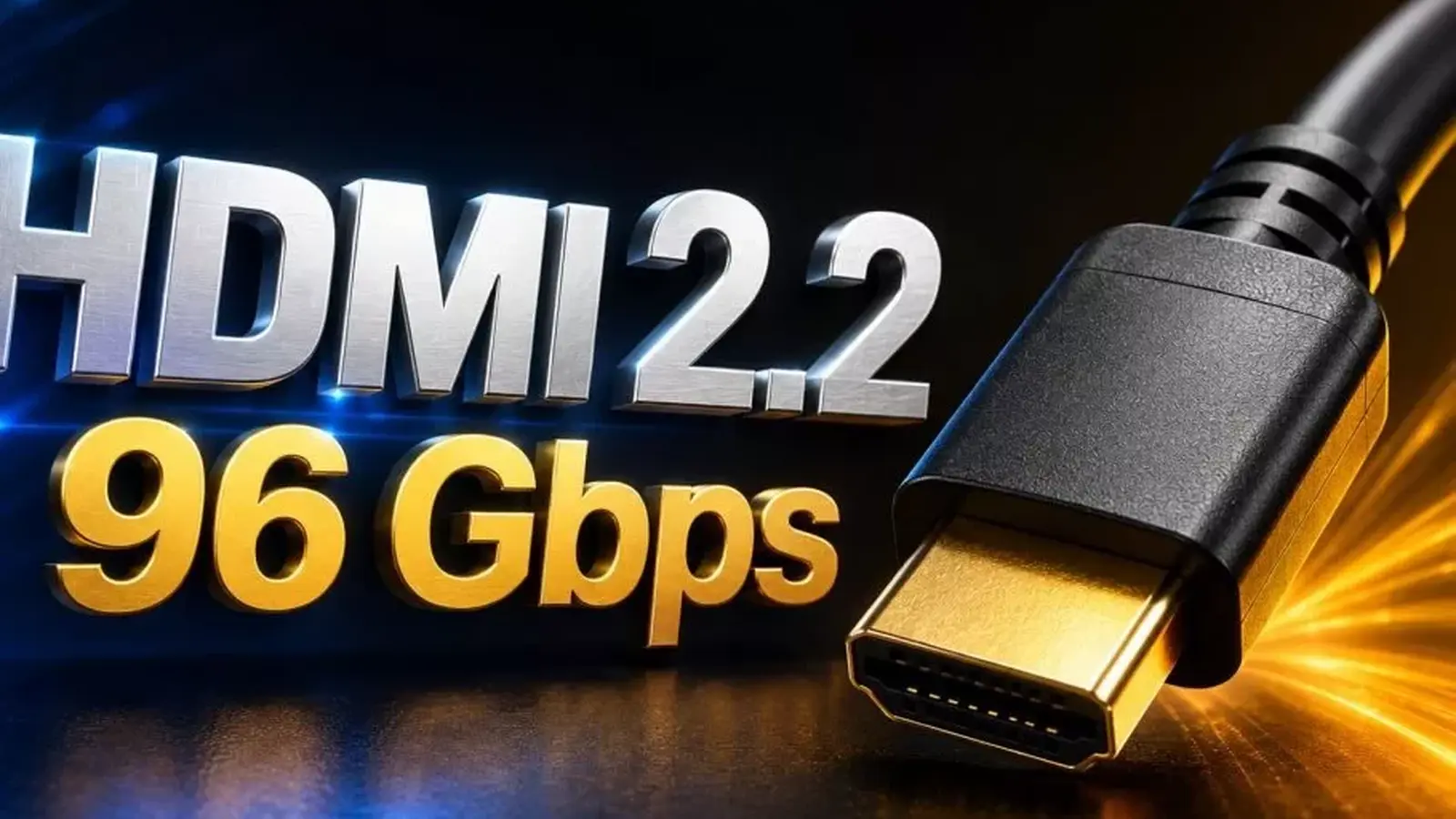
Think of HDMI 2.2 as a fast lane that’s been paved but won’t open for traffic until 2027. It promises a dramatic jump in raw muscle — twice the bandwidth of HDMI 2.1 — yet the devices that can truly exploit those extra lanes will take time to show up on store shelves.
Unveiled at CES 2026, HDMI 2.2 doubles peak throughput to 96 Gbps and brings an updated FRL (Fixed Rate Link) mode — essentially a cleaner, wider pipe for video signals. That bandwidth leap even outpaces DisplayPort 2.1, and it means displays can potentially push higher refresh rates and fuller color without leaning on Display Stream Compression (DSC).
What does that translate to in practice? The spec targets demanding use cases: 4K at 240 Hz, 8K at 60 Hz with full chroma, and other modes that only high-end gaming monitors, pro video hardware, and immersive VR rigs currently dream about. Manufacturers are calling it an infrastructure upgrade for next-generation displays rather than a tweak for today's gadgets.

Still, don’t expect instant availability. According to ARMdevices, Rob Tobias, CEO and chair of HDMI LA, says chipmakers will begin sampling FRL2 silicon during 2026, which lines up product launches for 2027. In plain terms: the spec is ready, the parts are in development, but mass-market equipment that unlocks HDMI 2.2's full 96 Gbps potential won't arrive this year.
There are other moving parts. AMD's RDNA 5 architecture is mentioned among early adopters likely to support the interface, which helps explain why gaming hardware vendors are watching HDMI 2.2 closely. But ecosystem shifts — from GPU pipelines to monitor controller chips and certified cables — must all align before the user experience changes meaningfully.
Speaking of cables: HDMI LA introduced an Ultra96 certification for leads capable of delivering the full 96 Gbps without compromise. If you want the nominal speed, you’ll need an Ultra96-certified cable. No shortcuts. That single requirement is a familiar bottleneck; previous HDMI generations showed how readiness was as much about cabling and certification as it was about silicon.
The bottom line: HDMI 2.2 sets the stage for a step-change in display capability, but the practical benefits will arrive on a realistic timetable — hardware sampling in 2026 and consumer products expected in 2027.
For anyone buying a monitor or GPU today, the sensible move is to weigh near-term needs against futureproofing. Will you need 4K at 240 Hz tomorrow? Maybe not. But if you're designing workflows or products that hinge on the highest uncompressed bandwidth, HDMI 2.2's roadmap is one to follow closely.
When that highway opens, it won’t just be about raw numbers. It’s about how manufacturers build displays, how GPUs feed them, and whether the cables in your drawer can keep up. Ready to upgrade when the pieces fall into place?
- Bandwidth: 96 Gbps (HDMI 2.2)
- Key modes: 4K @ 240 Hz; 8K @ 60 Hz with full chroma
- Transport: Updated FRL (FRL2)
- Cabling: Requires Ultra96-certified cables

Leave a Comment
Comments
No comments yet. Be the first.