

3 Minutes
Bitmine boosts Ethereum holdings with fresh 27,801 ETH purchase
Bitmine has added another 27,801 ETH to its treasury, pushing total holdings to 5,770,038 ETH. That position represents roughly 4.8% of Ethereum’s circulating supply, estimated at about 120.7 million coins. The acquisition continues the company’s aggressive accumulation strategy as it works toward a stated target of controlling 5% of the ETH supply by year-end.
Latest purchases and on-chain tracking
Blockchain intelligence platforms have tracked multiple recent inflows tied to Bitmine. Arkham Intelligence flagged a separate 40,000 ETH movement — roughly $70 million — via two wallets associated with FalconX and Kraken hot wallets. While Bitmine hasn’t publicly confirmed that exact transaction, the firm consistently publishes weekly updates that outline additions to its Ethereum treasury.
Bitmine’s buying cadence remains steady: the company reportedly added 42,197 ETH between June 29 and July 3, and now disclosed a new 27,801 ETH purchase carried out over the past week. Despite short-term market volatility, the miner has continued to scale its on-chain Ethereum exposure.
Staking profile and treasury economics
A substantial share of Bitmine’s ETH is actively staked. The company reports 4,917,189 ETH staked, producing projected annualized staking revenue of about $242 million. Public filings show an average acquisition price of $3,374 per ETH for Bitmine’s position. Using current market prices, data provider DropsTab estimates the firm remains at an unrealized loss of roughly $9.2 billion.
Why Bitmine keeps buying despite unrealized losses
Bitmine’s strategy reflects a long-term view of Ethereum’s fundamentals: accumulation even through drawdowns, coupled with staking to generate yield. Management has signaled confidence in ETH’s long-term demand drivers and continues to add to inventory while staking a large portion to capture network rewards.
Tom Lee: Robinhood Chain is a new adoption catalyst for ETH
Tom Lee, Bitmine’s chairman, has identified Robinhood Chain as an emerging driver of real-world demand for ETH. Lee argues that because Robinhood Chain uses ETH as the native gas token, denominates transaction fees in ETH, and settles finality on the Ethereum mainnet, it effectively integrates ETH into everyday user activity.
Robinhood Chain metrics and implications
Lee highlighted Robinhood’s vast retail footprint — an estimated 27 million users — and said that users paying fees in ETH strengthens the currency’s utility perception. He also pointed to robust network metrics: Robinhood Chain has surpassed $1 billion in dollar-denominated trading volume and processes more trading volume than any single decentralized exchange, indicating strong product-market fit around Ethereum.
Other reports note Robinhood Chain reached approximately 7.6 million daily transactions, overtaking competitors such as Base in daily activity. These on-chain indicators support the thesis that large consumer-facing products can drive transactional demand for ETH and broader blockchain utility.
Market reaction and stock performance
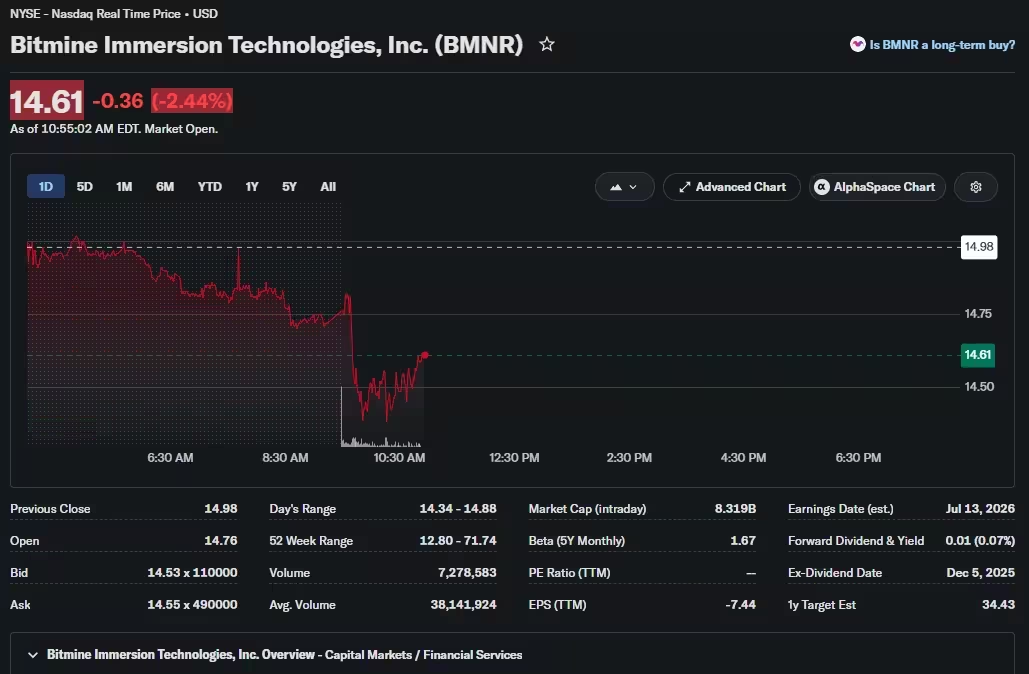
Despite the renewed accumulation and staking growth, Bitmine’s stock (BMNR) traded lower on the announcement. According to Yahoo Finance data, BMNR shares were around $14.61, down roughly 2.4% on the day. Investors appear to be weighing the long-term strategic accumulation and staking returns against the short-term unrealized losses shown on paper.
What to watch next
Key signals for market participants include further Bitmine purchases toward the 5% ETH supply target, changes in staking ratios, and continued adoption metrics from Robinhood Chain — especially user growth, fee volume, and transaction counts. On-chain tracking by analytics firms like Arkham Intelligence will likely continue to reveal where major ETH flows are originating and whether institutional holders accelerate accumulation.


Leave a Comment
Comments
No comments yet. Be the first.