

4 Minutes
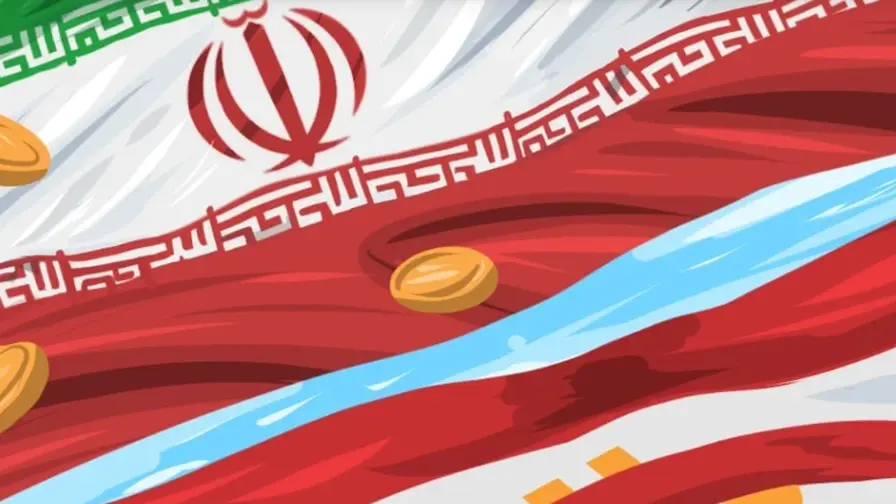
Bitcoin briefly dropped below $63,000 after renewed US strikes on Iranian targets increased geopolitical tensions, sending oil to around $80 and lifting the US Dollar Index. BTC fell to an intraday low near $62,500 before recovering to roughly $63,150, ending the session down about 2.4% as traders weighed the fallout for risk assets and crypto markets.
Market reaction: oil, dollar and risk assets
Oil and dollar surge
Fresh military action in the Gulf pushed crude toward $80 per barrel, while the US Dollar Index climbed to 100.79. A stronger dollar and higher energy prices often depress demand for higher-risk assets, including cryptocurrencies. On July 17, US stock futures also slid as investors reassessed potential economic consequences of an expanding conflict.
Immediate crypto market impact
According to crypto.news data, Bitcoin declined about 3.5% intraday to roughly $62,500 before reclaiming some losses and stabilizing around $63,150. The sell-off coincided with broader risk-off flows that hit equities and other speculative assets, adding pressure to BTC price action.
Geopolitical developments behind the sell-off
The US Central Command confirmed multiple nights of strikes on Iranian military sites, including coastal surveillance systems, air-defense installations, logistics hubs and maritime assets. Local reports also indicated strikes on transport infrastructure near Bandar Abbas — targeting bridges and a railway connected to Shahid Rajaei port — though those specific claims had not been independently verified at the time of writing.
Initial accounts suggested Iran retaliated with strikes across the Gulf region, with incidents reported in Qatar, Bahrain, Jordan, Kuwait and Iraq. The flare-up of regional hostilities heightened market uncertainty and drove flows into traditional safe havens such as the dollar and oil.
White House press secretary Karoline Leavitt stated that Tehran was still seeking talks with Washington, claiming Iran had been weakened by US military pressure. Against that backdrop, investors monitored how a sustained conflict could affect inflation, trade routes and global growth — all variables that matter for crypto risk appetite.
Technical outlook: key Bitcoin support levels
Critical Fibonacci and support zones
Technically, Bitcoin approached a decisive zone at the 78.6% Fibonacci retracement near $63,167. The daily candle briefly pierced that level before buyers stepped in to avoid a deep close at session lows. If BTC decisively breaks and closes below $63,167, the next substantial support sits around the June range floor at approximately $57,779.
A bullish recovery would need to overcome the 61.8% Fibonacci level near $67,396 and clear recent resistance between $65,000 and $66,000 — a ceiling where rebound attempts have repeatedly stalled.
Momentum and trend indicators
Short-term momentum tilts toward sellers. Technical readings on the daily chart showed Aroon Down at 85.71% versus Aroon Up at 0%, while the Average Directional Index (ADX) registered 23.41, signaling a bearish trend with moderate strength. These readings suggest downside momentum could persist unless demand returns decisively.

Bitcoin price daily chart — July 17
Political noise and market psychology
Domestic political developments in the United States added another layer of uncertainty. In a White House address, former President Donald Trump made renewed allegations of foreign interference in the 2020 election and urged Congress to pass the SAVE America Act, which includes stricter voter ID and proof-of-citizenship provisions. Critics, including Democratic leaders and senators, accused the administration of prioritizing contested election narratives over economic issues like household costs, housing and healthcare.
The charged political environment can amplify risk aversion across markets, including the cryptocurrency sector, where investor sentiment often responds sharply to headlines and macro shocks.
Institutional perspective and longer-term view
Despite the short-term weakness, some institutional executives remain constructive on Bitcoin over a longer horizon. BlackRock CEO Larry Fink reiterated a bullish 12-month outlook for crypto, describing Bitcoin as relatively stable around current levels. Institutional interest and on-chain fundamentals could provide a cushioning effect if short-term volatility deepens.
However, near-term price action will likely be dominated by macro variables: whether the US-Iran conflict intensifies or de-escalates, how oil and the dollar behave, and whether equity markets can absorb geopolitical shocks.
What traders and investors should watch
- Monitor BTC price around $63,167: a confirmed breakdown could open the path to ~$57,779.
- Watch oil and the US Dollar Index: further gains in either may weigh on crypto risk appetite.
- Track institutional flows and on-chain metrics: sustained inflows could counterbalance headline-driven selling.
- Follow geopolitical updates: any widening of the conflict could trigger additional market volatility.
Conclusion
The combination of fresh US strikes on Iran and renewed political controversy in the US created a risk-off environment that pushed Bitcoin below the critical $63K area. Technical indicators favor sellers in the short term, but institutional demand and broader market dynamics will determine whether BTC can defend the $63,167 support or slide toward the June range floor near $57,779. Traders should keep an eye on oil, the dollar, and evolving geopolitical headlines as they weigh crypto market positioning and risk management.


Leave a Comment
Comments (2)
Is this even true about strikes hitting rail links? markets react fast, but how much is headline churning vs real supply shock? feels like kneejerk selling
Whoa… BTC dip felt sudden, oil to $80? damn. If dollar keeps rallying, risk assets will stay shaky. Hope buyers hold 63k, but nerves rn