
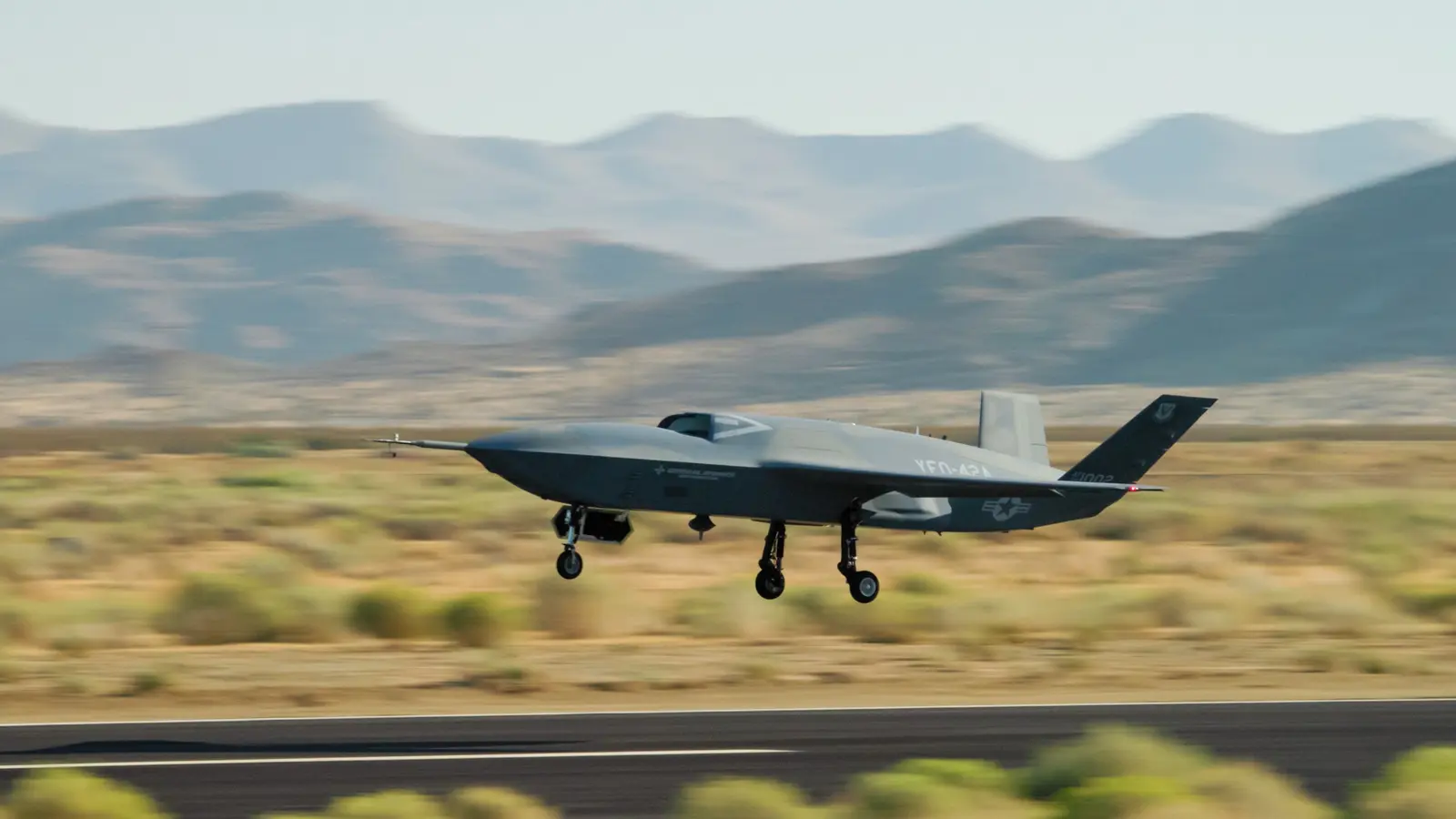
The U.S. Air Force has formally assigned the call signs FQ-42 Vengeance and FQ-44 Fury to its first two Collaborative Combat Aircraft, marking the first public identification of the pilotless, jet-powered jets chosen to operate alongside crewed fighters and bombers.
Announced at the Air and Space Forces Association Air, Space and Cyber Conference in mid-September in National Harbor, Maryland, the names follow a June decision to settle on two distinct designs from General Atomics and Anduril. Both aircraft are already flying test sorties and moving off production lines as the USAF plans to field 150 in the near term, grow the fleet to 500 by 2032, and target roughly double that number thereafter.
Design and performance
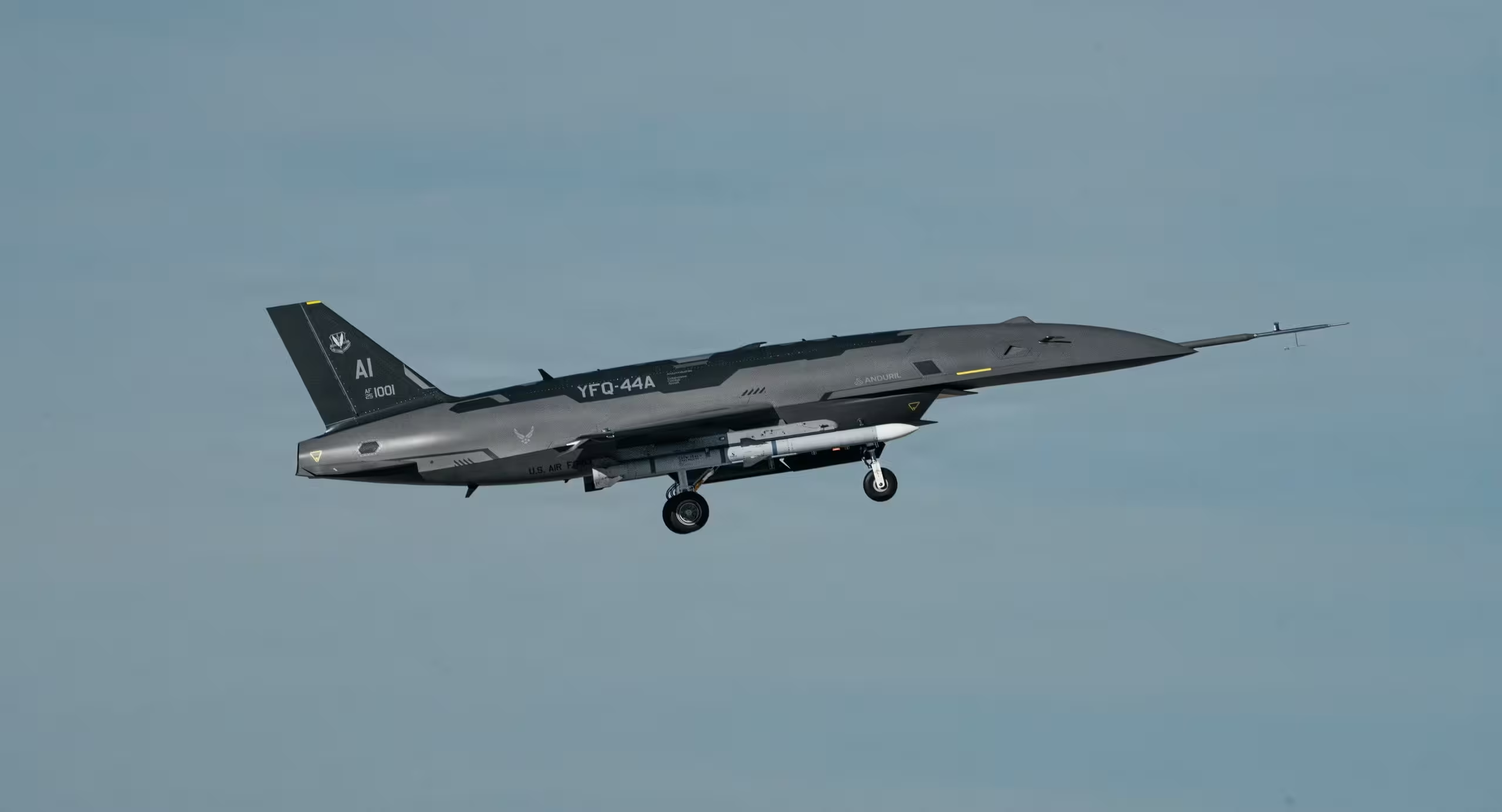
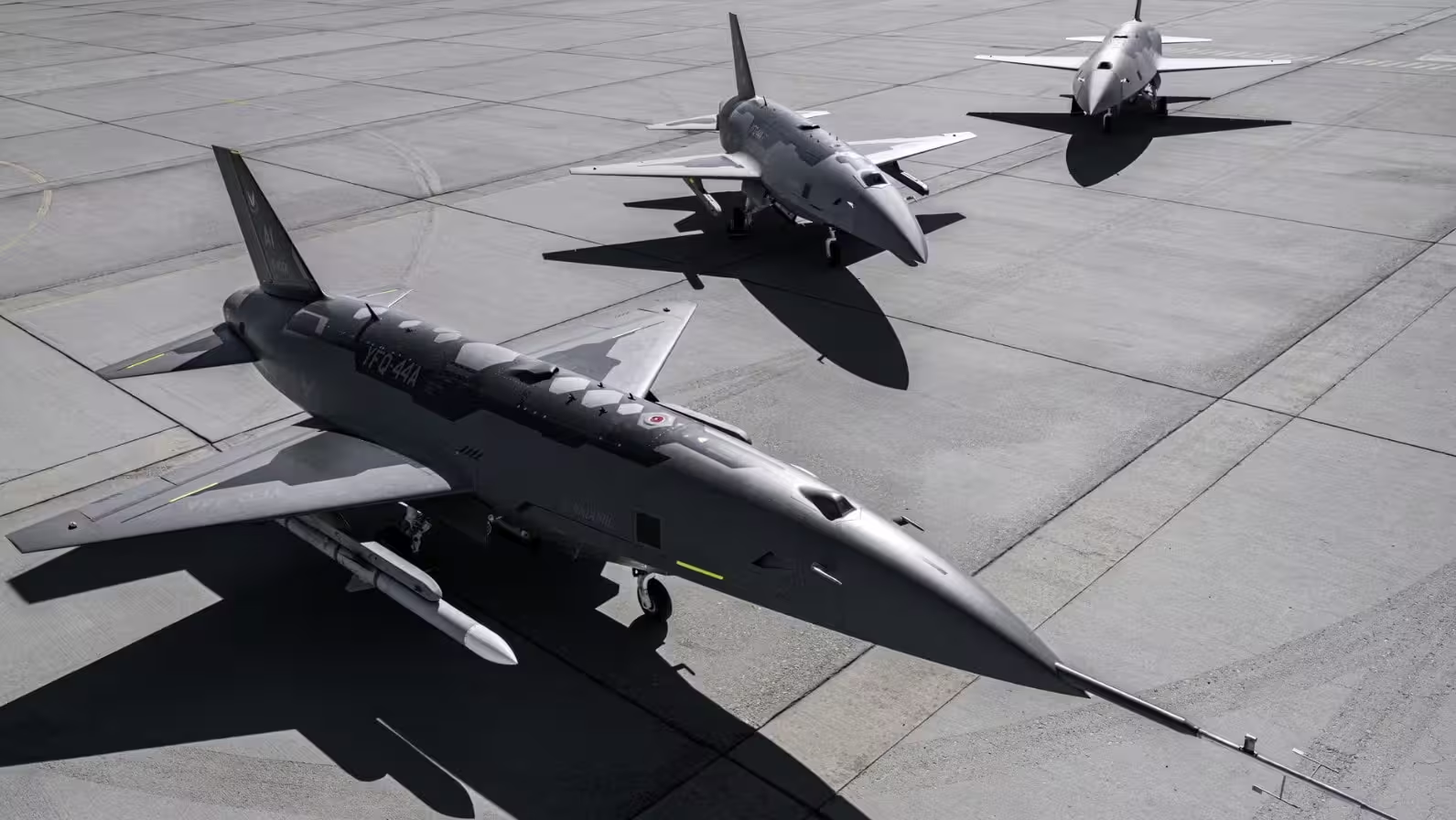
The Anduril FQ-44 Fury, previously known in prototype form as the YFQ-44 and internally as Fury, is a semi-autonomous, short-field-capable fighter. The design measures 20 feet (6 meters) long with a 17-foot (5.2 meter) wingspan and is powered by a single Williams FJ44-4M turbofan rated at 4,000 pounds of thrust. Anduril lists a top speed of Mach 0.95 (729 mph/1,173 kph) and a service ceiling of 50,000 feet (15,240 meters). The Fury has a maximum takeoff weight of 5,000 pounds (2,268 kg) and two weapons stations that can carry two AIM-120 AMRAAM missiles.
The General Atomics FQ-42 Vengeance, until recently the YFQ-42 and referred to internally as Dark Merlin, is similar in concept. Powered by a single turbofan of undisclosed make, the Vengeance is described as subsonic with an undisclosed top speed. It has a maximum range of 930 miles (1,500 km), a service ceiling of 45,000 feet (13,700 meters) and an endurance of up to eight hours. The FQ designation reflects the aircraft class as uncrewed fighter, while the Y prefix denoted prototype status during development.
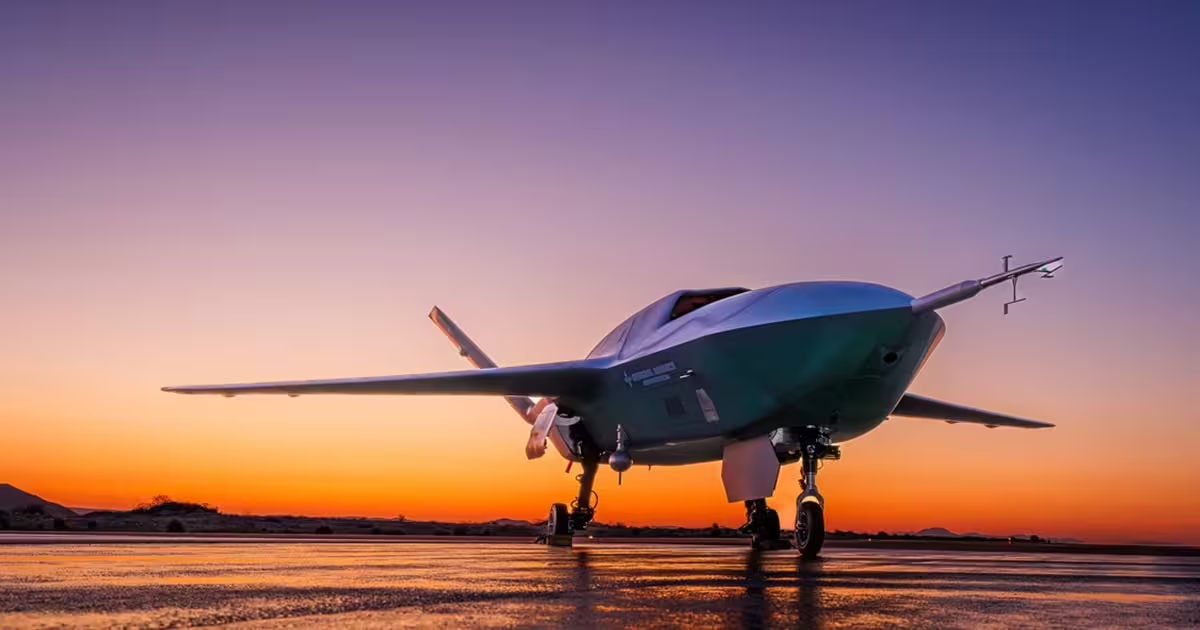
General Atomics positions the FQ-42 within its Gambit Series genus/species concept, a modular approach intended to adapt the platform across roles from long-endurance surveillance to air-to-ground strike.
Software, production and testing
One operational requirement for both airframes is the ability to run a variety of mission software packages rather than a single native load. Lockheed Martin, Northrop Grumman, RTX Collins Aerospace and Shield AI are developing mission software for testing. The USAF is expected to select the preferred software suites by the end of the year, with the chosen software for the initial 150-aircraft batch slated to be announced in summer 2027. The service plans an initial fleet of 150 CCAs, rising to 500 by 2032.
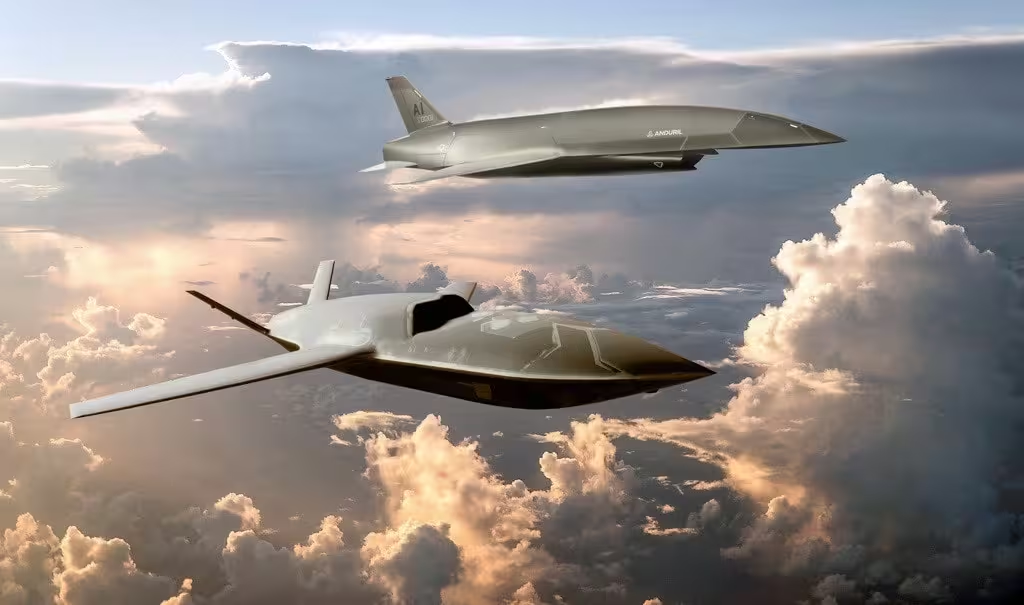
Anduril has said it intends to produce roughly 150 Fury units per year for USAF requirements and potential allied customers. General Atomics plans to supply the Vengeance to the USAF and to build additional fighters for its own company aircraft fleet; the company has not explained the purpose of that internal fleet. Neither manufacturer nor the Air Force has disclosed unit costs.
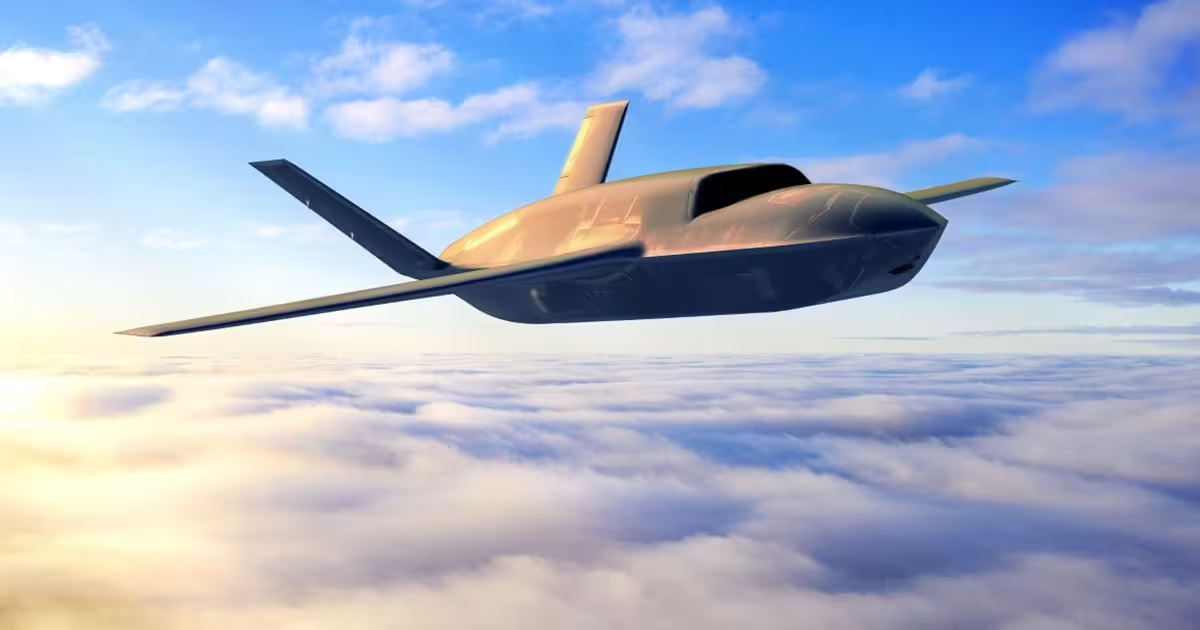
Testing will continue and intensify in the coming months. In spring 2026 a General Atomics FQ-42 experienced a crash in the California desert attributed to an autopilot miscalculation of weight and center of gravity; that incident is the first recorded crash of a CCA to date. Further flight test results and the software selections for the production lot will determine the next milestones in fielding the Vengeance and Fury.


Leave a Comment
Comments
No comments yet. Be the first.