

2 Minutes
Bank of England launches a consultation on sterling stablecoins
The Bank of England (BoE) has moved a major step closer to formal crypto regulation by publishing a consultation paper that outlines a proposed regulatory framework for sterling-denominated, systemic stablecoins. The proposal targets tokens used widely for payments that could present risks to UK financial stability and seeks industry feedback ahead of finalising rules in 2026.
Key proposals: backing, limits and timetable
Under the draft regime, stablecoin issuers would face strict backing requirements. The BoE proposes that at least 40% of stablecoin liabilities be held as unremunerated deposits at the central bank, while up to 60% could be backed by short-term UK government debt. For issuers identified as systemically important, the BoE indicates a temporary allowance to hold up to 95% of backing in government securities during scale-up, with that share later reduced to 60% when appropriate to mitigate systemic risk.
The consultation is open until Feb. 10, 2026, with the BoE aiming to finalise the regulatory framework in the second half of 2026. These measures form part of a broader effort to bring crypto assets, especially stablecoins used for payments, within robust oversight by the central bank and other UK authorities.
Holding caps, exemptions and supervision
The proposed regime would also introduce per-token holding limits to protect retail users and reduce concentration risk across payment networks. The BoE suggests a limit of 20,000 GBP per individual per coin and a 10 million GBP cap for business holdings, though businesses can apply for exemptions when larger balances are necessary for normal operations. His Majesty’s Treasury would be responsible for designating which stablecoin payment systems and service providers are considered systemically important; designated systems would then fall under the BoE’s supervision and the new sterling stablecoin framework.
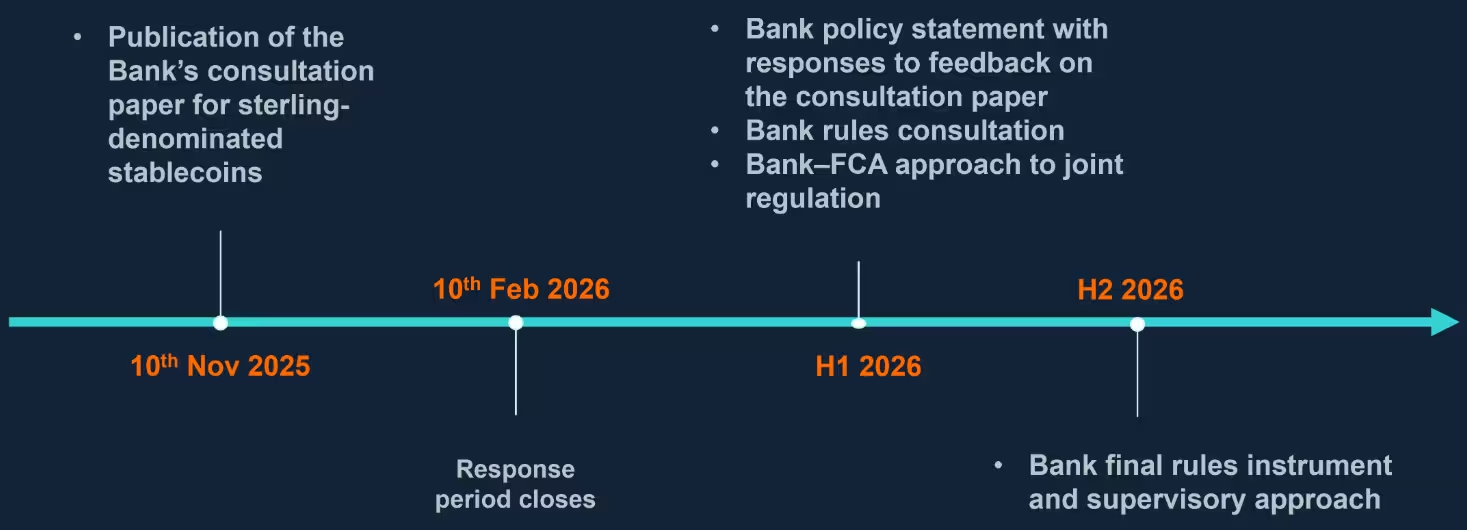
Timeline for regulation on sterling-denominated stablecoins by the Bank of England
Implications for the crypto industry
If adopted, the rules will reshape how stablecoin issuers structure reserves and manage liquidity, nudging the market toward heavier reliance on high-quality government debt and central bank balances. For payments infrastructure, the framework aims to preserve innovation while protecting financial stability, ensuring that stablecoins used in everyday crypto payments meet clear regulatory and operational standards.














Leave a Comment
Comments
No comments yet. Be the first.