

Holiday crowds, nostalgic spectacle
The two-hour Stranger Things finale hit cinemas over New Year’s Eve and turned what might have been a streaming-only event into a lucrative theatrical moment. According to industry sources speaking with Variety, cinema chains collectively earned roughly $25–$28 million from special screenings of Netflix’s final episode. The Duffer Brothers later confirmed through social channels that about 1.1 million tickets were sold for the event — a striking figure for a TV finale shown on the big screen.
Box office numbers and ticket strategies
Exact totals vary because exhibitors used very different pricing models. AMC and Cinemark offered premium $20 tickets bundled with concession credit, while Regal and a few other chains sold an $11 ticket — a wink to Millie Bobby Brown’s supernatural character. AMC alone reported about $15 million in revenue from patrons who purchased the concession credit package, representing more than one-third of the participating theaters.
These creative pricing choices show how exhibitors are experimenting: premium packages for superfans, lower symbolic prices to build goodwill and broad audience reach. For cinemas, the event was welcome news after a tepid year — U.S. domestic box office finished near $8.9 billion, still shy of the pre-pandemic $11 billion benchmark. But late-2025 hits like Avatar: Fire and Ash and The Housemaid helped boost momentum heading into the holidays.
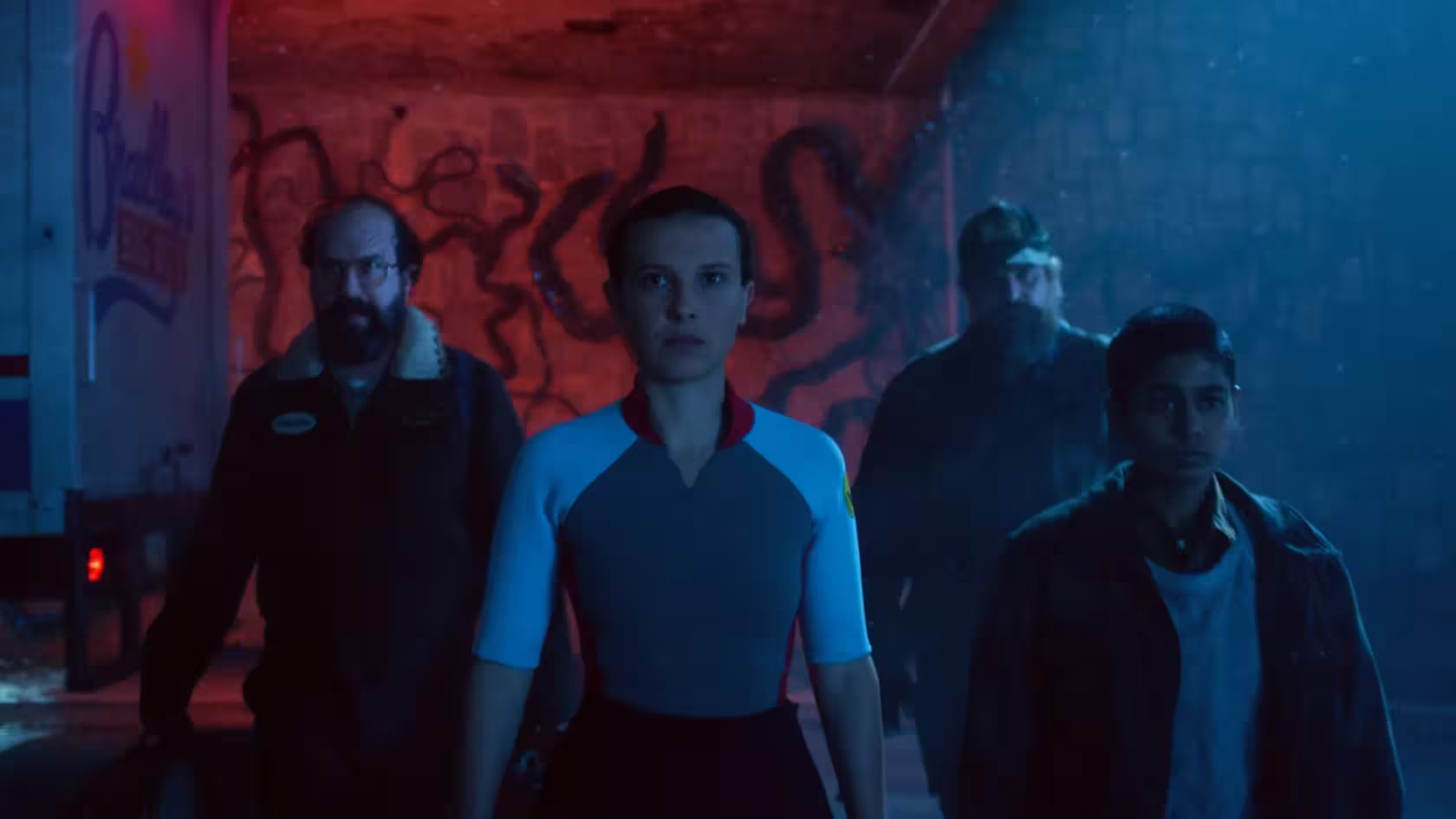
Why a streaming giant sent a TV finale to theaters
Stranger Things has always been Netflix’s love letter to 1980s adventure and sci-fi — think The Goonies, E.T. and Spielbergian spectacle. Its final episode was crafted as a cinematic event: a longer runtime, action set-pieces and a communal send-off. That cinematic ambition, combined with fandom appetite for a theatrical goodbye to the Upside Down, made the big-screen route logical.

But Netflix’s relationship with theaters remains complex. Many cinema chains historically resisted streaming releases that flout the traditional theatrical window. Some exhibitors are also wary of Netflix’s moves in the industry — potential acquisitions or changing release windows could shorten the exclusive theatrical run for studio films. Still, AMC’s CEO Adam Aron publicly signaled openness: he described recent collaborations as “creative, smooth and low friction,” and said talks are already underway to bring more Netflix content to AMC auditoriums.
Context, comparisons and fan reaction
Compared to other TV-to-theater experiments, the Stranger Things finale stands out because of scale and fandom. Previous special screenings for shows or limited theatrical runs typically pulled modest numbers; this one approached mid-tier film openings thanks to brand loyalty and clever exhibitor promotions. Fan communities treated screenings like events — cosplay, midnight parties, and emotional farewells were common at many locations.
Behind the scenes, the choice to screen theatrically also reflects a growing trend: streaming platforms treating certain tentpole episodes as cross-platform events. Creators increasingly design finales and season-enders with cinematic production values, blurring lines between TV and film.
"Theaters are craving event cinema, and franchises with built-in fandoms deliver that reliably," says cinema historian Marko Jensen. "This screening proved that, with the right marketing and a beloved IP, a TV finale can convert into meaningful theatrical revenue and audience engagement."
Beyond box office, the experiment offered ancillary benefits: concession sales, renewed foot traffic, and publicity for chains that participated. For fans, it provided a shared, communal way to say goodbye to the Upside Down — a different emotional register than watching at home alone.
Whether Netflix will lean further into theatrical windows remains unclear, especially amid industry consolidation chatter. But for one cold holiday night, the marriage of streaming spectacle and traditional cinema produced a rare win-win: fans got a memorable communal finale, and theaters scored a timely revenue boost.

In short: Stranger Things turned a streaming ending into a theatrical moment — and the industry is watching closely to see if this becomes a recurring strategy.

Leave a Comment
Comments (2)
Is this even true? $25- $28M for 1.1M tix sounds low. Different pricing models explain some, but AMC's $15M claim smells off... math?
Wow, 1.1M tickets?! Cinema > streaming for a night, felt like a real sendoff. curious if Netflix repeats this, hope not greedy