
A cone icon taught the world to play video. Now its author is trying to teach machines to move with the same simplicity.
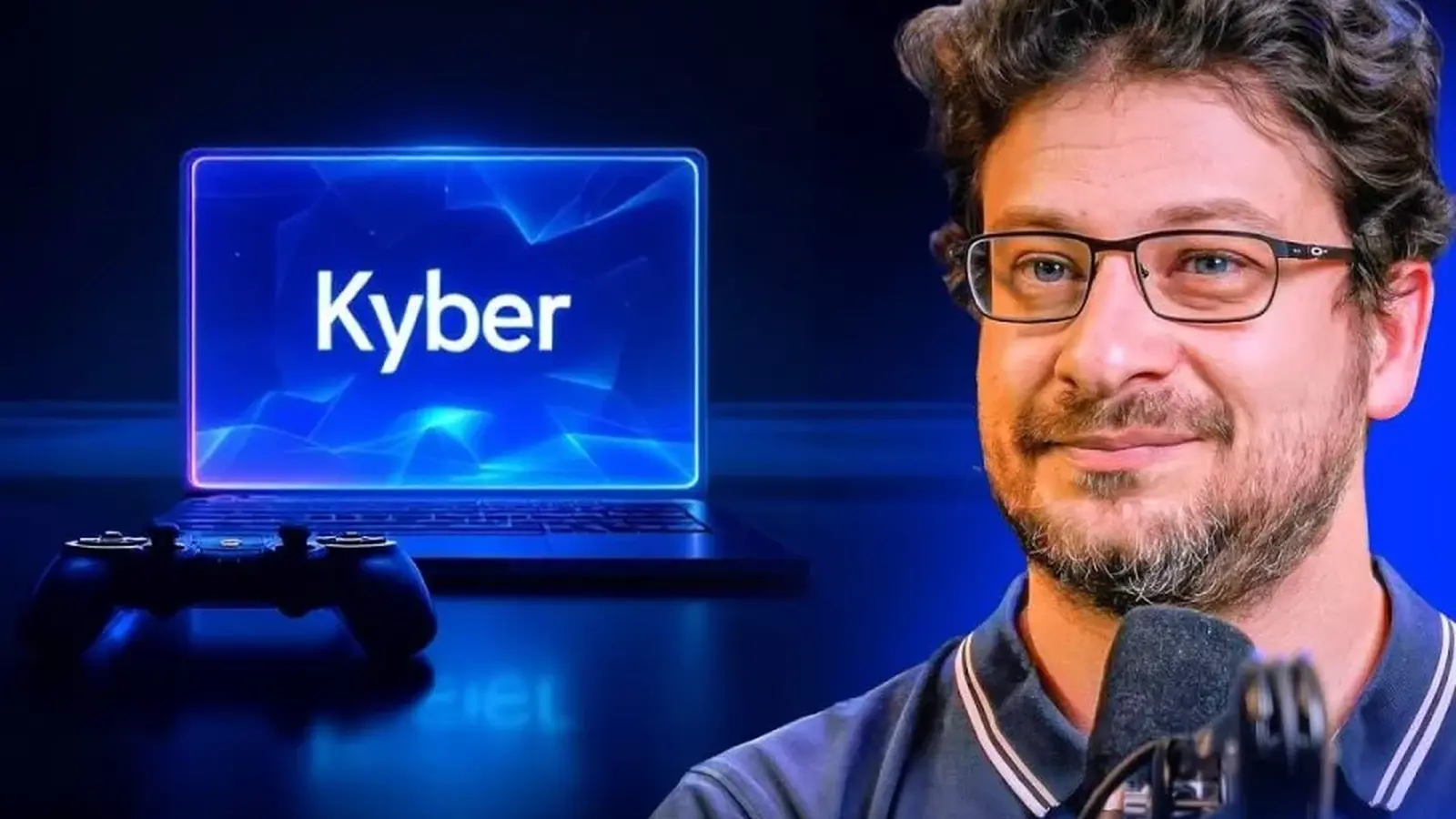
Jean-Baptiste Kempf, the lead developer behind VLC Media Player, has quietly launched Kyber, a Paris-based startup building an infrastructure layer for real-time remote device control. Investors took notice: a Lightspeed-led seed round raised $5 million to get the project off the ground.
Kyber's core offering is an SDK that synchronizes video, audio, sensor feeds, and control inputs with razor-thin latency. Picture a conductor keeping dozens of instrumentalists perfectly timed, except the orchestra spans cameras, drones, delivery robots, and cloud compute nodes scattered across cities. The platform targets situations where the human operator, the processing backend, and the machine doing the work are not co-located.
Speed matters. Control matters. Kyber is built to orchestrate millions of robots with millisecond precision.

Today's largest fleets tend to count a few thousand vehicles at most. Kyber is designed to scale far beyond that, to the point where monitoring and governance become mission-critical. When AI agents are steering fleets and stitching together networks of devices, ensuring predictable behaviour and fail-safe telemetry is no longer optional — it's the backbone of trust.
Kempf brings an unusual résumé to the problem. He cut his teeth as CTO at cloud gaming startup Shadow, where minimizing latency was a daily obsession, and his IoT work sharpened his sense for performance at scale. Those lessons show up in Kyber's architecture and its focus on deterministic timing under variable network conditions.
Kempf has kept the project's foundations open source, but Kyber also sells a productized, enterprise-grade solution. The company mixes software licensing with engineering-led deployments — a hands-on approach familiar to clients of high-touch platforms. About 25 people work full time on the venture, and while headquarters sit in Paris, Kyber has planted footholds in San Francisco and Singapore to support a global customer base.
Funding, pedigree, and a tight focus on latency. But the bigger question lingers: if robots begin to populate sidewalks and skies as apps did phones, who decides the rules of engagement?

Leave a Comment
Comments
No comments yet. Be the first.