
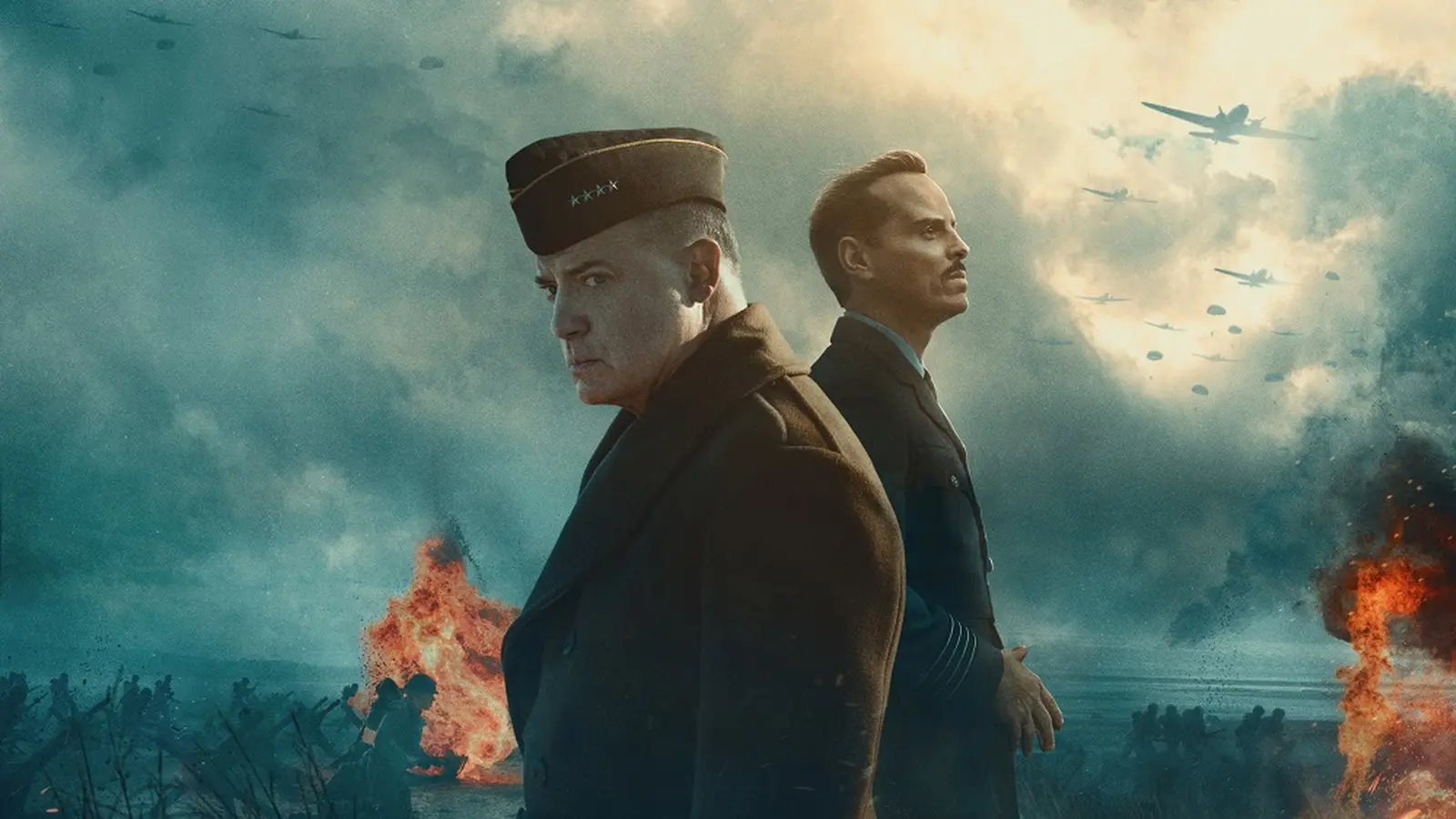
Picture a cramped room, a cluttered table, and a handful of men whose choices will ripple across beaches they will never see. That image is the heart of Pressure — a film that reroutes the familiar D-Day story away from trenches and blood-soaked sand and into a quieter battlefield: the council room where data, duty and doubt collide.
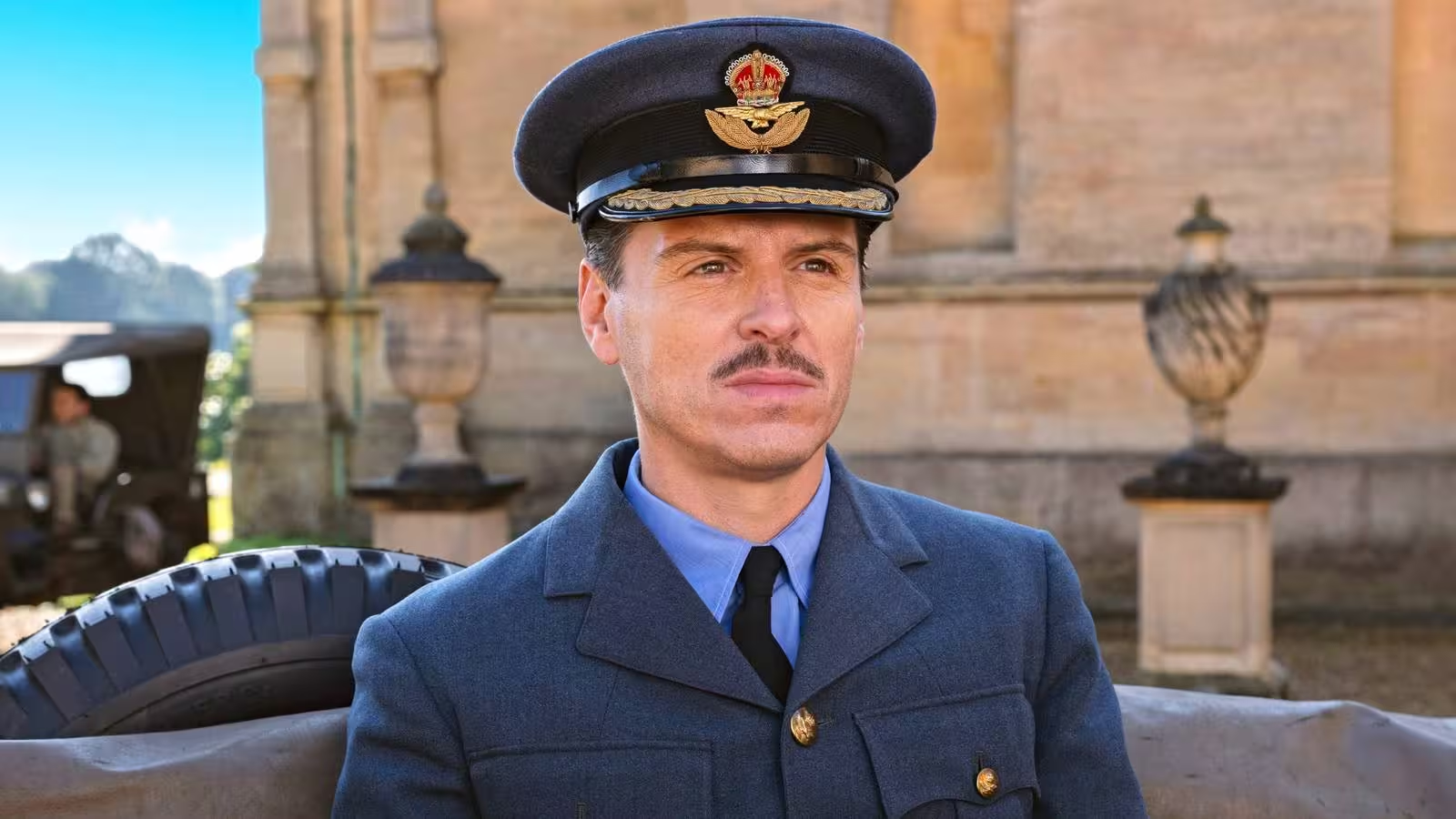
Seventy-two hours. A single variable: the weather. The premise is disarmingly simple, yet its implications are colossal. Captain James Stagg, the British meteorologist at the center of this whirlwind, must predict conditions that will either green-light the largest seaborne invasion in history or doom it to disaster. Opposite him stands General Eisenhower, played with measured authority by Brendan Fraser, torn between competing forecasts, military urgency, and the weight of lives on his shoulders.

It’s an elegant flip of perspective. We’ve seen Normandy through the mud, the smoke and heroic sacrifices. Pressure asks us to consider another kind of courage — the quiet, terrifying responsibility of people whose tools are charts, instruments, and judgment. The film makes that case without grandstanding. It trusts the audience to feel the stakes.
Andrew Scott anchors the movie with a performance that reads as precise and human. He inhabits Stagg with a careful balance of scientific certainty and private strain; small gestures and sudden silences say as much as any speech. Damian Lewis, in a compact but luminous turn, brings the necessary steel of command. Together, the principal cast turns what could have been a procedural into a study of character under pressure.
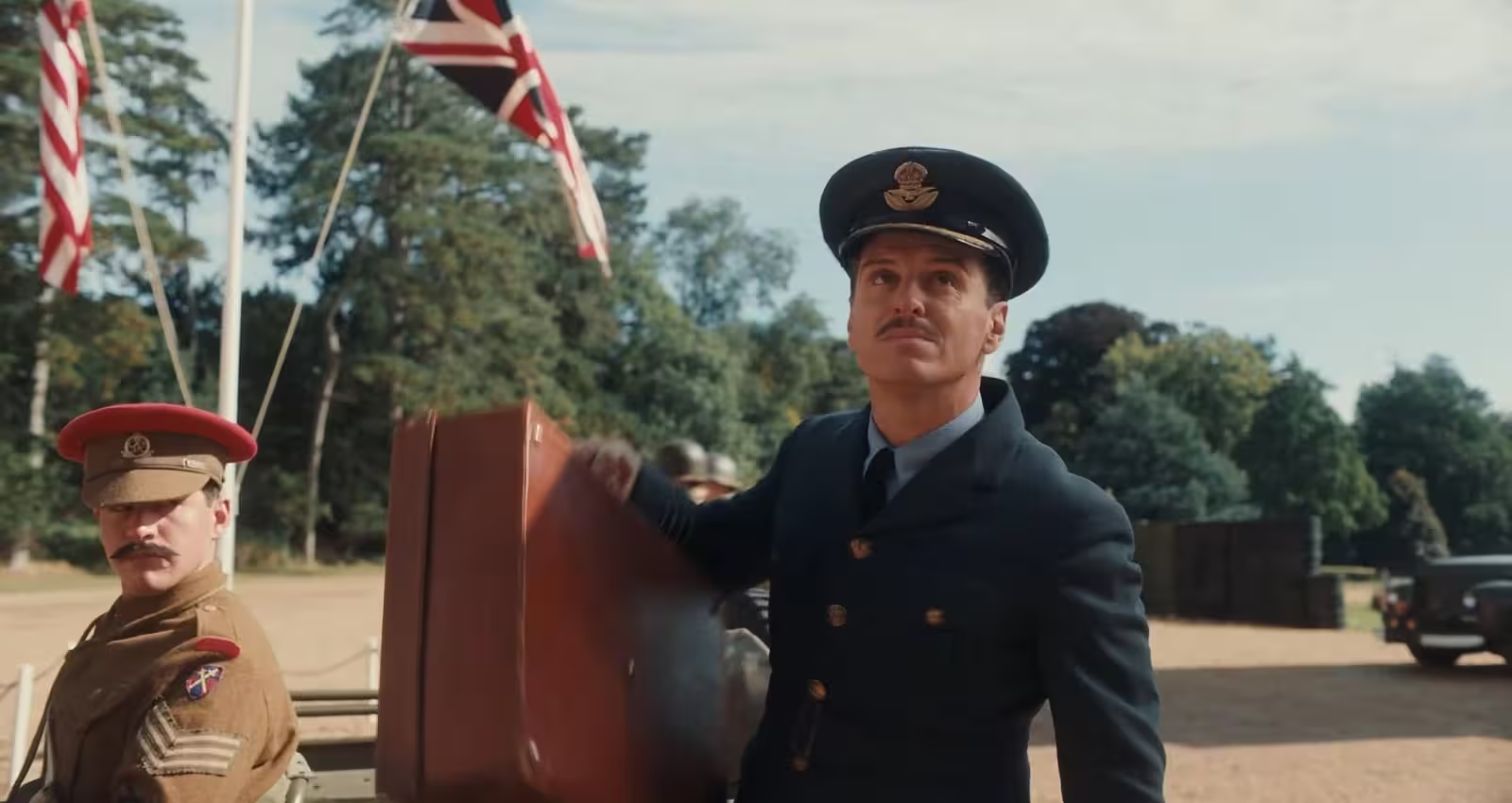
Director and cinematographer find drama in restraint. Camera moves are economical. Lighting favors warmth and claustrophobia. The climactic scene — the announcement of the forecast — is, in my view, the film’s high-water mark: a crowded room, taut performances, crackling dialogue and a hush that feels almost physical. You can hear the moral calculus as much as the words. The sequence is tense. It’s intimate. It breathes.
Yet Pressure doesn’t ignore the expected wartime spectacle. There are battle sequences, including a vivid echo of Normandy’s chaos, that remind viewers of what hangs on the decision made indoors. These moments are calibrated: neither gratuitous nor absent. They serve the central argument, offering necessary context without stealing focus from the film’s thesis — that decisions made on paper and policy lines can carry the same weight as bullets.
Script and pacing hold well. Characters arrive quickly and feel lived-in rather than schematic. The film resists lecturing; it doesn’t indulge melodrama or romanticize conflict. Instead, it finds moral complexity in the friction between science and command, between expertise and expectation. That friction becomes the movie’s engine, driving scenes that are both intellectually engaging and emotionally immediate.

Pressure is less a war movie than a meditation on responsibility — the kind that asks one man to stake a thousand lives on a forecast.
There are textures here that linger: the mundane heroism of a forecaster, the worn fatigue of senior officers, the small rituals that keep people anchored in chaos. As an Iranian viewer with a lived sense of war’s consequences, I found the film’s restraint and honesty refreshing — not consoling, but clarifying.
Where the movie truly succeeds is in reorienting our view of history. Cinema has long lionized frontline valor. Pressure reminds us that history’s hinge points sometimes occur under fluorescent lights and over maps, where the right call arrives not from force but from careful science and the willingness to accept responsibility for its consequences.
Technically, the film is sound: steady direction, effective production design, and actors who disappear into their roles. It doesn’t chase stylistic flourish for its own sake. Instead, it chooses a clarity that amplifies tension. The result is a movie that sits somewhere between historical drama and moral thriller — one that rewards attention and, at times, stops the breath.
Final note: this is a picture that will make you reconsider what counts as heroism. After the last frame, it’s the silence in the command room — not the explosions — that stays with you. My score: 8.5 out of 10.


Leave a Comment
Comments (2)
Strong acting, neat direction. Still, it kinda sanitizes the actual bloodiness, maybe too neat? Wanted grittier aftermath shots, but the forecast bit was killer.
Wow, that cramped room vibe actually gave me chills. Who knew forecasts could feel like life or death drama? Small gestures, huge weight. loved it