
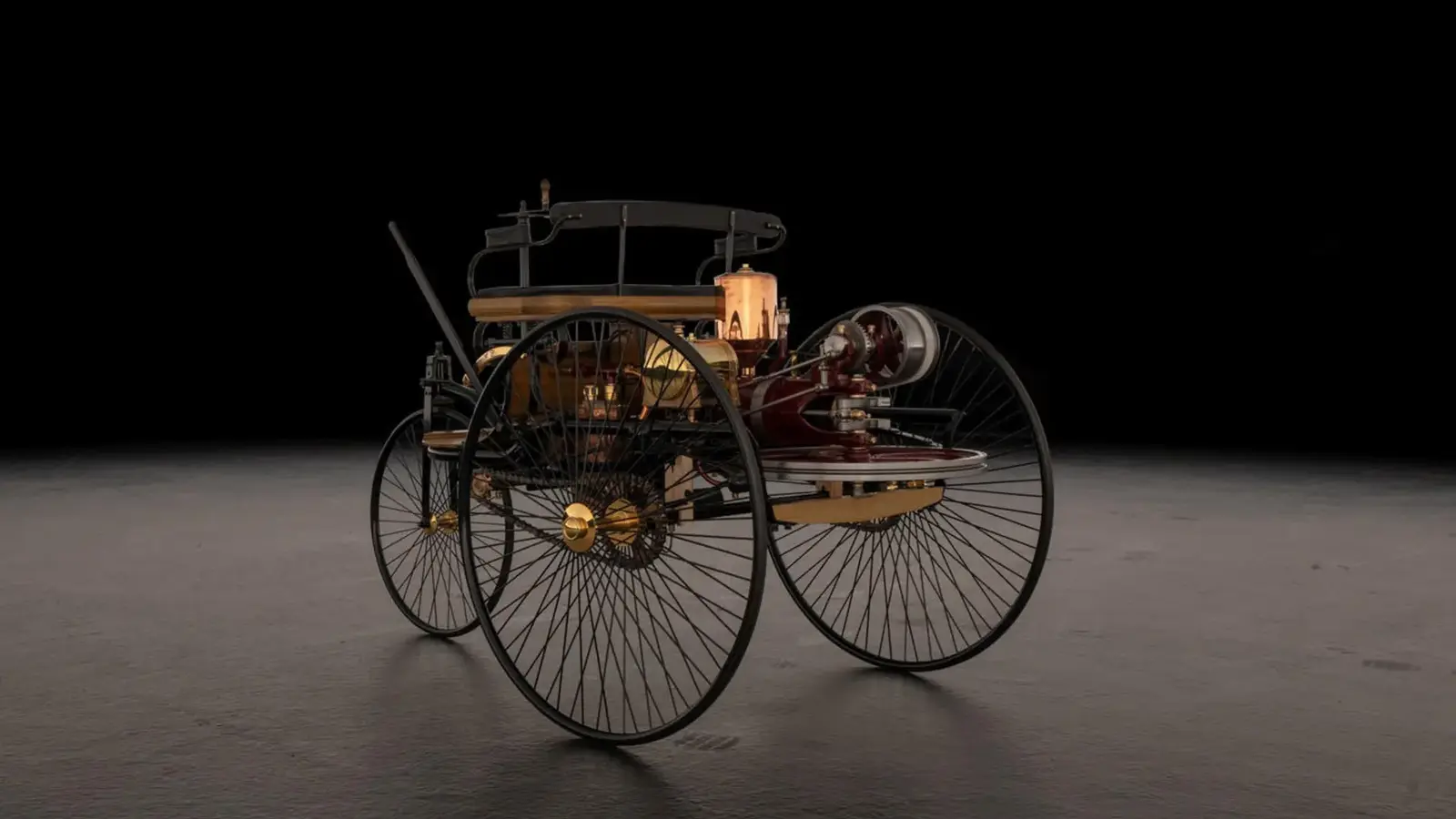
Historic Mercedes Patent Motorwagen Starts Again After Restoration
A three-wheeled Mercedes Patent Motorwagen — widely regarded as the world's first true automobile — has been brought back to life and driven under its own power after a meticulous restoration. The project, led by an American collector and restorer in California, returned a 1886 Motorwagen to running condition after roughly 139 years, offering a rare, living glimpse at the origins of the automotive era.
More than a mechanical fix
This was not simply a mechanical refresh. The restoration team focused on preserving authenticity while making sure the vehicle could actually run. The process involved rebuilding or fabricating components including the single-cylinder engine, drivetrain, chassis elements, wheels and visible bodywork so originals were conserved where possible and faithfully reproduced where they were not.
A newly released video of the project shows the Motorwagen's engine firing and the tiny vehicle moving under its own power. For car enthusiasts and historians, that moment is more than a technical milestone: it's a direct encounter with one of the foundational machines of modern mobility.

Why the Motorwagen matters in automotive history
Designed and built by Karl Benz in 1886, the Patent Motorwagen is considered by many historians to be the first practical automobile powered by an internal combustion engine. Restoring such a vehicle bridges museum preservation and functional demonstration: it preserves historical engineering while demonstrating how early automotive principles actually worked on the road.
The continued functionality of a vehicle conceived near the end of America's Civil War era underscores both the ingenuity of late 19th-century engineering and the importance of careful conservation for future generations.
Technical highlights
- Year introduced: 1886
- Designer: Karl Benz
- Wheel layout: 3 wheels
- Engine: single-cylinder, four-stroke
- Displacement: approximately 954 cc
- Power output: about 0.75 hp
- Top speed: around 16 km/h (roughly 10 mph)
These figures sound modest by today’s standards, but in the 1880s they represented a major engineering achievement. The Motorwagen's low horsepower and limited speed reflect early engine design and the infancy of automotive transmission systems.
What restorers emphasized
Restorers aimed for functional authenticity rather than cosmetic perfection for display. That meant:
- Rebuilding the original-style single-cylinder engine to run safely and reliably
- Recreating worn or missing drivetrain components to original specifications
- Repairing or reconstructing the wooden and metal structural elements by traditional methods
'The goal was to hear it run, not to create a trophy piece for a glass case,' one insider involved in the project commented. That philosophy brings engineering history to life and allows enthusiasts to experience early automotive technology dynamically.
Context and legacy
Today’s global auto industry — from combustion engines to electric vehicles — traces its roots to inventions like the Motorwagen. Restorations like this help contextualize modern developments in propulsion, design and manufacturing. They also remind collectors, museums and manufacturers why conservation and accurate restoration matter: not only to honor heritage, but to educate and inspire.
For readers interested in car restoration, automotive history, and preservation, this restoration is a compelling case study in balancing historical accuracy with operational safety. The Motorwagen's return to running condition is a poignant reminder that technological revolutions begin with small, inventive steps — and that those first steps deserve to be preserved and understood.


Leave a Comment
Comments
No comments yet. Be the first.