
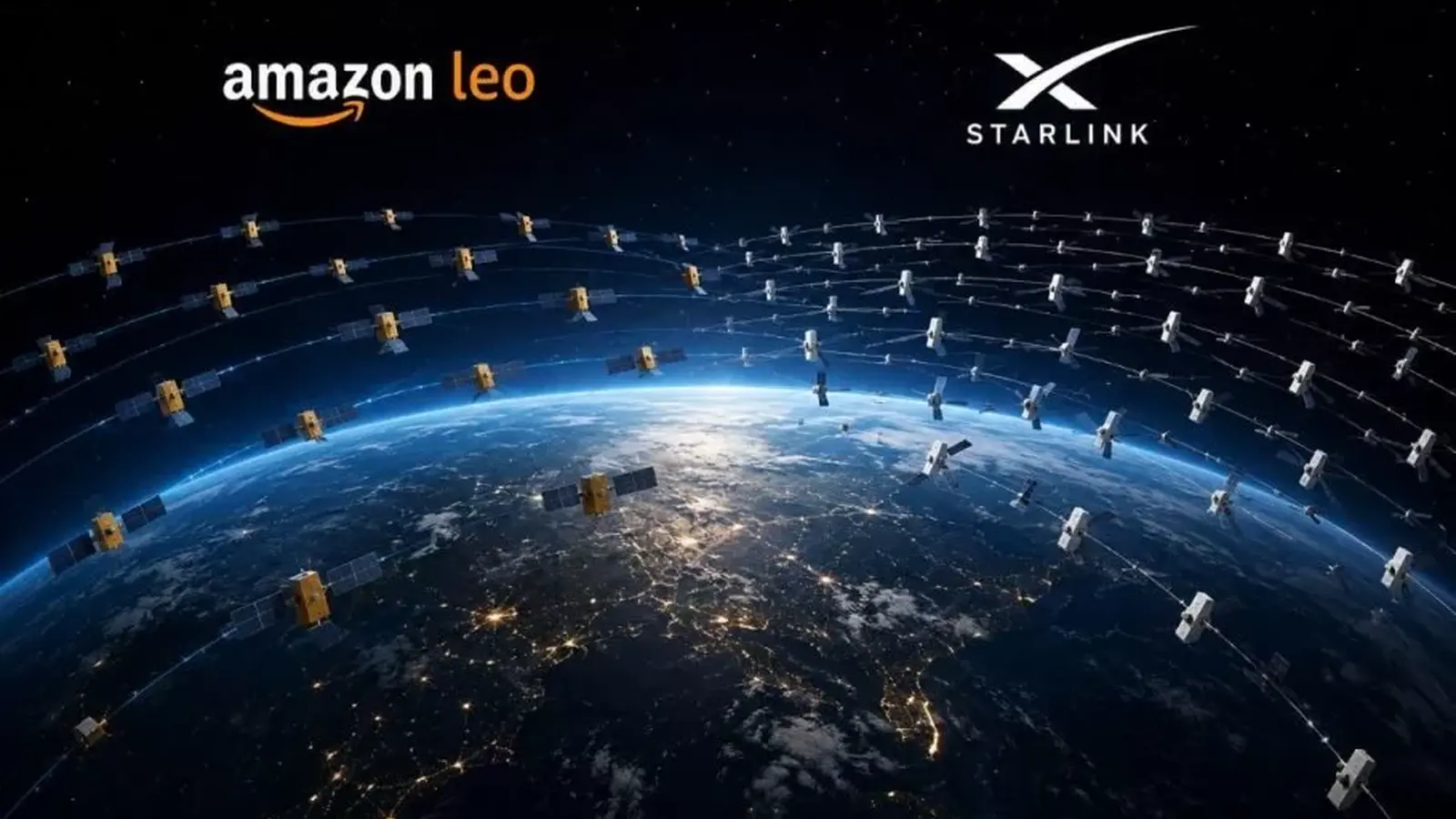
Amazon is quietly closing the gap on SpaceX. Small, bright dots are stacking up in low Earth orbit — 396 of them now, according to Chris Weber, Amazon's vice president for Project Leo business and product — and the company says that's enough to begin offering continuous service across its initial coverage bands.
The update came after a recent launch that lofted another batch of Leo satellites aboard ULA's Atlas V rocket; Weber even shared a photo of the booster on social media. Amazon aims to begin commercial operations by mid-2026, though executives caution that the network won't look perfect on day one. Expect growing pains. Expect improvements as more hardware reaches orbit.
It helps to remember how Starlink started. In 2020, SpaceX opened a limited 'Better Than Nothing Beta' with roughly 900 satellites aloft. Early customers reported frequent dropouts, sensitivity to line-of-sight issues, and speeds that typically ranged from about 50 to 150 Mbps with latencies in the 20–40 ms window. Within a couple of years, coverage and quality took a big step forward as SpaceX kept launching.

Amazon's early users will likely see a similar trajectory: usable service that steadily improves. The company's long game calls for a constellation of 3,232 Leo satellites. Getting there won't be instant. Amazon is running behind its initial schedule, and some of those delays trace back to challenges with Blue Origin's New Glenn rocket — notably, difficulty achieving reliable reusability.
Meanwhile, Starlink has a huge head start. SpaceX operates more than 10,000 satellites and offers service in over 160 countries, with average downloads around 200 Mbps, uploads between 10 and 40 Mbps, and latency settling near 25 ms for many users. Matching those figures will take Amazon years of launches, firmware tweaks, and ground infrastructure scale-up.
Throwing hardware into orbit is only step one; shaping a dependable global service takes time, testing, and patience.
So what should consumers expect? A new option in satellite internet competition, incremental gains as the Leo fleet grows, and a longer-term rivalry that will push performance and pricing. Keep your eyes on the sky — the race for orbital broadband is just getting interesting.

Leave a Comment
Comments
No comments yet. Be the first.