
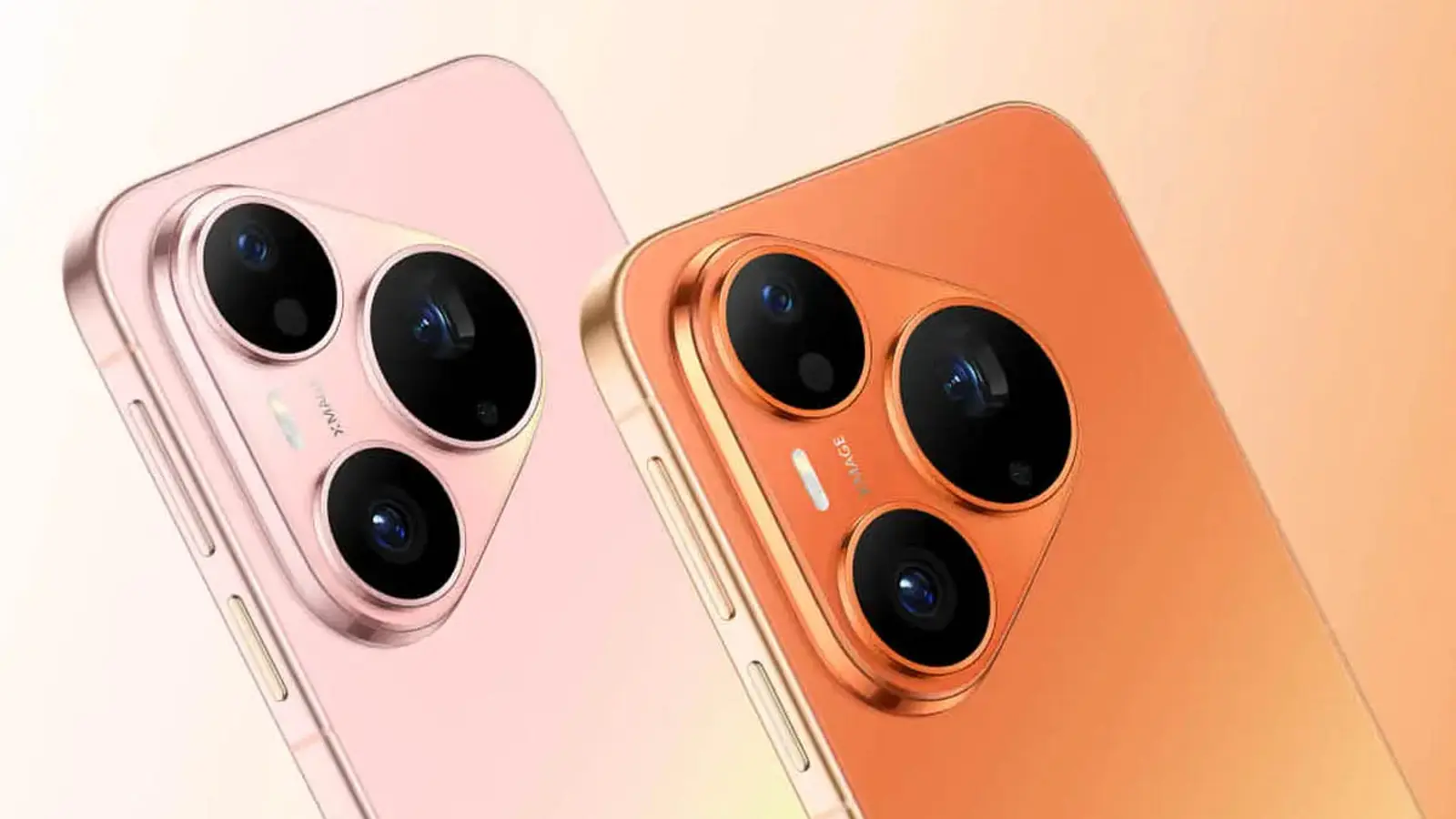
Huawei has quietly pushed the camera bar again. The Pura 90s Pro Max now packs a 200MP RYYB telephoto sensor — the first of its kind — and it isn’t a novelty: it’s a statement about how far mobile optics can stretch without relying on gimmicks.
Two new global models join Huawei’s lineup: the Pura 90s Pro and the larger Pura 90s Pro Max. They share much of the same engineering DNA, but differences in screen size, charging speeds and telephoto hardware split their identities. One is built for pocketable balance; the other is built for long-reach photography and battery envy.
The Pro Max’s headline act is that 200MP RYYB tele camera. It sits behind an f/2.6 lens and a large 1/1.28" sensor, offering fixed 4x optical zoom and a surprisingly capable 20x telephoto video mode enabled by real-time RAW processing. That’s not just about pixels. Stabilization is rated at an impressive CIPA 7.0 stops, and Huawei even claims macro capabilities from the same module. Short version: you can finally expect clean long-range shots without the wobble and blur that used to ruin them.
Primary imaging duties fall to a 50MP 1/1.28" RYYB sensor on both phones. On the Pro Max this sensor is a LOFIC-type device designed for broader dynamic range; on the Pro it’s the same size but without the LOFIC tuning. The main lens gains an adjustable aperture that sweeps from f/1.4 to f/4.0 in ten steps, giving the phones a real photographer’s tool for depth-of-field control. Ultra-wide duties are handled differently across the pair: the Pro Max carries a 40MP RYYB ultra-wide, while the Pro steps down to a 12.5MP unit—both optimized for color and low-light performance thanks to the RYYB layout.

Telephoto on the regular Pura 90s Pro isn’t shabby either. It uses a 50MP sensor behind an OIS-enabled f/2.1 lens and supports macro shooting from as close as 5cm. Huawei clearly split the variants to give buyers choices: slightly smaller, slightly lighter, and marginally less extreme imaging performance on the Pro versus flagship-level zoom chops on the Max.
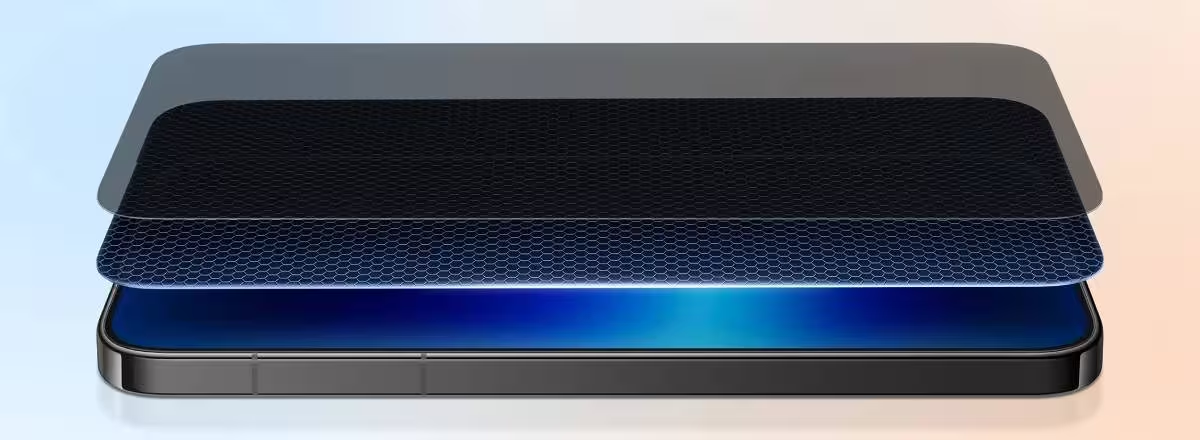
Displays follow the same design language: flat LTPO panels with 1–120Hz variable refresh and custom optical stacks that reduce reflections up to 70 percent. The Pro uses a 6.6" panel at 1,256 x 2,760px; the Pro Max stretches to 6.9" at 1,308 x 2,880px. Both are protected by Huawei’s Kunlun glass and treated with diamond-like carbon and silicon nitride ceramic layers that promise significantly better scratch and drop resistance than typical glass surfaces.
Under the hood sits HiSilicon’s new Kirin 9030S, a chip that replaces last year’s Kirin 9020. Specs are clean but spare on paper; real-world benchmarks will decide whether it’s a generational leap or an incremental update. What matters immediately is connectivity: both phones support 5G (a welcome return for Huawei’s global devices), eSIM, dual-band Wi‑Fi 7, Bluetooth 6.0 with LDAC and L2HC codecs, and Huawei’s NearLink E2.0 for low-latency local links.
Memory and storage are straightforward: 12GB of RAM with either 256GB or 512GB of internal storage. Software-wise, Huawei ships EMUI 16 based on AOSP 16 rather than standard Google-branded Android, continuing the company’s path of tight integration between hardware and its own OS ecosystem.

Battery capacities are generous but regulated: in most markets both models carry a 6,000mAh cell, while units sold in the EU drop to 5,500mAh to comply with local rules. Charging differs by model — the Pro Max supports 100W wired and 80W wireless charging, while the Pro tops out at 66W wired and 50W wireless.
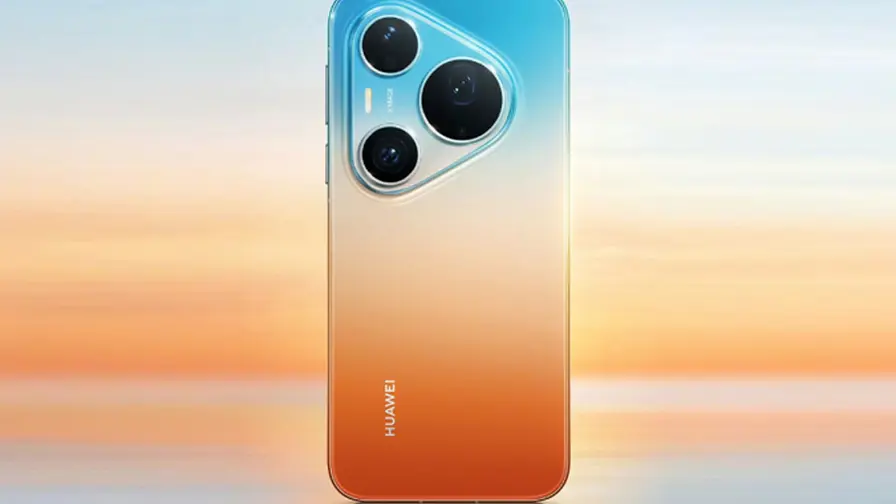
Design touches are less subtle. Huawei now colors the metal frames to match the rear gradients, making finishes like Orange Ocean and Blush Gold pop in ways that flat metal never did. Both phones meet IP68 for immersion and IP69 for resistance to high‑pressure water jets. The Pro Max weighs 230g and measures 8.1mm thick; the Pro is a touch lighter at 213g and 8.2mm.
Availability is rolling. The phones have appeared in Malaysia and should land in Singapore soon, with a dedicated Middle East launch scheduled for July 16. European availability hasn’t been posted widely on Huawei’s EU pages yet, but official Euro pricing has surfaced: the Pura 90s Pro starts around EUR 900 for 12/256GB and EUR 1,050 for 12/512GB, while the Pura 90s Pro Max is listed at approximately EUR 1,150 and EUR 1,300 for the two trims respectively.
- Displays: 6.6" (Pro) / 6.9" (Pro Max), LTPO 1–120Hz
- Main sensor: 50MP 1/1.28" RYYB (LOFIC on Pro Max)
- Telephoto: 200MP 1/1.28" RYYB (Pro Max, 4x optical)
- Connectivity: 5G, eSIM, Wi‑Fi 7, Bluetooth 6.0, NearLink E2.0
- Battery/charging: 6,000mAh (5,500mAh EU); 100W/80W Pro Max, 66W/50W Pro
It’s tempting to reduce the Pura 90s generation to a single headline — 200MP tele, RYYB sensors, big batteries — but the real story is where Huawei placed its bets: optical quality and tangible durability rather than a parade of spec sheet one-ups. For photographers, that adjustable aperture and the LOFIC-tuned sensor are as interesting as raw megapixels. For everyone else, the combination of long battery life, fast charging and modern connectivity could make these a serious option if and when Huawei finishes its global rollout. Which markets will embrace them the most? That’s the next plot twist to watch.


Leave a Comment
Comments (2)
Is EMUI16 gonna feel like Android or some stripped thing? No Google apps makes me wary, even with cool optics. Also why drop to 5.5k in EU, feels like a castrated model. Pics look promising though, i'll wait for hands on
Wow Huawei went full pro, 200MP tele? OK that sounds insane. If the 7 stop stab is real long range shots without wobble could be a game changer. but can we trust real pics yet, and EU battery nerf sucks a bit