
5 Minutes
Delay in CLARITY Act raises stakes for US crypto leadership
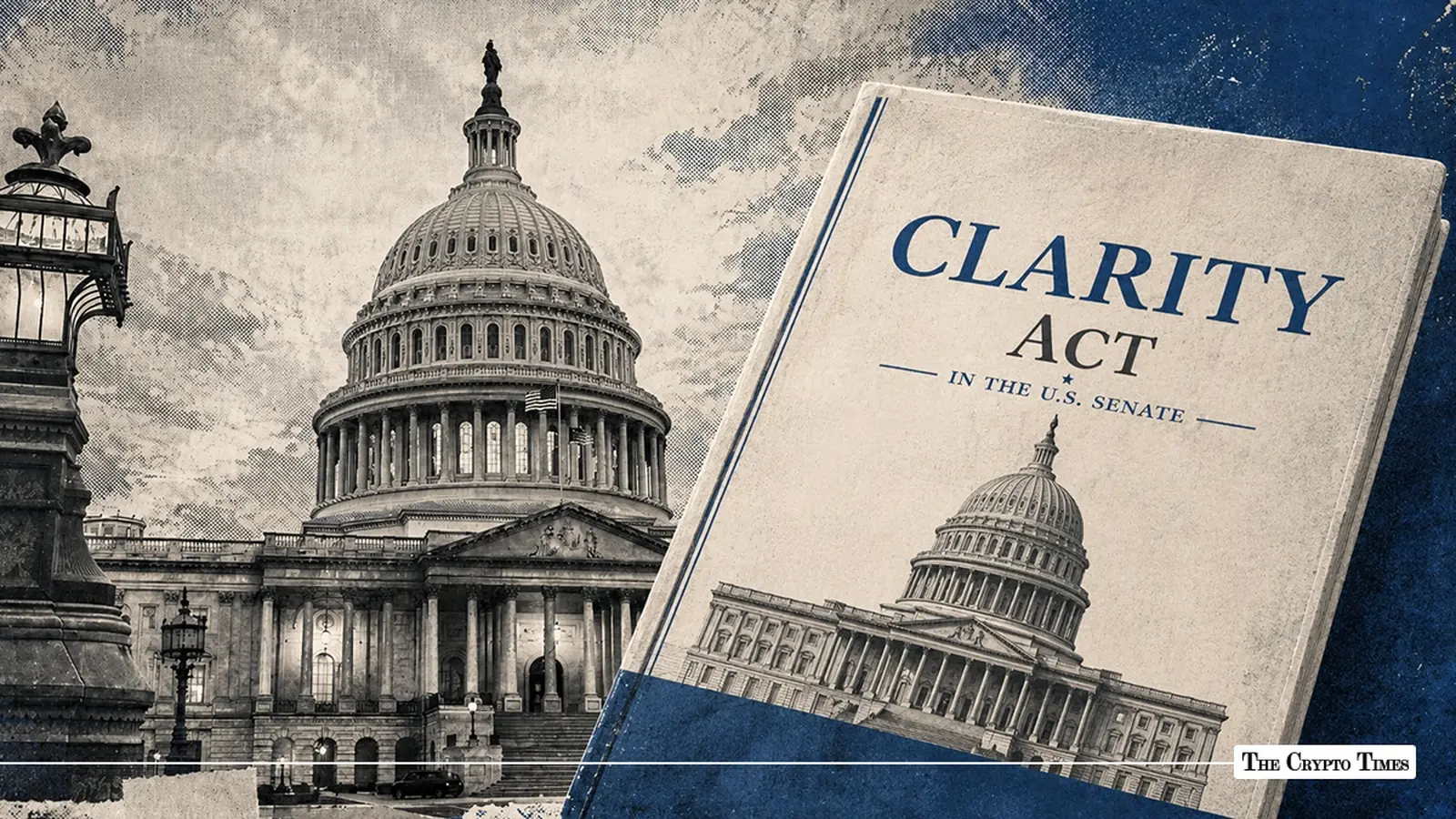
Florida Representative Mike Haridopolos has renewed his call for quick action on the CLARITY Act after Senate scheduling choices narrowed the bill's path before the August recess. Haridopolos, a member of the House Financial Services Committee, told Fox Business that the legislation is essential to keep digital asset activity and crypto businesses anchored in the United States. He warned that extended delays risk sending investment, exchanges, token issuance and blockchain development overseas, eroding American competitive advantage in digital assets and financial markets.
What the CLARITY Act would do
The CLARITY Act is designed to draw clearer lines between the Securities and Exchange Commission and the Commodity Futures Trading Commission when it comes to cryptocurrency regulation. Backers say the bill will provide exchanges, token issuers, blockchain developers and institutional market participants with a more predictable regulatory framework for spot trading, token listings, fundraising and custody.
In the House, the bill passed by a bipartisan 294 to 134 vote in July 2025, with significant support from both parties. The legislation aims to reduce ambiguity about whether specific tokens are securities or commodities, which has been a persistent source of legal and operational risk for crypto firms and spot ETF issuers.
Senate scheduling and the vote math
Senate Majority Leader John Thune shifted floor time to consider 74 federal nominees and the Lindsey O. Graham Sanctioning Russia and Iran Act of 2026, pushing CLARITY further down the calendar. With the Senate scheduled to begin a summer work period after August 7, the opportunity to secure a floor vote before recess is narrowing.

Under the current Senate balance, the bill needs support from at least eight Democrats to overcome procedural hurdles and advance to a final vote. The Senate Banking Committee did advance a draft in May by a 15 to 9 vote, but only two Democrats supported it at that stage and neither committed to a definitive floor vote without further amendments.
Thune has suggested preliminary action could still occur before the break, but leadership first needs assurance that the required votes exist. If those votes cannot be mustered, the measure risks being delayed until the post-recess calendar or into the next congressional session.

Ethics provisions and state enforcement disputes
A central point of contention in negotiations is how to handle ethics rules and state enforcement authority. The Senate draft includes a temporary restriction that would bar certain elected officials, including the president and vice president, from issuing or sponsoring crypto assets until January 2029. Enforcement of key provisions would be placed with the Justice Department.
Democrats and several state attorneys general have pushed back against language that would limit state-level enforcement. Critics argue the draft could prevent state attorneys general from pursuing crypto-related fraud or consumer protection cases if federal prosecutors decline to act. New York Attorney General Letitia James has also warned that the bill could preempt state rules and hamper aggressive local enforcement against scams, calling for stronger anti-money laundering, customer identification and cybersecurity standards.
Market implications and industry response
While the delay does not alter the immediate legal status of digital assets, exchanges or existing spot crypto ETFs, it prolongs regulatory uncertainty over which federal agency will have primary oversight of token trading, fundraising and digital commodity markets. That uncertainty can deter investment, complicate compliance for crypto companies and slow product innovation in markets such as spot ETFs, custody services and decentralized finance.
Major industry participants and parts of Wall Street continue to support the effort to codify regulatory clarity. Leading exchanges, blockchain firms and trade groups, including Coinbase, Ripple and the Digital Chamber, backed the House version. Corporate leaders such as Goldman Sachs CEO David Solomon have signaled support for advancing the Senate version despite calling for improvements.
Supporters argue that a clearer framework will encourage responsible innovation, attract institutional capital and strengthen consumer protections, while critics caution against preemption of state-level consumer safeguards and call for tighter anti-money laundering controls.
Next steps and timeline risk
If lawmakers cannot secure votes before the August recess, September may offer the next chance for action. Even then, the Senate would need to pass its version, reconcile differences with the House-passed bill and return the final text to both chambers for approval. Failure to complete that process before the end of the current Congress could push the debate about market structure, regulator roles and oversight into 2027.
For market participants, the immediate takeaway is continued uncertainty. Crypto businesses, exchanges and institutional investors will be watching Senate maneuvering closely, balancing expansion plans against the risk that a favorable US regulatory framework could still be delayed or materially altered. For policymakers, the stakes are geopolitical and economic: establishing US leadership in digital asset regulation will affect where talent, capital and innovation gravitate in the coming years.
As the CLARITY Act moves through negotiations, key issues to monitor include the final allocation of SEC and CFTC responsibilities, protections for state-level enforcement, enhanced anti-money laundering and cybersecurity requirements, and any transition rules affecting existing crypto product offerings. These elements will ultimately determine whether the United States can preserve and strengthen its role as a global hub for cryptocurrency markets and blockchain innovation.

Leave a Comment
Comments (2)
This delay sux. We need rules now, not months of back and forth. If they don't act, talent and money leave.
So they might push crypto regs overseas? sounds like panic or just politics... is this even true, anyone got receipts?