

NVIDIA showed up in Geekbench and people noticed. Two entries for its long-rumored laptop chip, the RTX Spark (codename N1X), revealed more than just a line on a spec sheet — they sketched a possible new rival for laptop CPUs.
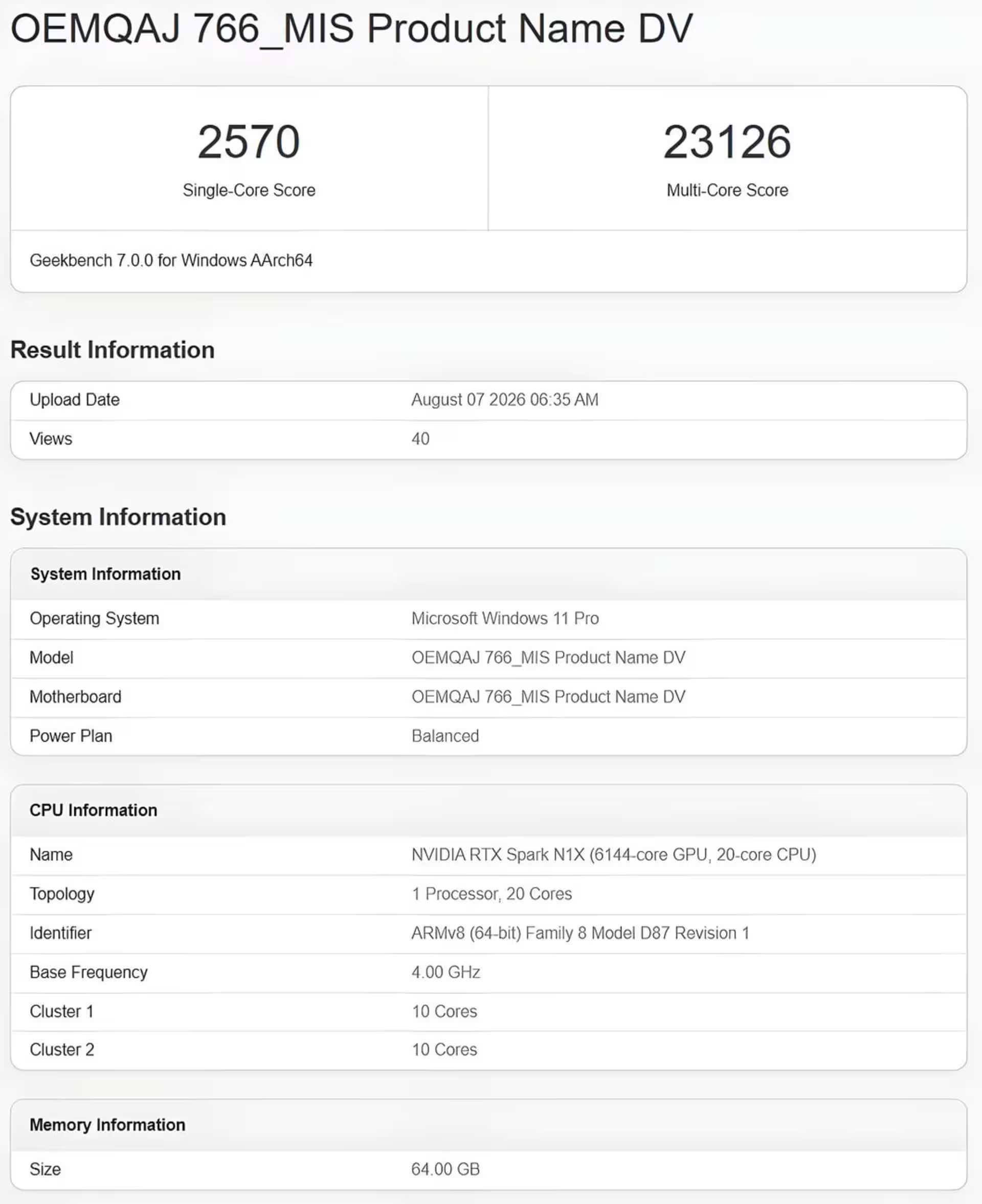
One N1X sample clocks at 4.0 GHz with 20 cores and posted a single-core score of 2,570 and a multi-core tally of 23,126. A sibling chip, an 18-core part at 3.9 GHz, scored 2,541 single-core and 21,776 multi-core. The gap between them is slim in heavy workloads, a hint that NVIDIA is tuning core counts and clocks to balance throughput and efficiency rather than chasing headline core numbers alone.
How does that stack up? In multi-threaded workloads the 20-core N1X ran roughly 12% faster than AMD’s Ryzen AI Max+ 395 in the same benchmark snapshot. It also edged past Apple’s 14-core M3 Max by about 3.3% in multi-core tests — not a seismic upset, but meaningful given how recent those Apple chips are. On single-core grunt, the new NVIDIA part beats some high-end x86 silicon such as the Ryzen AI 9 HX 370 and Intel’s Core Ultra 9 275HX. Then again, Apple’s base M5 still holds a sizable single-thread lead, appearing roughly 41% quicker in this dataset.
Raw numbers tell one story; software and platform maturity tell another. Drivers, power profiles, and thermal design will determine whether these benchmark figures turn into real-world advantages in creative apps, AI inference, or gaming laptops. Early scores suggest NVIDIA has the architectural chops to threaten established CPU vendors, but optimization will make the difference between promising demos and market disruption.
This is the clearest signal yet that NVIDIA intends to challenge x86 incumbents in laptops — and the industry should be paying attention.
Expect a slow boil rather than an instant upheaval. NVIDIA moving into laptop CPUs raises fresh questions about motherboard ecosystems, OS support, and how manufacturers will package chips into thin-and-light versus high-performance designs. Will OEMs embrace an NVIDIA-centered platform? Can software vendors optimize for a GPU-first company expanding into CPU silicon? Those are the real battlegrounds, not just Geekbench rows.
Either way, these Geekbench sightings turned speculation into data. If driver tuning and platform partners follow, the N1X could become a serious choice for certain laptop classes — especially where mixed CPU–GPU workloads and on-device AI matter as much as raw single-thread speed.

Leave a Comment
Comments
No comments yet. Be the first.