
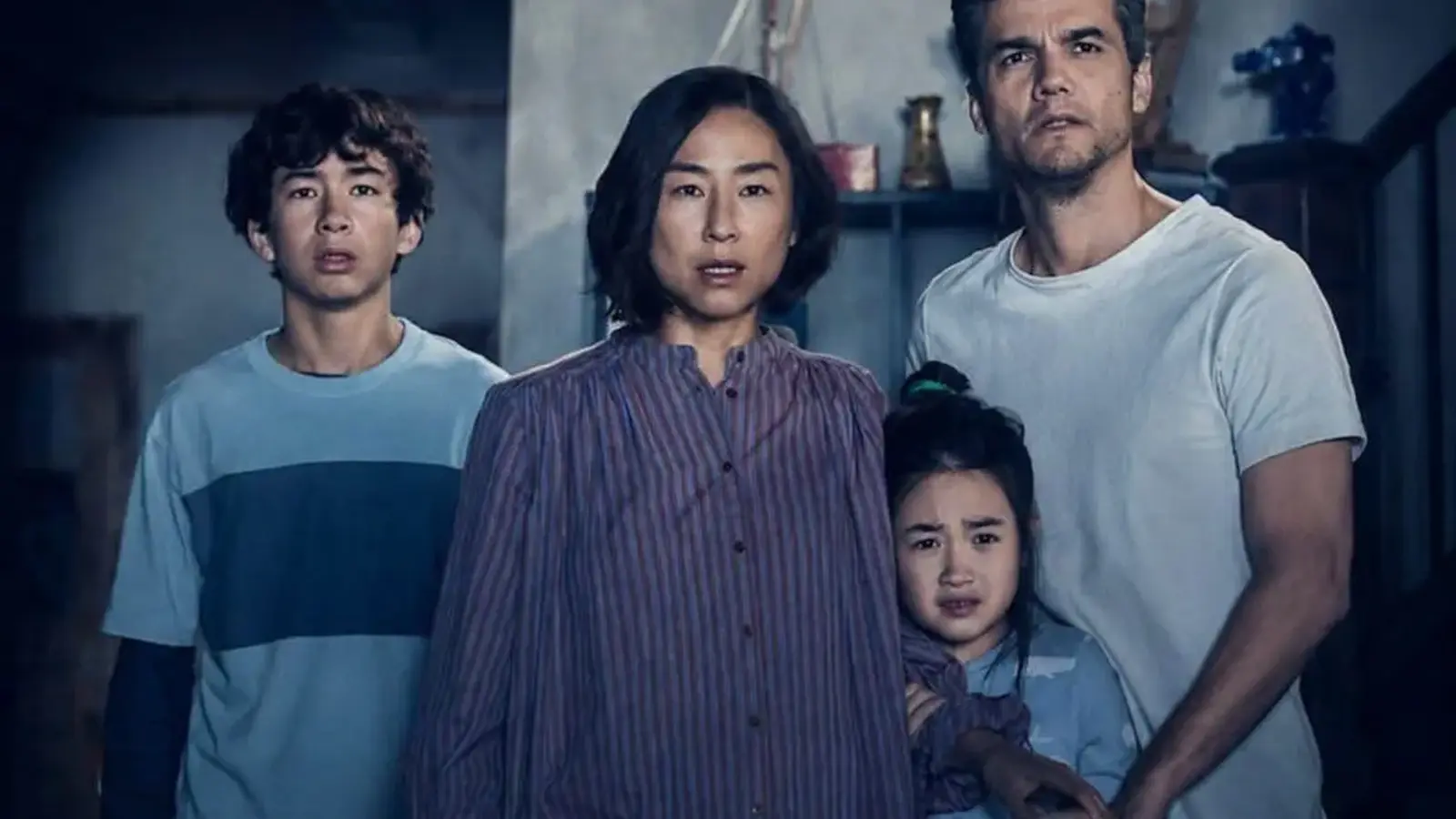
Imagine waking up and your house refuses to let you leave. Doors stick. Windows blur. The world outside becomes an unreadable page. That unsettling premise is the engine behind The Last House, Netflix's 2026 sci-fi thriller directed by Louis Leterrier and penned by Matthew Robbins, starring Greta Lee and Wagner Moura.
It is a simple setup with complicated reverberations: a family trapped inside their own home as an unexplained catastrophe rewrites the rules of reality. The stakes are intimate, even domestic. And yet critics are split over whether intimacy is enough to carry the film's lofty ambitions.
On aggregate, the reaction has leaned chilly. Rotten Tomatoes tallies 57 reviews and places The Last House at 26 percent. Metacritic, with 21 reviews counted, lands the title at a middling 42 out of 100. Numbers, of course, tell only part of the story. The nuance lives inside the outliers.
At one extreme sits Polygon, which rewarded the movie with a glowing 90. The critic praised Leterrier's direction and the film's Spielbergian sensibility — the way it makes emotional shifts feel both grand and intimately observed. At the center of that praise: performances that turn a contained scenario into vivid theatre.
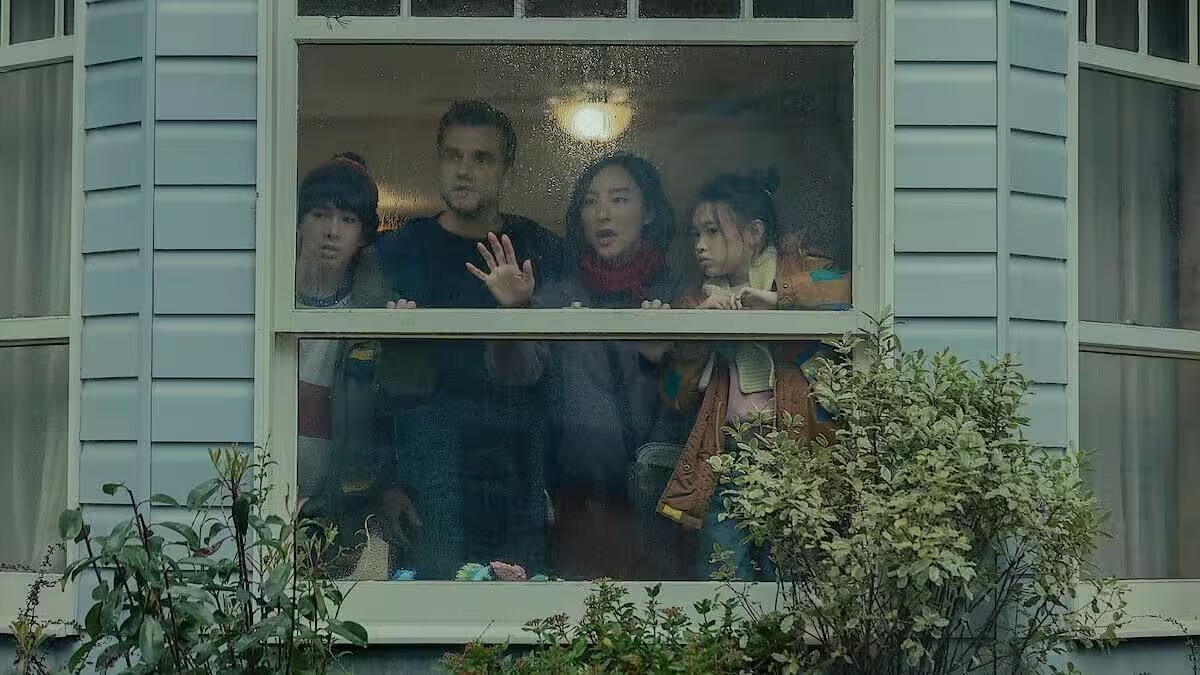
Other voices are less forgiving but still acknowledge strengths. TheWrap (66) and The Hollywood Reporter (60) highlight how the cast — especially Lee and Moura — anchors the film. Reviewers note scenes where the actors' diminishing hope becomes painfully beautiful, giving the film a pulse even when storytelling choices wobble.
Then come the qualms. Several critics point to a contrived late-act pivot and wavering narrative logic. Screen Rant's harshest take (20) wonders how so much potential resolved into something disappointingly smaller than its pieces suggested. IndieWire argues the movie flirts with pandemic-era trauma and collective solidarity but never mines those currents deeply enough, leaving ideas undercooked.
Tone and tempo also divide opinion. IGN observed an odd simultaneity — the film can feel too rushed and too slow in the same breath. RogerEbert.com cited thin character development and a lack of clear, resonant commentary as reasons the premise fizzles rather than lands.
Still, plenty of critics find pleasure in the ride. Variety and Empire, both at 60, describe moments of genuine curiosity and an oddly satisfying meditation on how life persists after rupture — mundane, stubborn, and sometimes ridiculous. For many, the movie's value lies less in mystery solved and more in watching a family navigate fracture.
So where does that leave viewers? If you come for suspense and big-picture explanation, you might be frustrated. If you come for performances, mood, and a thriller that privileges human texture over neat answers, you'll find enjoyable moments. Either way, The Last House proves that a simple lock on a door can open up a lot of questions about who we become when the world changes.
Will you step inside to see for yourself?

Leave a Comment
Comments
No comments yet. Be the first.