
Imagine going live and, without much fanfare, your voice and image becoming part of a training set for Amazon's next wave of AI. That is exactly the shift Twitch announced — stream content will now be eligible to train Amazon's models unless creators opt out.
Privacy fights over raw training data are no longer theoretical. Developers and legal teams have tangled for years over the sources large models learn from. Some companies sidestep the controversy by using only their own platforms' material. Meta, for instance, can draw on Facebook and Instagram pages that are public. Private profiles, however, remain off-limits — at least in principle.
What makes Twitch different is scale and intimacy. Streams are long, multimodal, and messy: hours of voice, face-cam, live chat, gameplay, and spontaneous moments that you won’t find in curated archives. For AI researchers, that mess is a goldmine for teaching models to speak, react, and behave more like real people. For creators, it feels like someone rifling through a digital attic.
Your past broadcasts could be teaching the next generation of AI how to talk, look, and react.
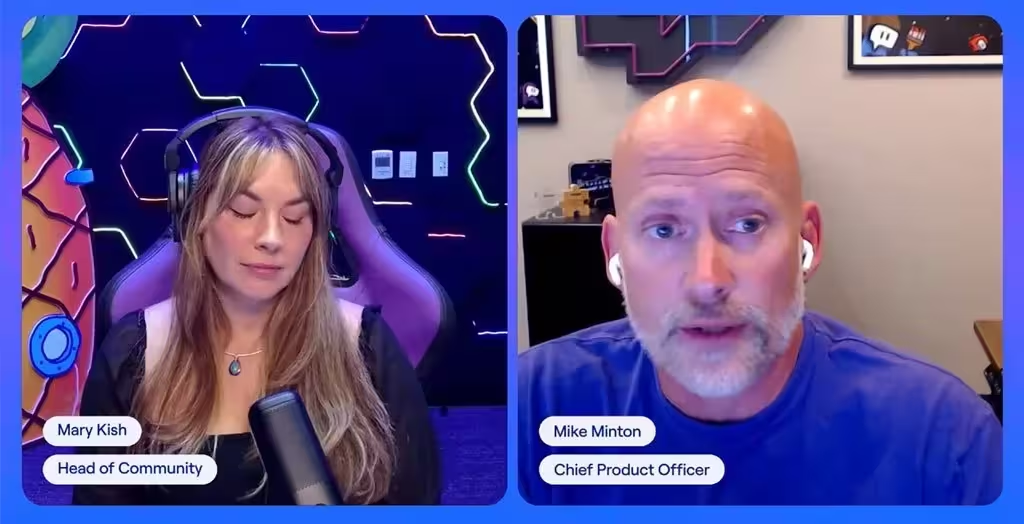
Amazon says creators can opt out. But the choice is a default opt-in. Many streamers only discover the change after a policy update scrolls by or a heated chat explodes during a company stream. That explosion already happened: a recent Twitch broadcast with platform managers drew thousands of angry responses in chat, a raw signal of how volatile this feels to the community.
There’s a broader worry that this isn’t a one-off. Streamers ask whether their old archives were swept up long before any announcement. Tech giants tend to deny indiscriminate scraping, yet language and multimodal models have clearly trained on vast swaths of the web — images, books, videos — and now, apparently, live streams are in scope.
So what should creators do? Check your settings. Read the fine print. Decide whether you want your content to be fodder for generative systems. And ask platforms for clearer, proactive consent flows instead of buried toggles. The debate over who owns online attention is far from over — but for anyone who goes live, the question is suddenly very personal.


Leave a Comment
Comments
No comments yet. Be the first.