
4 Minutes
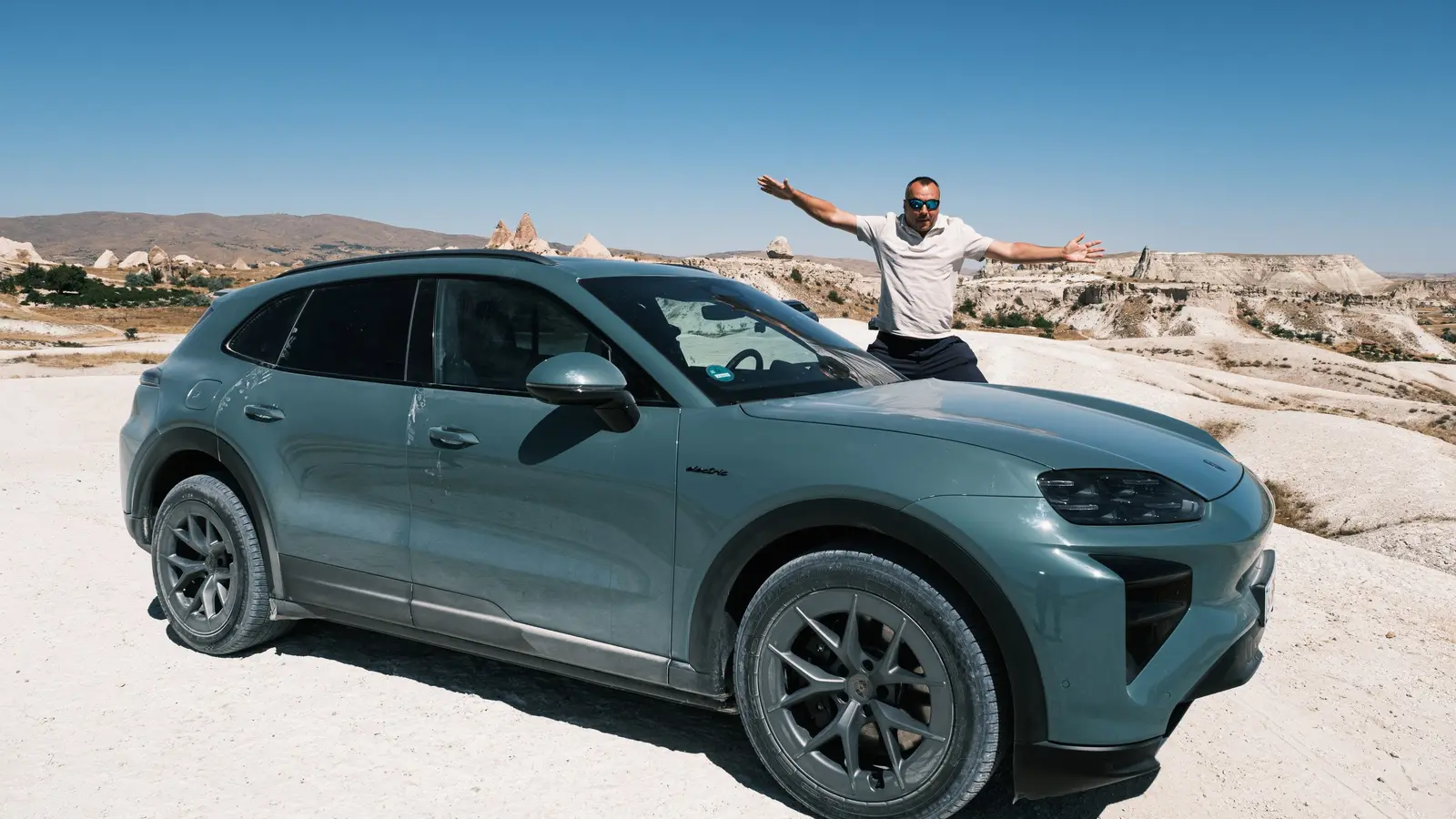
During a media drive in Cappadocia, Turkey, Dragos Chitulescu sampled Porsche's new Cayenne Turbo Electric, reporting the model can access up to 1,139 hp through Launch Control and accelerate from 0 to 62 mph (100 kph) in 2.5 seconds. Those figures were the central takeaway from the trip and framed the Cayenne Electric as a breakthrough in Porsche's electrified lineup.
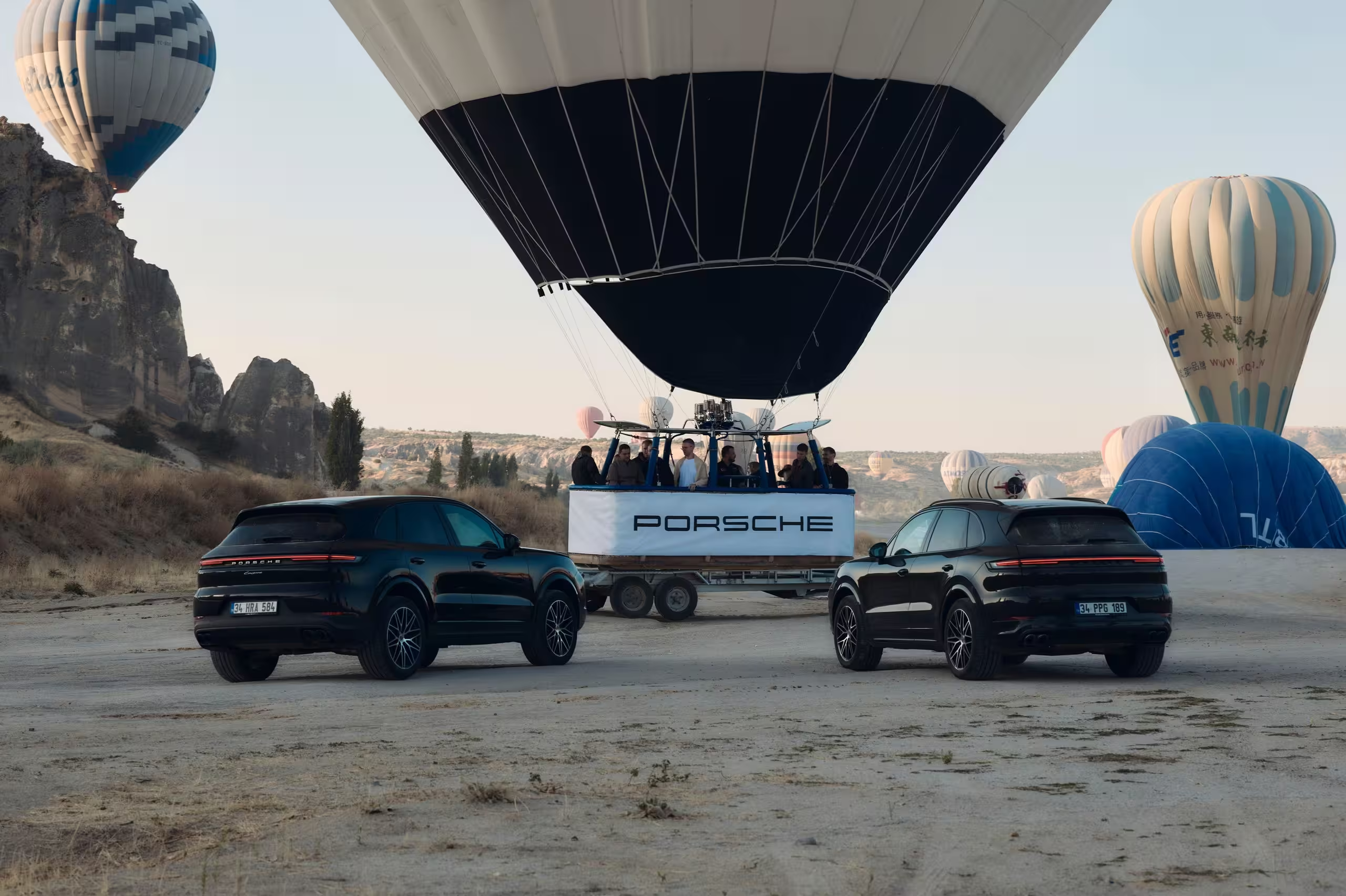
The test programme followed previews of the 992.2 911 Turbo S and earlier Porsche electrification projects. Chitulescu describes arriving in Urgup, Nevsehir province, and taking a hot-air balloon flight over Cappadocia before driving. The region's landscape and the contrast between burner noise and balloon silence served as a recurring motif in his account of the transition from internal combustion to battery power.
Models, range and charging
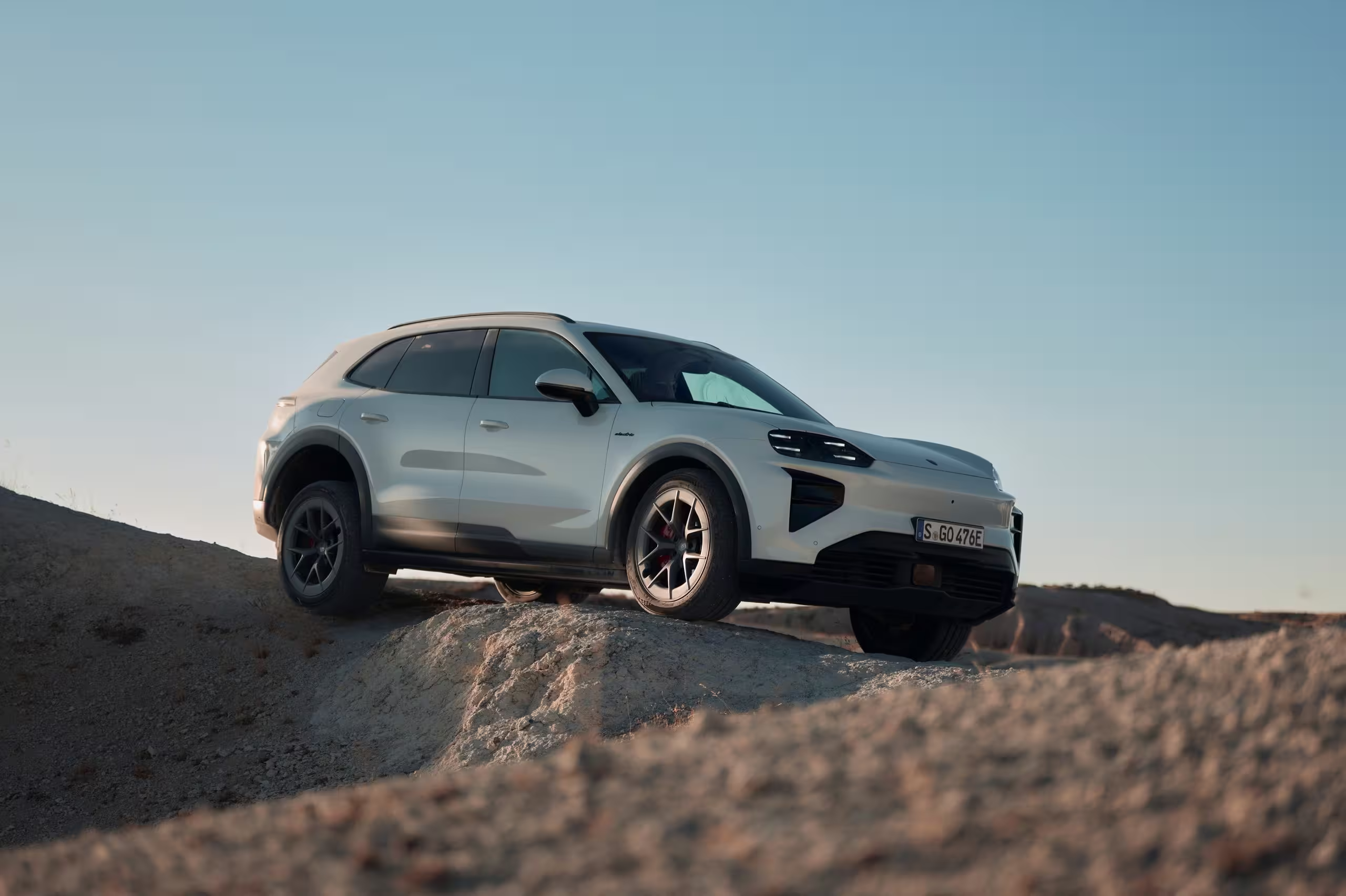
Porsche brought three Cayenne Electric variants to the event. The entry-level model produces up to 435 hp with launch control and is quoted at 0 to 62 mph in 4.8 seconds. Porsche cites combined ranges of up to 410 miles (661 km) for the base Cayenne, 415 miles (669 km) for the S, and about 395 miles (637 km) for the Turbo in the same combined scenario.
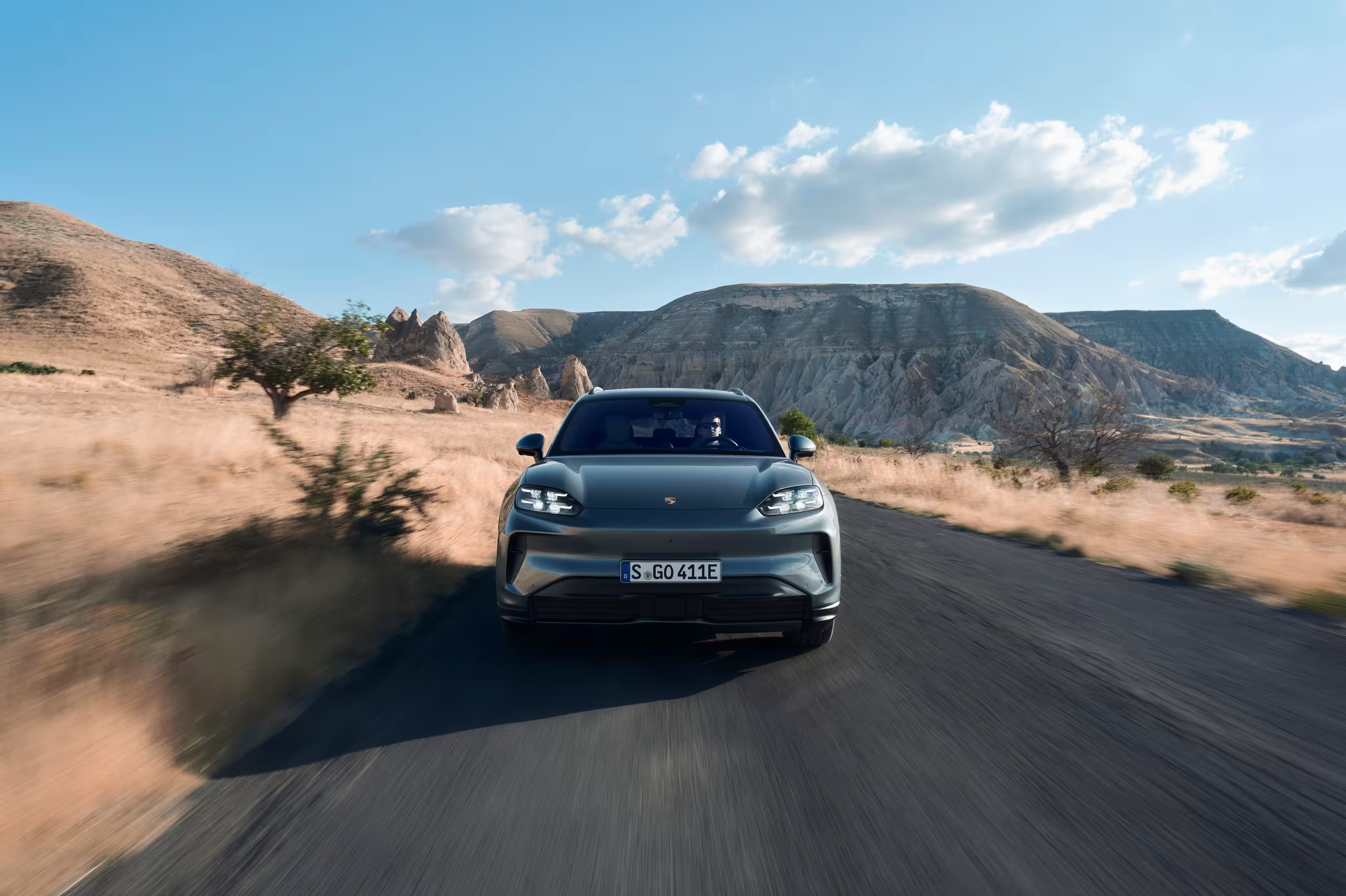
Charging capabilities are prominent in Porsche's specifications. The company says the Cayenne can accept DC charging at up to 400 kW, and that a 10-minute charge in the S can add as many as 210 miles (338 km). Porsche also states a 10% to 80% state of charge can be achieved in under 16 minutes. Energy recuperation is promoted at levels up to 600 kW, a system Porsche draws on experience from in motorsport programmes.
Performance, handling and safety hardware
The Turbo Electric variant combines two motors for a nominal output Porsche lists at 844 hp, with a push-to-pass function adding 173 hp and Launch Control unlocking 1,139 hp. Peak torque is quoted at 1,500 Nm (1,106 lb-ft). Chitulescu noted the Turbo Electric weighs nearly 6,000 lbs (2,720 kg) yet reaches 0 to 124 mph (200 kph) in 7.4 seconds.
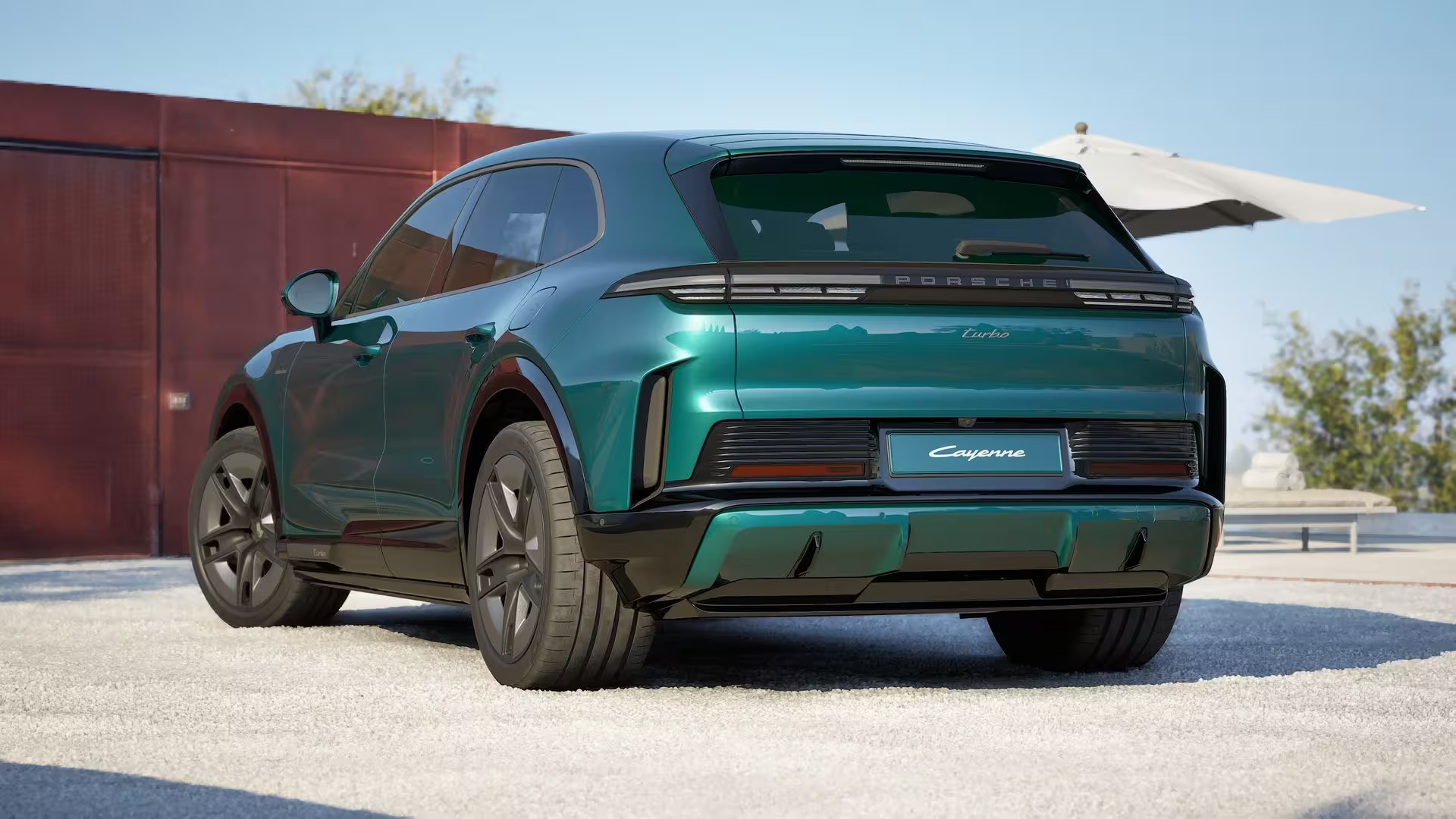

On-road acceleration during the drive produced the visceral impression of more than 1 g; Chitulescu refers to reports that the Cayenne Turbo Electric can pull as much as 1.3 g with Launch Control. He attributes the composed delivery of that power to chassis systems including Porsche Active Ride, introduced for the first time on the company's SUV, and Porsche Torque Vectoring Plus. Braking is handled by Ceramic Composite Brakes; independent tests cited by the author indicate stopping from 70 mph (112 kph) can be comparable to a new Corvette ZR1.
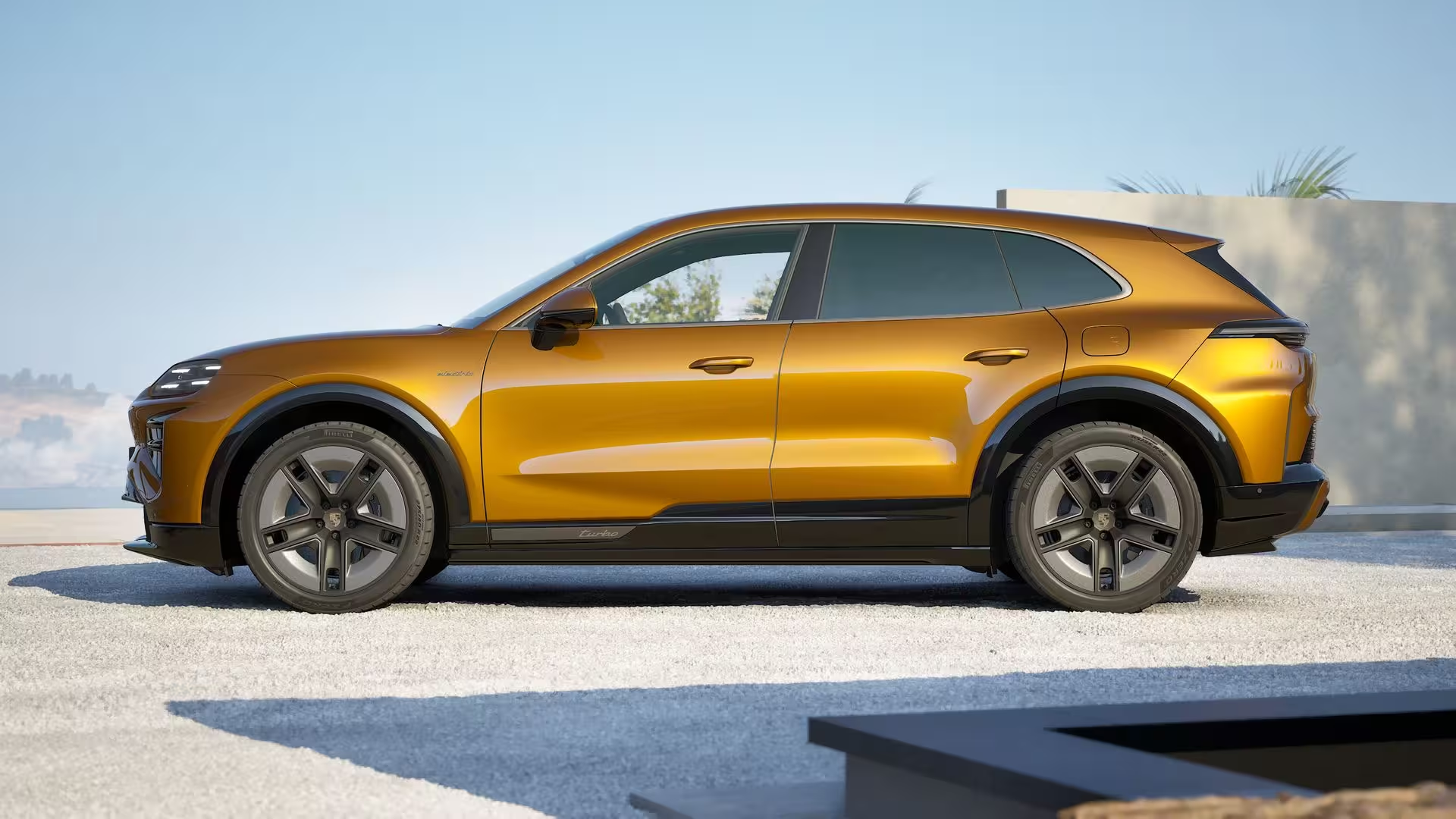
Chitulescu stresses that while the Cayenne Electric cannot match a 911 in agility, Porsche has engineered the SUV to deliver supercar-level straight-line performance without compromising everyday usability. He also mentions Nordschleife reference times from other Porsche models for context: a 2021 Cayenne Turbo Coupe lap of 7:38.925 by Lars Kern, a Taycan Turbo GT lap of 6:55.553, and a 992.2 Turbo S time of 7:03.000, noting no official Nordschleife time for the new Cayenne was available to him.
Off-road, the Cayenne Electric proved able on a demanding course. The author reports using an Off-Road mode that made obstacles manageable even when wheels lifted; his observation underlines Porsche's claim that the new Cayenne balances on-road performance and off-road capability.
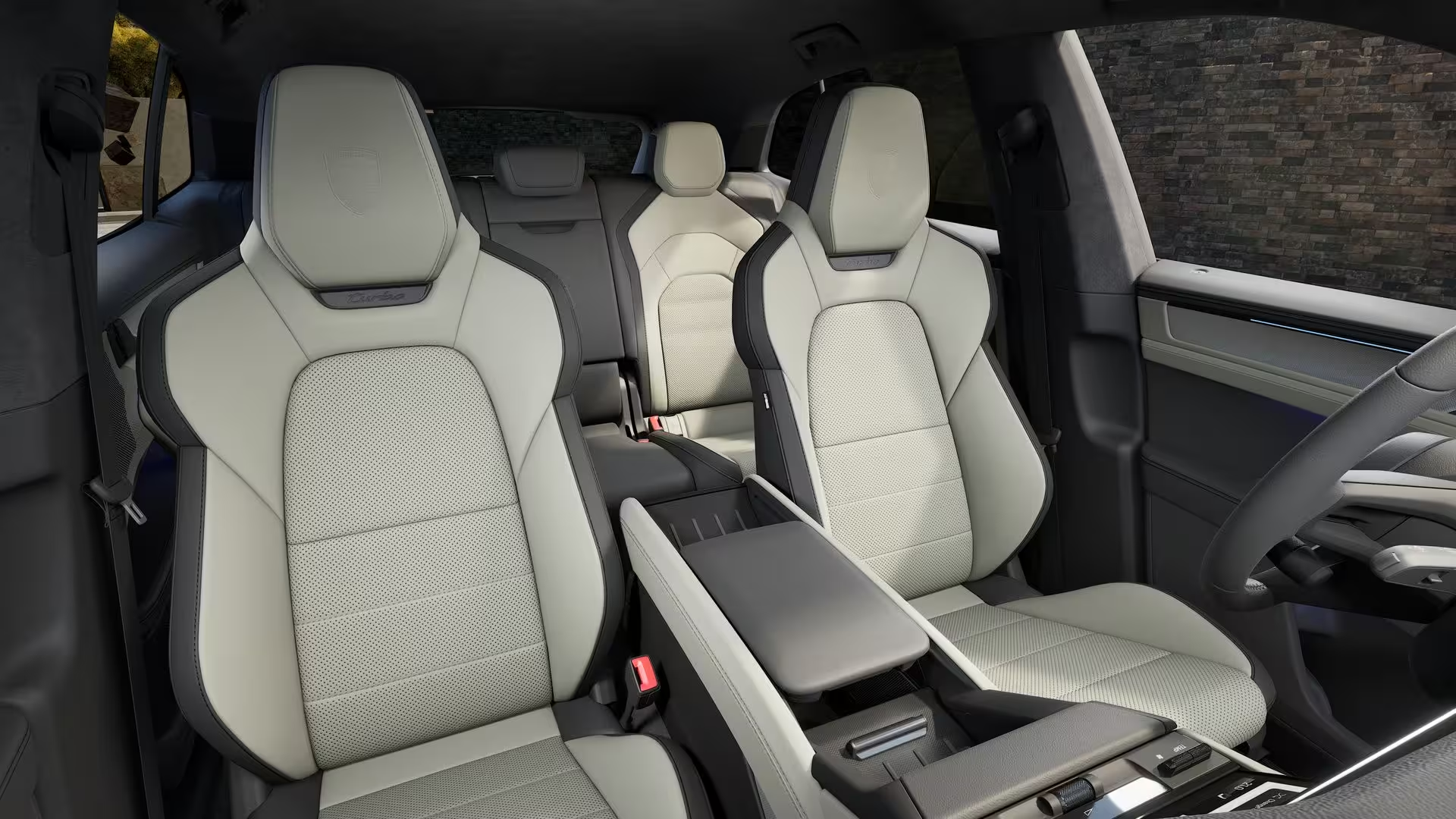
Practical details include a new 14.25-inch curved Flow Display using OLED technology, which Chitulescu found prominent in the cabin experience. He also noted interior choices and some option constraints: a leather interior in black and Delgada Green is striking but, in his configuration, precluded selecting Adaptive Sports Seats Plus.
Pricing and option items were listed for the US market. Porsche lists the Cayenne Turbo Electric starting MSRP at $163,000 before taxes, with the base Electric at $109,000 and the S at $126,300. Factory paint and option costs cited by the author include nine no-cost paint options; a Legends paint pack for $3,000; 92 Paint-to-Sample colours for $13,870; wheel choices in 21 and 22 inches; and a selection of interior and technology upgrades.
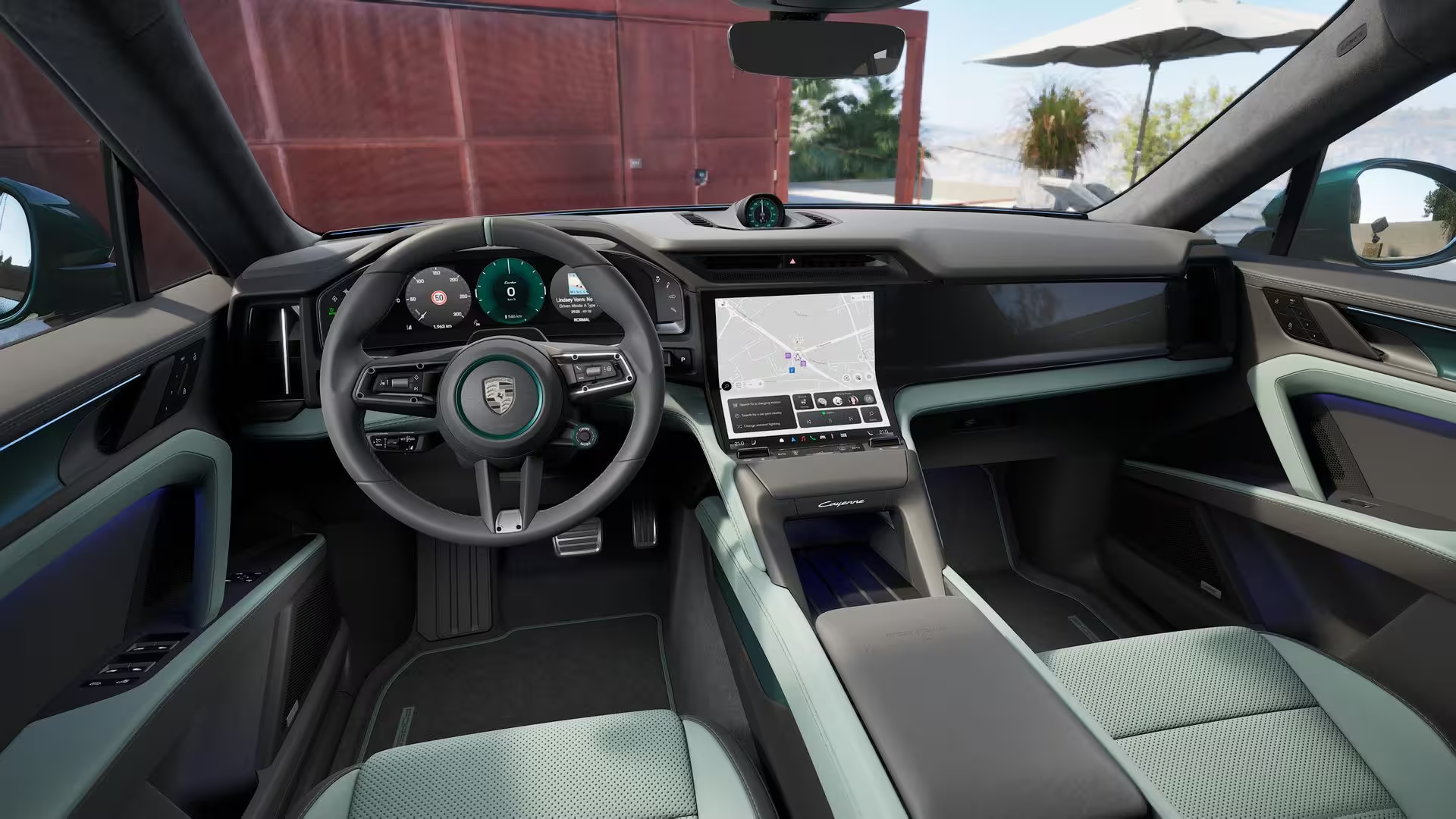
Specific option prices in Chitulescu's example build included rear axle steering for $1,350, Porsche Active Ride for $7,790, Porsche Ceramic Composite Brakes for $10,900, Mood Modes for $260, heated centre console and door panel armrests for $480, a sliding panoramic roof with variable light control for $4,930, and wireless charging preparation for $250 (the charging platform itself is more costly). The Cayenne can tow up to 7,716 lbs (3,500 kg) when equipped with the trailer hitch. After options in his specification, the author lists a total of $216,040 before taxes.

Chitulescu also emphasised Porsche's decision to retain an internal combustion engine option for the Cayenne, allowing buyers to choose an ICE model rather than an electric one. He reports that the base Electric model will suit most daily needs, while the Turbo Electric delivers markedly higher performance for buyers prepared to pay the premium.

Leave a Comment
Comments
No comments yet. Be the first.