

Xiaomi's switch to extended-range electric powertrains paid off in October when SkyNomad EREV deliveries jumped to 27,147 units, pushing hybrid models ahead of the companys pure battery electric range. According to data from the China Passenger Car Association, Xiaomi handed over 50,168 vehicles that month, a 25.37 percent rise from September and a 3.11 percent increase year on year, ending two months of decline.
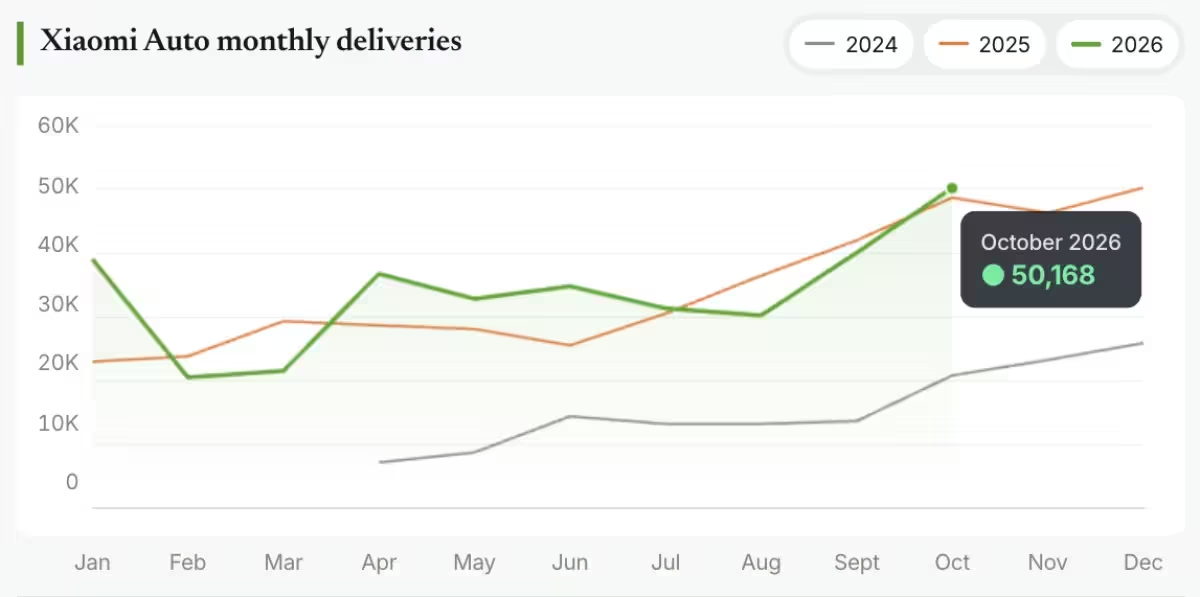
For the first time since it began building cars, Xiaomi saw its hybrids with onboard petrol generators outsell its pure battery models, driven almost entirely by the new SkyNomad family. The October total missed Xiaomis all time monthly record of 50,212 from December 2025 by just 44 cars, but the composition of sales is the notable shift.
SkyNomad: how the EREV works and what buyers are getting
The SkyNomad N70 and N90 sit on Xiaomi's Kunlun platform and treat a 1.5 liter turbocharged four cylinder engine built by Harbin Dongan as an onboard power station rather than a drive unit. The engine makes 150 hp (112 kW) and feeds electricity to the battery, rather than driving the wheels directly. Standard rear wheel drive N70 models use a 52 kWh LFP battery, while the AWD Max variants carry a larger 76 kWh NMC pack.
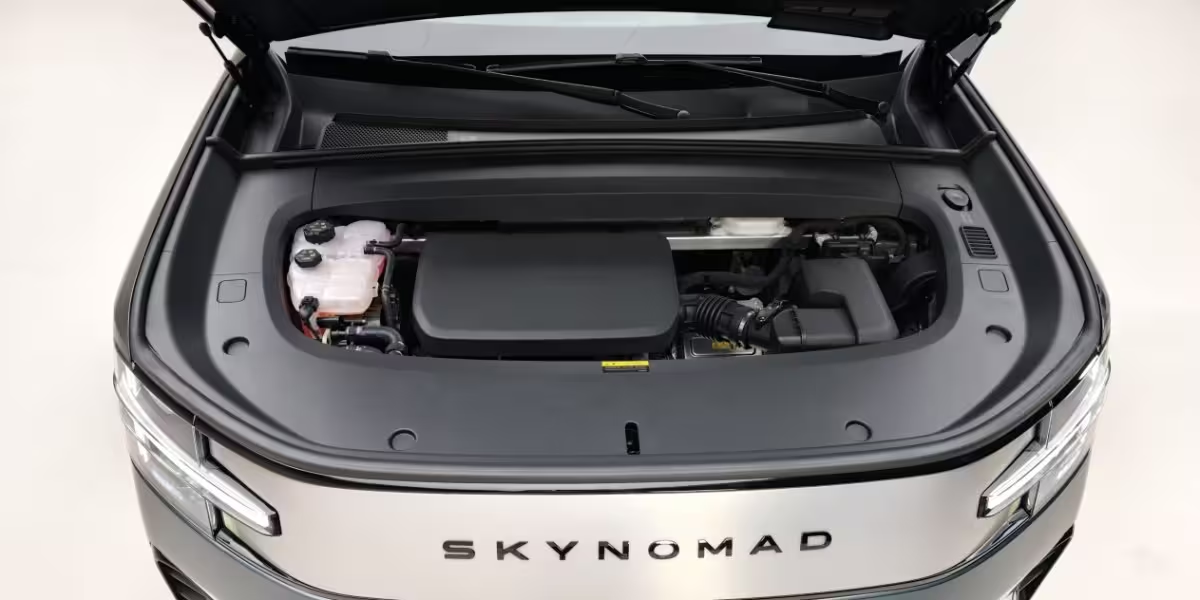
Xiaomi claims the N70 Max can deliver up to 380 km of pure electric range on the WLTP cycle before the petrol generator is required, and a combined CLTC range of 1,461 km. In dual motor N70 Max and N90 Max form, front and rear electric motors combine for 416 hp (310 kW) and 690 Nm of torque. The 2,561 kg N70 posts 0 to 100 km/h times between 4.3 and 5.5 seconds depending on trim. Suspension hardware is double wishbone up front and a five link setup at the rear with air springs, and Xiaomi highlights acoustic glass and Bridgestone quiet tuned tyres to keep generator noise subdued. The N90 also adds six exterior microphones and outside speakers for voice commands while loading gear.
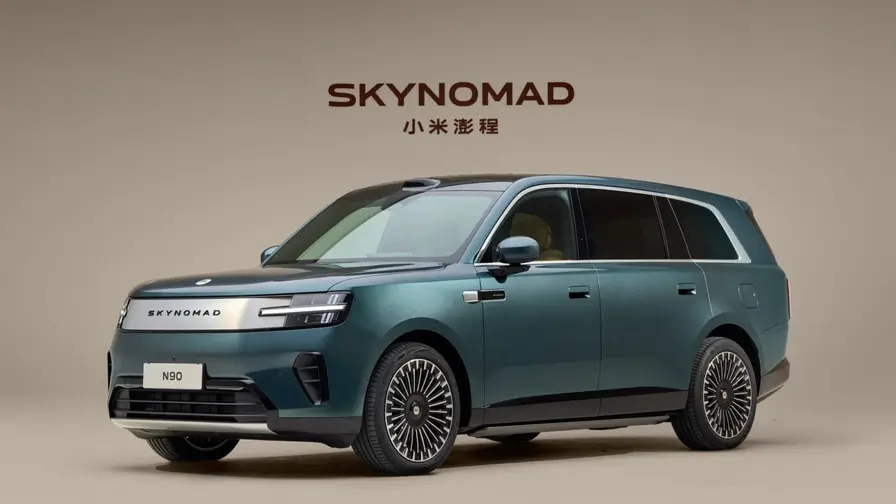
The arrival of SkyNomad has been rapid. The range launched on September 7, and SkyNomad deliveries climbed from 12,444 in its debut month to 27,147 in October, an increase of 118.15 percent. The SkyNomad line accounted for 54.11 percent of Xiaomi's October sales. Breakdowns show the five seat N70 reached 14,558 buyers, up 103.69 percent month on month, and the larger N90 found 12,589 homes, up 137.66 percent. Xiaomi reported more than 70,000 locked in orders within 30 days of launch, leaving a substantial queue of customers.
Pressure on Xiaomi's pure electric models and wider implications
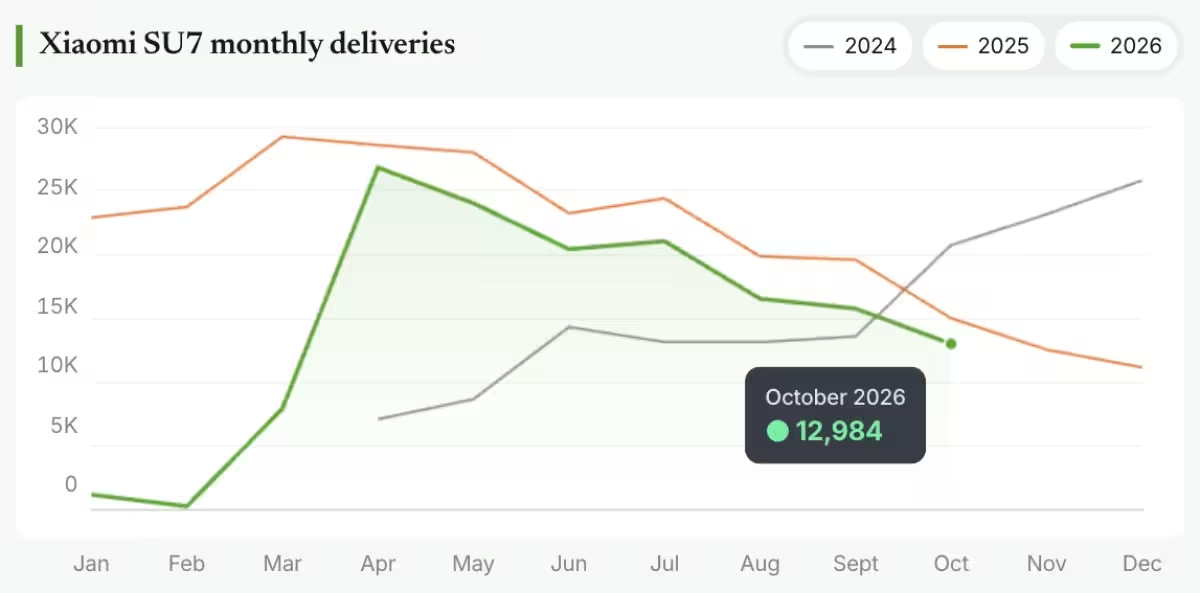
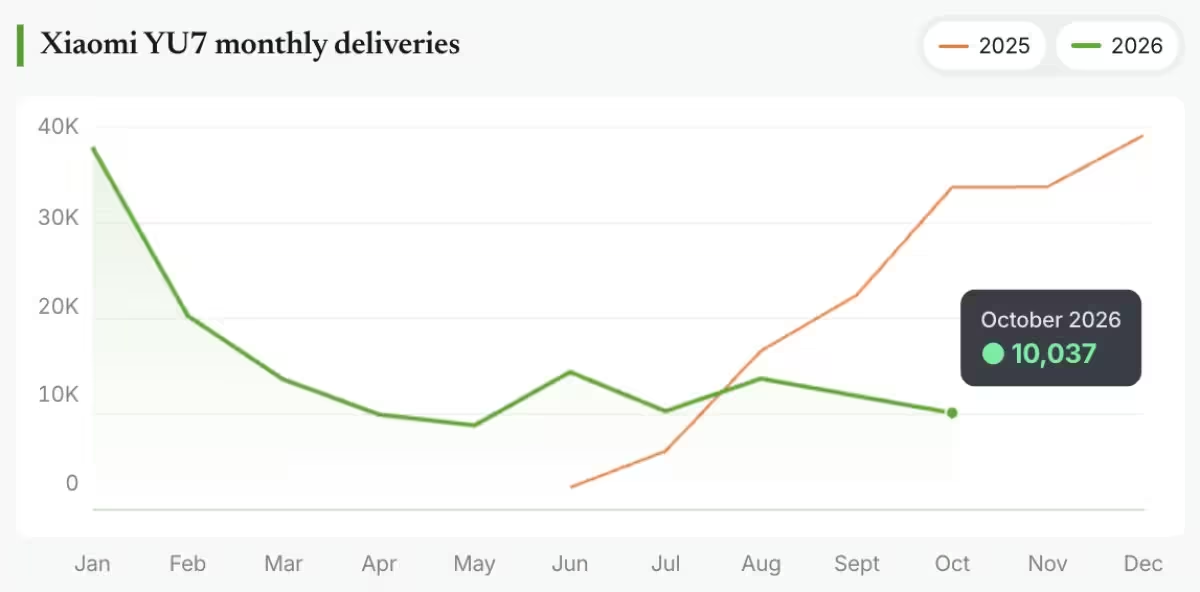
While SkyNomad surged, Xiaomi's battery electric SU7 sedan and YU7 SUV cooled. Combined BEV deliveries fell by 4,550 units to 23,021 in October. The SU7 recorded 12,984 deliveries, down 17.57 percent from September and down 13.39 percent year on year, marking its 13th consecutive month of year on year declines. The YU7 dropped to 10,037 units, down 15.08 percent month on month and down 70.18 percent year on year. Observers and dealers point to direct competition in showrooms: at roughly RMB 260,000, buyers choosing between two five seat SUVs often prefer the tall EREV for long range without hunting for chargers.
The internal shift complicates Xiaomi's official production target. Through the first 10 months of the year the company delivered 336,658 vehicles, a 6.75 percent increase year on year and bringing lifetime cumulative deliveries to 887,966. Xiaomi's annual goal is 550,000 vehicles; at 61.21 percent of that target with November and December remaining, the company would need to deliver 213,342 cars in two months, an average of 106,671 deliveries every four weeks.
One small but telling line in the CPCA data suggests Xiaomi is already moving beyond China. Wholesale deliveries in October were 50,168 units while domestic retail sales were 50,123, a gap of 45 cars. Those first factory export batches are headed abroad for testing, homologation, or dealer trials. Xiaomi announced memoranda of understanding with major German dealer groups in September as it prepares a European sales and service network ahead of an official launch in 2027.

Leave a Comment
Comments (1)
Whoa, Xiaomi actually bet on petrol generators and it paid off? SkyNomad numbers are wild. But 1.5L generator long term costs, noise, resale? kinda curious…