
7 Minutes
Binance takes an equity position and a long-term USDC deal
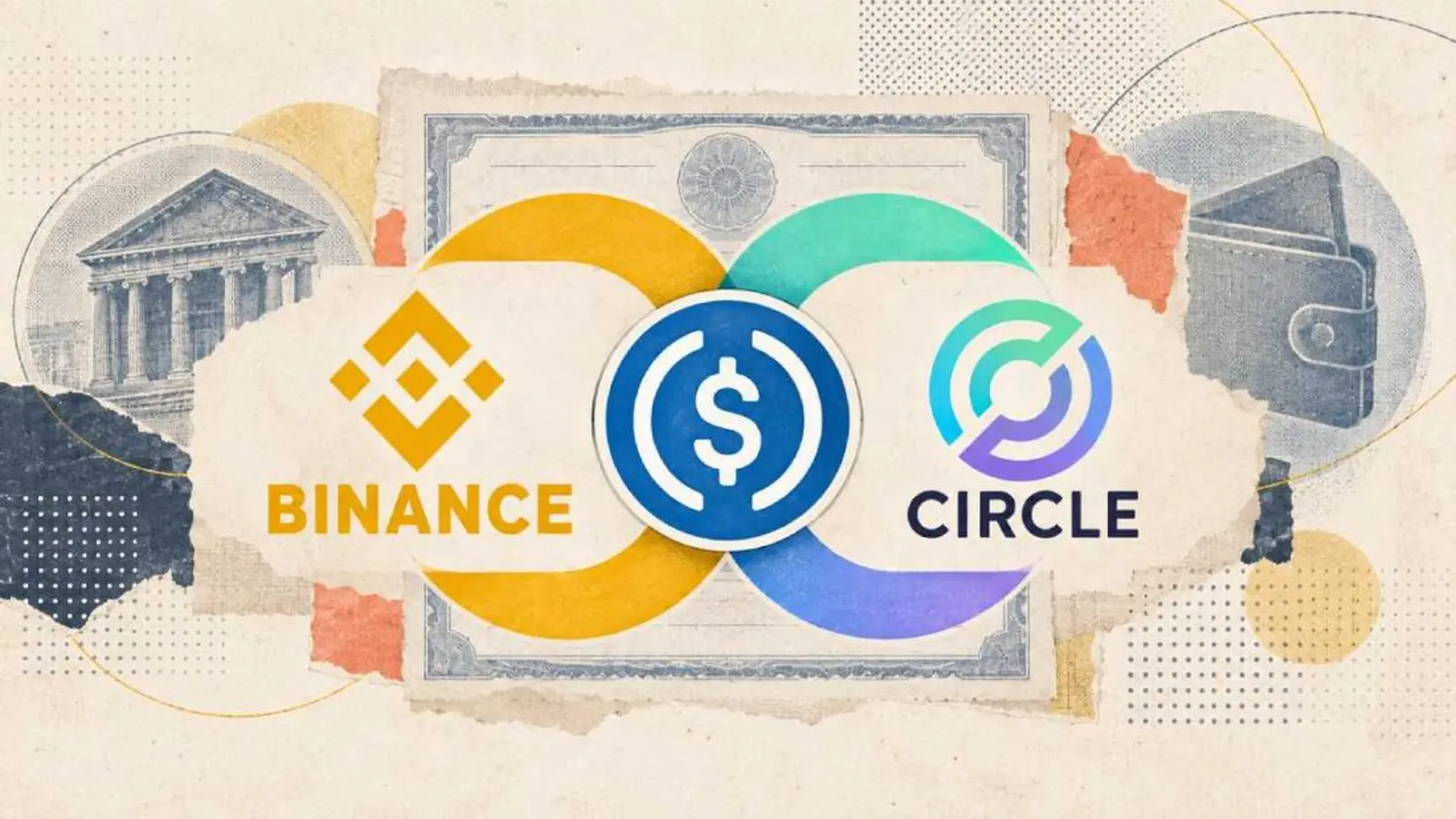
Binance has acquired a minority equity stake in Circle Internet Financial and agreed a fresh five-year commercial partnership to promote USDC across its exchange and product ecosystem. The strategic transaction — a private placement that closed on Sept. 17, 2026 — saw Binance purchase 1.24 million Class A shares in Circle at $80.84 per share, a deal valued at roughly $100 million. The arrangement pairs this equity commitment with a new commercial framework under which Circle will pay monthly incentives to Binance tied to qualifying USDC balances, while Binance will actively promote the dollar-pegged stablecoin across its platform.
Deal mechanics and share restrictions
Private placement details
The share purchase was executed through an unregistered private placement, meaning Binance cannot freely resell those securities unless they are later registered or an exemption applies. Circle priced the shares at $80.84 each, which the company described as a discount to its prior market valuation. Immediately after the equity issuance, Circle and Binance implemented the new five-year commercial terms governing USDC distribution and incentives.
Restrictions and governance
Under the terms of the equity agreement, Binance faces limits on disposing of the shares: sales, transfers or hedging are restricted for up to two years unless specific termination conditions of the commercial arrangements are triggered. Despite those restrictions, Binance retains full voting rights attached to the Class A shares during the lock-up period, preserving its ability to participate in governance matters affecting Circle.
Commercial terms: incentives, promotion and scope
Monthly incentive structure
The new five-year contract requires Circle to pay Binance monthly incentive fees calculated on qualifying USDC balances held through Circle’s Modular Smart Contract Wallet infrastructure and other specified channels. In return, Binance will promote USDC across spot and product listings, savings and other services, integrating the stablecoin more deeply into the exchange’s user flows and corporate treasury activities. The exact thresholds and termination triggers for the agreement have not been publicly disclosed.
How this replaces prior arrangements

This deal supersedes earlier commercial agreements between the two firms that dated to November 2024 and August 2025. Circle’s 2024 agreement included a one-time upfront payment of $60.3 million to Binance plus ongoing monthly incentive fees linked to USDC balances on the exchange and Circle’s treasury — with a two-year term for the treasury component. The expanded August 2025 arrangement extended incentives to USDC held via Circle’s Modular Smart Contract Wallet and ran for four years with defined early-termination provisions. The latest five-year pact consolidates those earlier arrangements and runs alongside Binance’s equity stake.
Deepening operational ties: product integrations and timelines
USDC across Binance products
The commercial partnership builds on a sequence of technical and product integrations. The two companies began formalizing a strategic USDC partnership in December 2024 aimed at expanding USDC availability for trading, savings, payments and treasury use within Binance. Since then, Circle and Binance have broadened their cooperation beyond simple exchange listings.
Key integrations and innovations
Notable milestones include Binance’s integration of USDC deposits on Circle’s Arc network, completed on Sept. 16, 2026, which facilitates on-chain deposits and withdrawals via Circle-native rails. In July 2025, Binance also began accepting Circle’s tokenized Treasury product, USYC, as off-exchange collateral for institutional derivatives trading — enabling institutional counterparties to post high-quality tokenized collateral while preserving yield characteristics. Circle signaled plans to natively issue USYC on BNB Chain as part of that integration, and USYC has been routed through Binance’s triparty banking partners and custody stack to enable operational conversion back into USDC when liquidity is needed.
Circle’s distribution strategy and broader partnerships
USDC circulation and platform distribution
Circle continues to expand USDC distribution through major exchanges and strategic partners. At the end of Q2 2026 Circle reported $73.3 billion of USDC in circulation, up roughly 19% year-over-year. Coinbase remains a major distribution partner, holding approximately 30% of circulating USDC on its platform. In August, Circle renewed a multiyear distribution agreement with Coinbase through 2029 on existing commercial terms.
Partnerships outside exchanges
Beyond crypto exchanges, Circle has deepened payment and brand partnerships to extend USDC into mainstream channels. The firm signed a principal partnership with Chelsea Football Club in August 2026, bringing USDC branding to club shirts for men’s, women’s and academy teams for the 2026/27 season. On the payments side, Circle’s network added Nium as a global payout partner earlier in 2026, enabling USDC-based settlement to convert into local currency payouts across more than 190 countries and over 100 currencies through bank rails, wallets and cards.
.webp "Apple Issues Emergency iOS Patch After Zero-Click Exploit Threatens Crypto Wallets")
How Binance’s stance on USDC evolved
From pair removals to renewed emphasis
Binance’s approach to USDC has shifted significantly over the past several years. In 2022 the exchange removed multiple USDC trading pairs as part of a broader liquidity consolidation effort for stablecoins. It began restoring select USDC pairs in December 2023 and progressively expanded USDC availability across spot markets thereafter. Binance also converted portions of its Secure Asset Fund for Users (SAFU) into USDC and has increased the stablecoin’s role in product incentives and rewards.
Regulatory impact and product expansion
Regulatory changes in Europe further shaped Binance’s stablecoin strategy: in March 2025 the exchange removed non-MiCA-compliant stablecoin pairs for European Economic Area users while continuing support for compliant stablecoins including USDC and EURI. Binance offered zero-fee trading on selected compliant pairs and rewards denominated in USDC or EURI to help users migrate liquidity away from affected tokens. More recently, Binance has broadened USDC use into tokenized traditional assets — launching tokenized U.S. equities (bStocks) in June 2026 with initial listings that included Circle shares as well as companies like Nvidia, Tesla, Micron and Sandisk. Those tokenized stocks are backed 1:1 by underlying securities and can be moved into self-custody or used in supported DeFi applications under the product terms.
Market and strategic implications
The $100 million equity commitment signals a closer strategic alignment between one of the world’s largest crypto exchanges and a leading stablecoin issuer. For Circle, the capital and distribution reach that Binance provides could accelerate USDC adoption across spot, derivatives, custody and payments rails. For Binance, the agreement locks in promotional reach for USDC across a broad user base and product set while deepening its exposure to a regulated, dollar-pegged stablecoin that has become a cornerstone of crypto liquidity.
At the same time, the transaction’s lock-up provisions and private placement status mean Binance’s stake is not immediately liquid, and the exact incentive thresholds that govern monthly payments remain undisclosed. Investors and market participants will be watching how these commercial incentives influence on-exchange USDC balances, token liquidity across spot and derivatives markets, and any competitive responses from other exchanges and stablecoin issuers.
Risks, compliance and governance considerations
Strategic partnerships between major exchanges and stablecoin issuers are subject to regulatory scrutiny, especially as jurisdictions tighten oversight of payments, custody and tokenized financial instruments. Retaining voting rights while agreeing to transfer restrictions may raise governance questions among Circle shareholders, and the private nature of the placement limits public transparency until relevant filings or disclosures are made. Both parties will need to manage compliance requirements across multiple jurisdictions as the integration of USDC expands into on-chain rails, institutional collateral uses and tokenized securities.

Conclusion: A closer Binance-Circle alignment
Binance’s roughly $100 million investment in Circle and the accompanying five-year USDC promotion agreement mark a new chapter in the firms’ partnership. The deal consolidates prior arrangements, reinforces USDC’s role across Binance’s services, and links an exchange with massive distribution reach to Circle’s stablecoin infrastructure and product roadmap. As the market digests the deal, attention will focus on how incentive flows and product integrations shift stablecoin liquidity, institutional collateral practices, and the broader tokenization trends reshaping crypto and traditional finance.

Leave a Comment
Comments (1)
is this even real? $100M stake but locked up, incentives hidden. seems like Binance wants control not liquidity. who benefits here, users or both firms?