

Jensen Huang, Nvidia’s chief executive, told The Ezra Klein Show that artificial intelligence may do harm before it helps, and argued that the industry will need fossil fuels to power the massive data centers AI demands. Huang said he shares the view of some politicians, including Donald Trump, that the benefits of AI outweigh its drawbacks and that using fossil fuel energy to run AI infrastructure is worth the trade-off for now.
Huang framed the trade-off with a blunt medical analogy. "It is sort of like surgery: to save you, they first have to hurt you. To save you they have to open up your body. They have to inflict a great deal of pain and suffering in order to be able to save you. And I think AI is kind of the same," he said.
He warned that over the next few years the industry will still rely on fossil fuels because new and renewable sources currently lack the capacity to supply the enormous power requirements of large AI data centers. Huang said the plan should be to build enough data-center capacity now, then migrate gradually to cleaner energy sources so the system can reach balance.
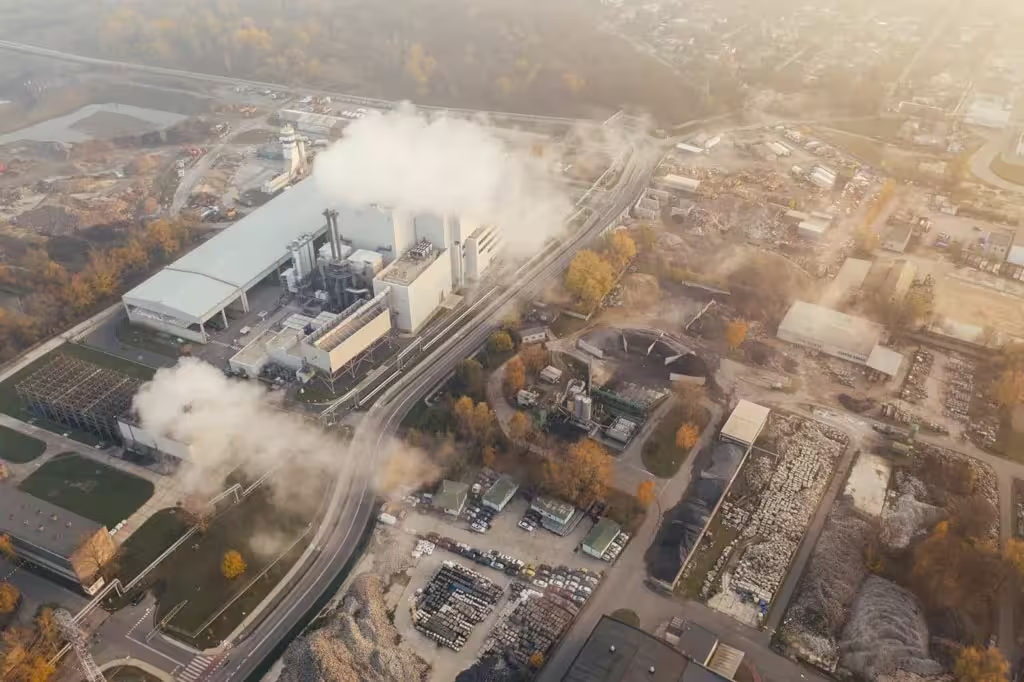
Huang also criticized companies that plan and build data centers without providing sufficient information to local communities about energy use and efficiency. He said that if a firm wants to site a new facility in a city or region, it should share clear data on energy efficiency and equipment performance. He added that an excessive focus on renewables has, in his view, left insufficient energy available to support additional data-center deployments.
Climate context and international commitments
The interview comes against the backdrop of the 2015 Paris Agreement, under which countries pledged to reduce greenhouse gas emissions and aim for net-zero emissions by 2050. Meeting those goals requires a shift to low-carbon energy sources, such as nuclear and renewables. Failure to do so carries severe projected impacts: models indicate up to 99 percent loss of coral reefs and sea-level rise that could put about 770 million people, roughly 10 percent of the global population, at risk. Increased wildfires, floods and storms are among other likely consequences of unchecked warming.
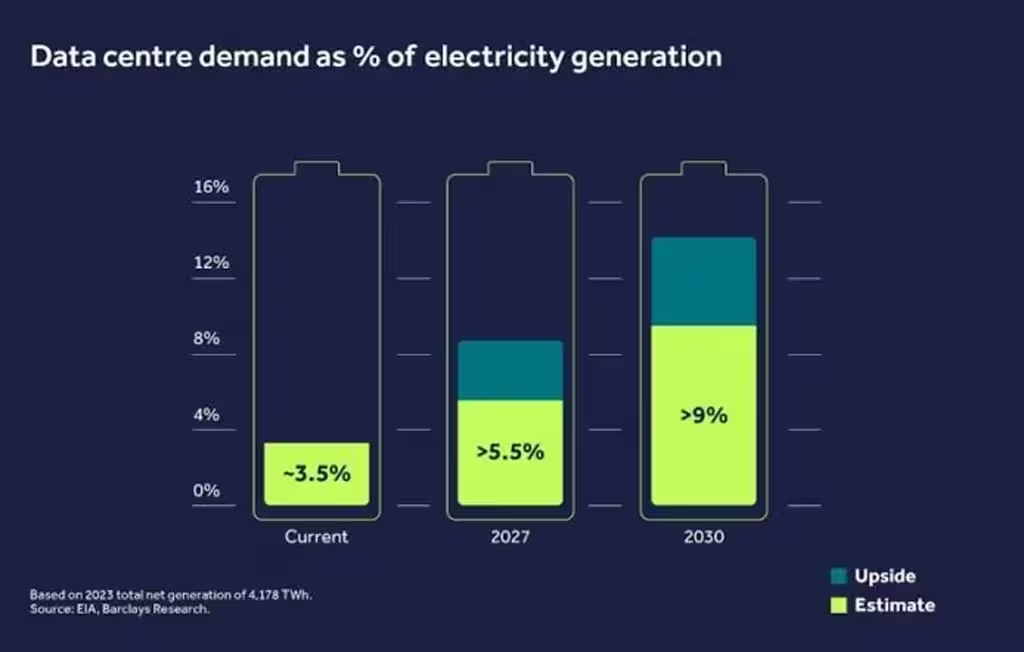
Huang’s remarks also reflect how the energy landscape has shifted since AI’s recent surge. Before the latest wave of data-center construction, wind and solar were often cheaper than gas or coal. But, the piece notes, rising demand from new data centers and policy shifts during the Trump administration coincided with a renewed turn toward fossil fuels to meet immediate needs.
Some estimates now warn of direct near-term harms tied to AI-driven energy and pollution patterns: researchers have suggested AI could be linked to around 1,300 premature deaths in the United States by 2028 and roughly $20 billion in related health costs.


Leave a Comment
Comments
No comments yet. Be the first.