
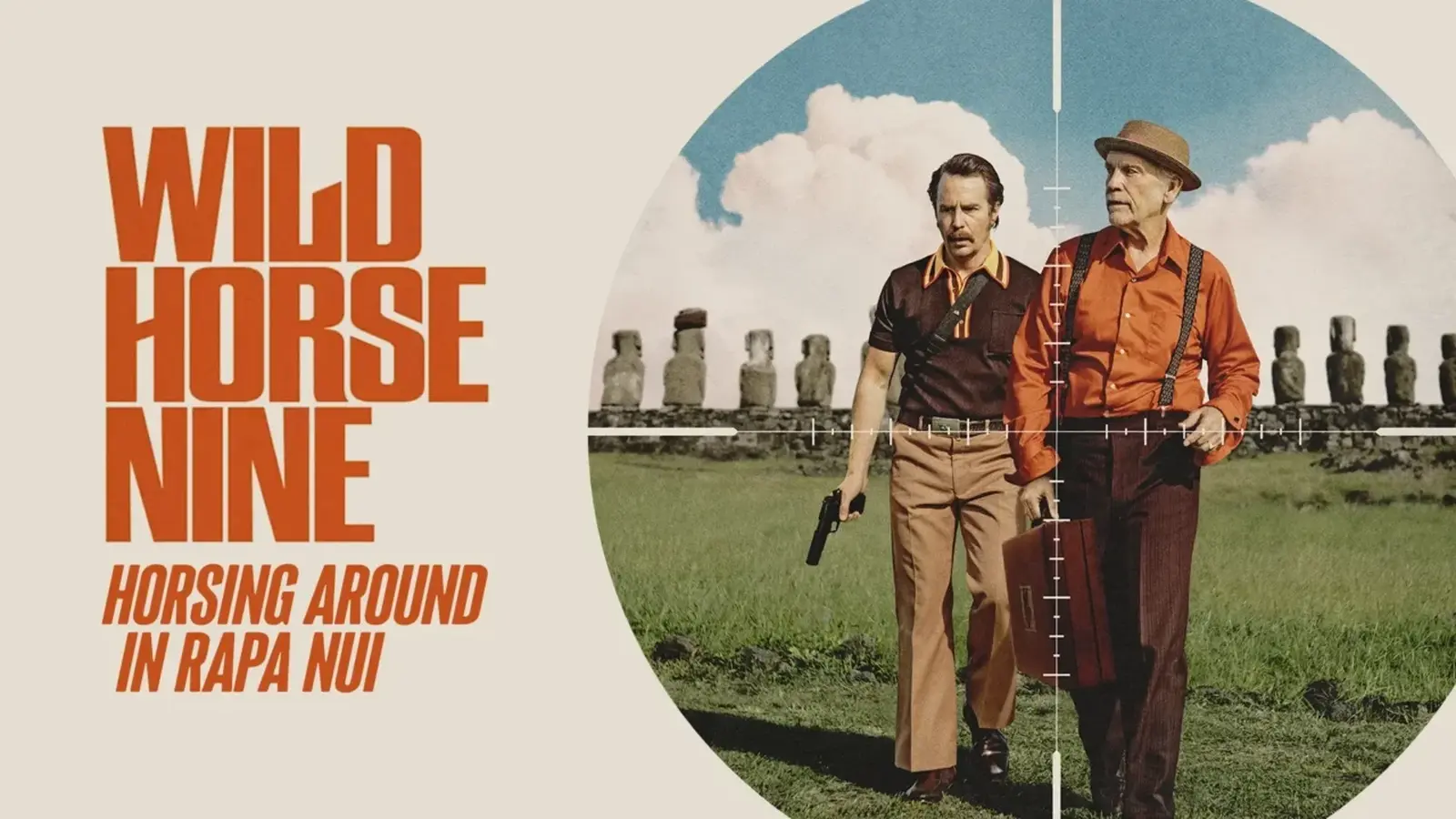
A pair of seasoned spies on a windswept island. Statues that watch like silent jurors. A screw-tight plot that mixes dark comedy with real political dread. Wild Horse Nine lands like a sly punch—funny, uneasy and quietly corrosive.
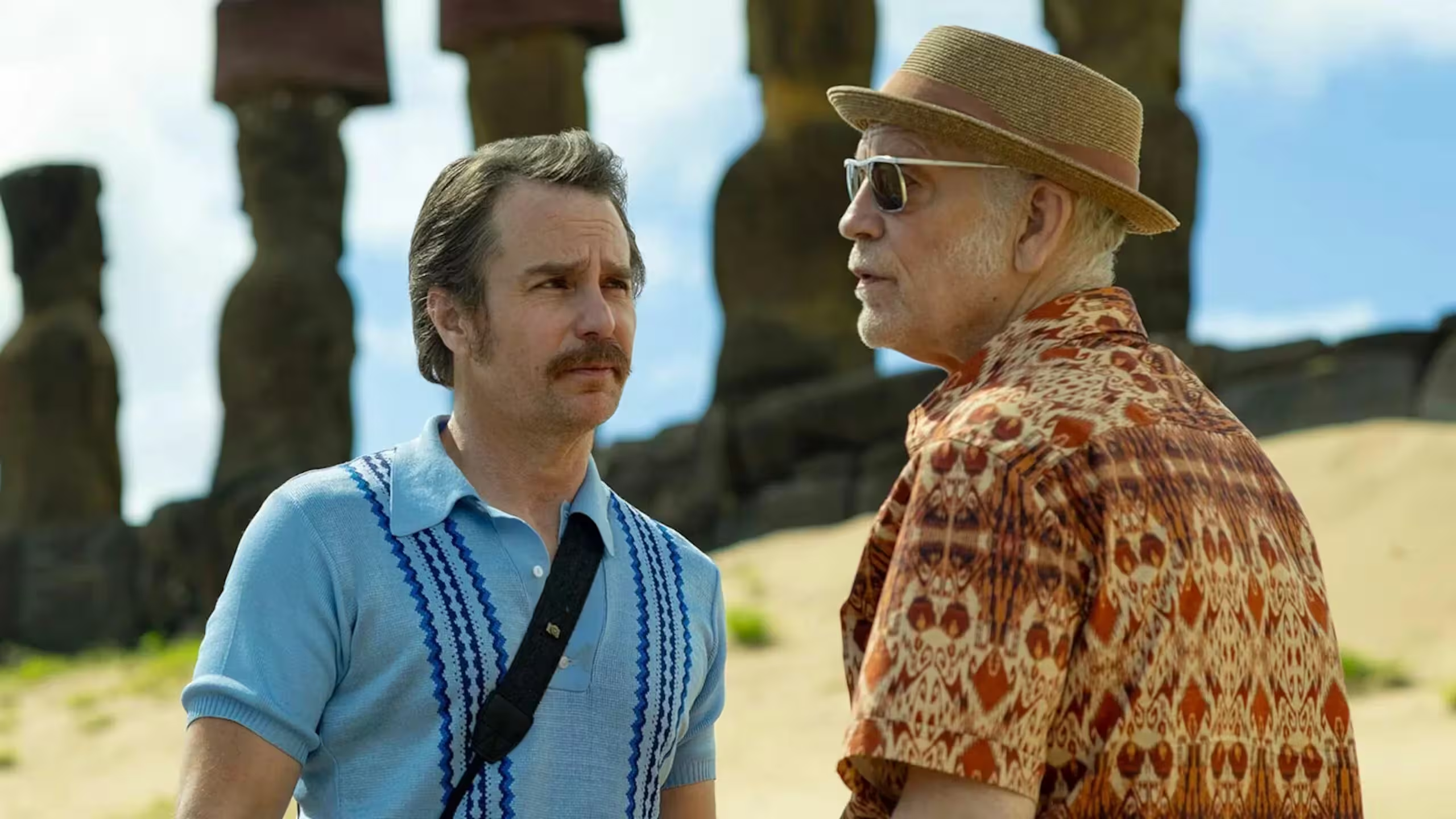
Martin McDonagh writes and directs this late-1960s/early-1970s espionage drama with his usual appetite for morally messy characters and sharp dialogue. The story unfolds on the edge of one of modern Chile's most consequential moments: the 1973 coup. The CIA, jittery and decisive, sends two veteran operatives—Chris and Lee—from Santiago to Easter Island. They arrive among the moai, hoping to tidy up a mission. Instead, old secrets, new loyalties and a budding, risky romance with a radical student send their carefully set plan collapsing into unpredictable territory.
John Malkovich and Sam Rockwell carry the film. Their chemistry is tactile, sometimes brittle, often unexpectedly tender. Supporting turns from Steve Buscemi, Tom Waits and Parker Posey add comic texture and off-kilter humanity. The film premiered in competition at the 83rd Venice Film Festival, where John Malkovich walked away with the Volpi Cup for Best Actor—an outcome that feels earned rather than ceremonial.
Rotten Tomatoes reports 129 critic reviews and a 94% approval rating, while Metacritic aggregates 34 reviews for a score of 77. Those numbers sketch a broad critical embrace, but the nuance lives inside the reviews themselves.
100/100 — The Times (Kevin Maher) sees McDonagh nudging at death with an almost celebratory candor. The film, he writes, is haunted less by politics than by a frank acceptance of mortality and the inevitable endings each life carries.
91/100 — The Playlist (Rodrigo Perez) praises McDonagh's gift for rendering deeply flawed characters with compassion and curiosity. The result is an intimate tragedy that balances bitterness, humor and a sting of genuine emotional impact—an exploration of karma, friendship and the stories people tell to survive their choices.
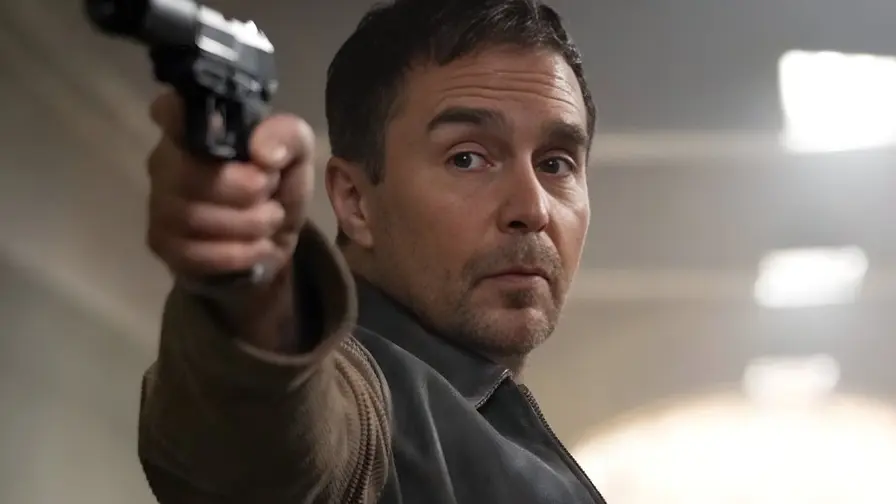
90/100 — The Hollywood Reporter (David Rooney) and 90/100 — Collider (Aiden Klein) both single out Malkovich and Rockwell, noting how their performances anchor the film's tonal shifts. McDonagh's signature mix—wry, violent, and humane—threads through Wild Horse Nine even when the movie experiments with a slightly different cadence than his best-known work.
88/100 — RogerEbert.com (Matt Zoller Seitz) argues that the heart of the film is the relationship between the two leads. That bond becomes a stage for larger questions: regret, guilt, fear of death, and the difficulty of looking at our ugliest truths.
80/100 — Variety (Guy Lodge) and Empire (Ian Freer) both praise Malkovich's voice—gravelly, world-weary—and how his performance undercuts the film's neatness, injecting a welcome unpredictability. The movie is playful, they say, but disciplined; it rarely loses sight of McDonagh's theatrical instincts.
75/100 — The A.V. Club (Monica Castillo) finds a familiar McDonagh theme: men who, through misadventure and stubbornness, discover unlikely companionship. Wild Horse Nine focuses less on plot machinations and more on how damaged souls manage to reach for empathy.
Lower scores point to limits. 70/100 — Screen Rant notes echoes of In Bruges and suggests the film delivers what fans expect without fully reinventing the wheel. 67/100 — IndieWire calls it high-strung but not always convincing in its tonal translation to a western-inflected landscape.
At the critical tail end, reviewers from The Guardian, Slant Magazine, TheWrap and The New Yorker raise questions about balance and ambition. Some feel the political backdrop is too scenic, or that McDonagh occasionally prefers cleverness over depth. Yet even these dissenting takes often concede the actors' commitment and the film's uneasy pleasures.
Wild Horse Nine doesn't announce itself as a landmark. It slips in, carries you somewhere unfamiliar, then leaves a residue—something like a polished coin you turn over in your palm and find there are scratches you didn't notice at first. See it for the performances. Stay for the moral jolts. Ask yourself afterward which side of the story you were rooting for.

Leave a Comment
Comments
No comments yet. Be the first.