
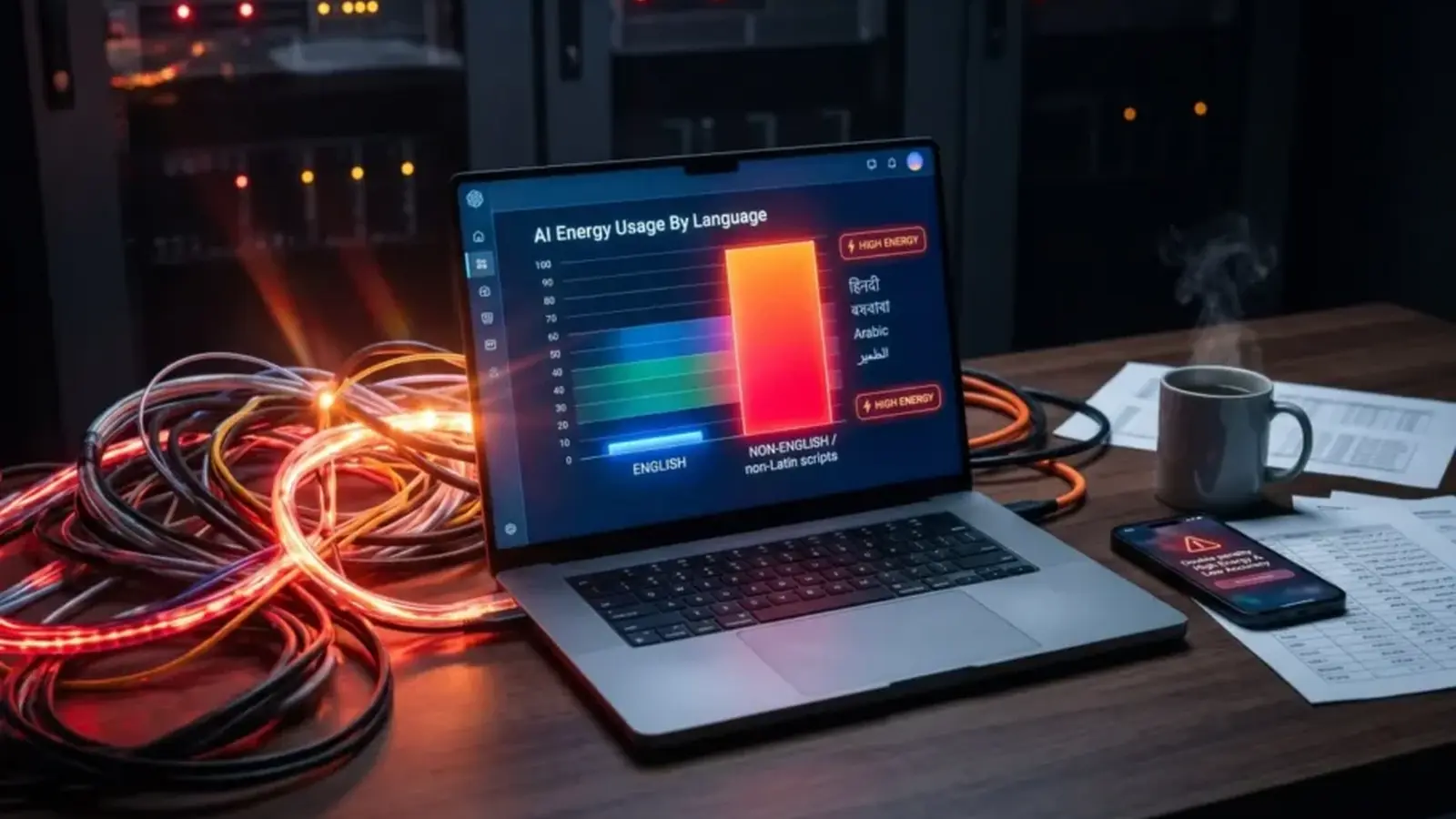
A new University of Michigan study finds generative AI models consume substantially more energy when producing non-English text—between 1.4 and 180 times more—and can produce lower-accuracy outputs for those languages. The researchers report that AI models use between 1.4 and 180 times more energy to generate non-English text.
Study findings and scope
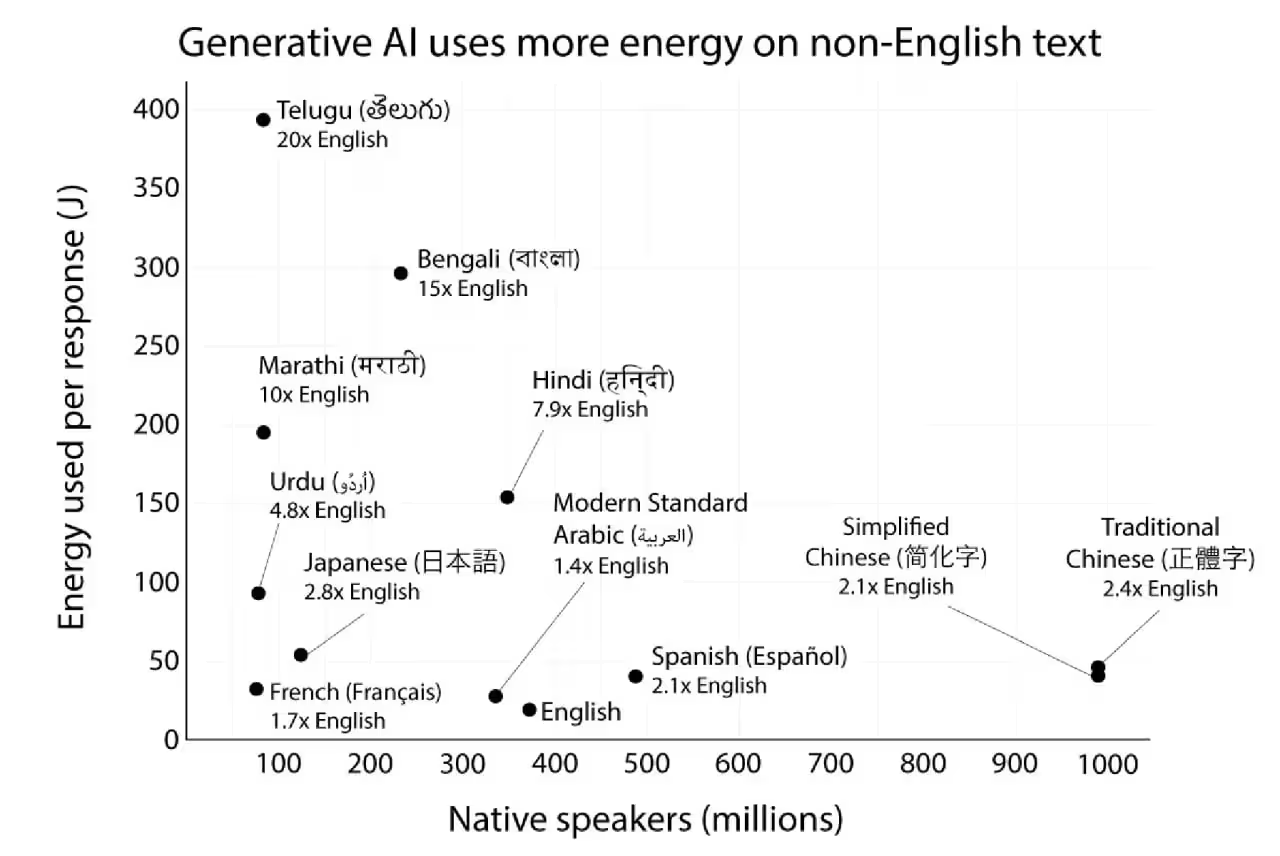
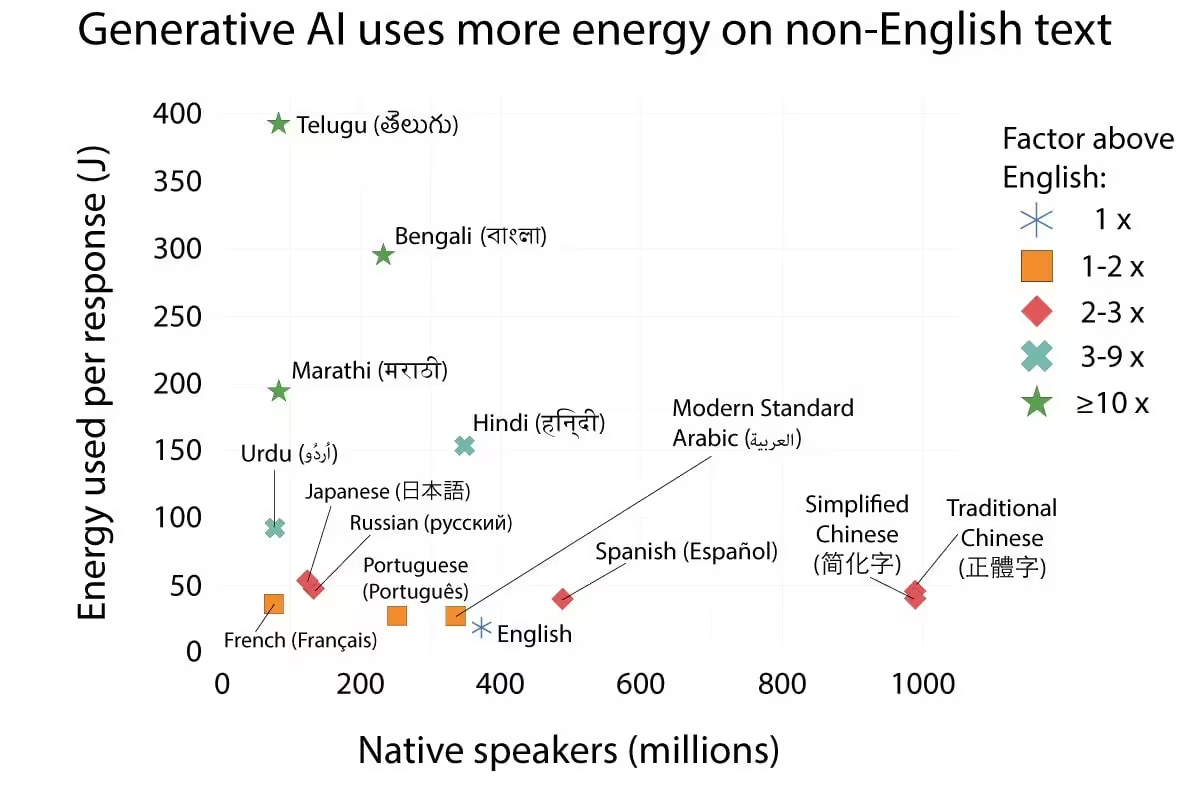
The research, presented at the EMNLP conference, measured energy use for text generation across languages and found the largest gaps in languages that do not use the Latin alphabet and that have less digital training data. On average, models require 1.4 to 180 times more energy for non-English text than for English. Western European languages were at most about twice as costly as English, while Hindi and Bengali required 7.9 and 15.3 times the energy, respectively. The authors estimate that roughly 5.2 billion people worldwide need more than twice the energy to generate text in their first language compared with English speakers.
Naihao Deng, a PhD student in computer science and engineering at the University of Michigan and the paper's first author, says languages that consume more energy also tend to see lower model accuracy. He described the effect as a "double penalty" that can limit access for users who face higher costs and reduce incentives for companies to support some languages.
Methods, models and measurements
To quantify the gap, the team evaluated three open models and measured energy consumption with a dedicated framework. The models tested were:
- Qwen 3 (Alibaba)
- Gemma 3 (Google)
- Llama 3.1 (Meta)
Researchers used the Belebele dataset, which assesses model comprehension across 122 languages, and applied the ML.Energy measurement framework. They ran multiple-choice questions, math problems and free-text prompts. Results showed all three models consumed less energy on average for English prompts, and the disparities persisted across larger model sizes and different processors.
Causes and technical explanation
The primary technical cause is tokenization. Tokens are the basic data units models process; text is converted into tokens before computation. Languages such as Hindi and Nepali, where characters change shape or combine with diacritic marks, generate many more tokens for the same semantic content. Producing more tokens increases memory use, which forces models to process tokens in smaller batches. Smaller batches raise energy consumed per token and reduce throughput. Because many providers bill access by token counts, non-English users may also face higher direct costs.
Implications and proposed mitigations
The study highlights a potential source of global digital inequality: users of many non-Latin and lower-resource languages may pay more in energy and money and receive lower-quality outputs. To address the imbalance, the researchers recommend that AI companies optimize services for a broader set of languages, for example by routing queries to language-specific models or translating prompts into English before processing when appropriate.


Leave a Comment
Comments
No comments yet. Be the first.