
Six high-profile supercar projects progressed past the concept stage—some to running prototypes, one to hundreds of blind orders—but were cancelled late in development. Below are the technical details, production plans and stated reasons these models never reached customers.
Closest to production: orders, prototypes and engineering partners
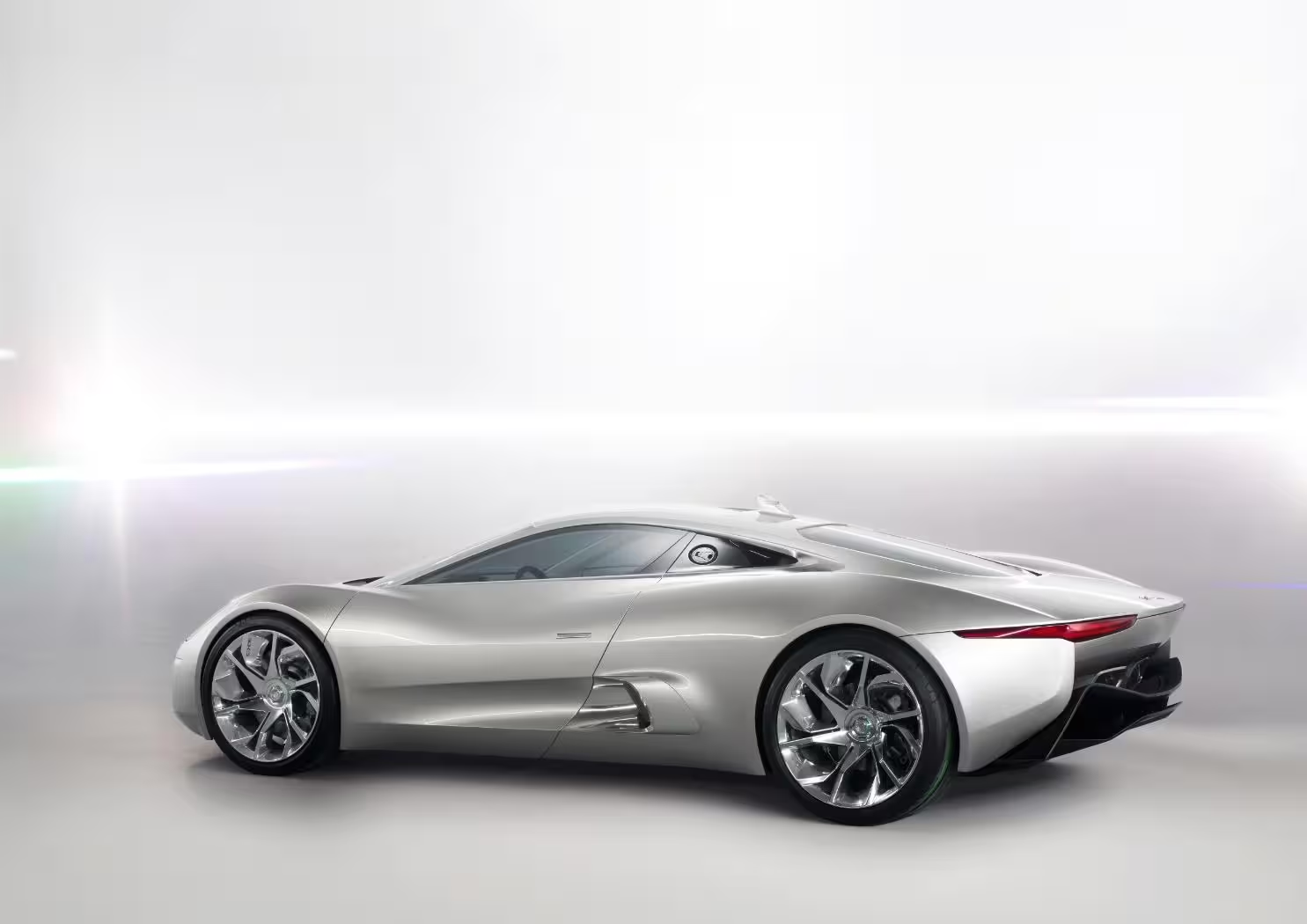
Jaguar C-X75 (2010–2012): Unveiled at the 2010 Paris Motor Show to mark Jaguar’s 75th anniversary, the C-X75 began life as a range-extended concept powered by four YASA electric motors and two small gas turbines as generators. Jaguar later confirmed a production run with Williams Advanced Engineering: 250 cars was the plan and start of sales was targeted for 2013. The production specification was revised to a 1.6-liter, supercharged and turbocharged four-cylinder (able to rev to 10,000 rpm) producing 509 PS (502 HP) on its own, augmented by two YASA electric motors for a combined 862 PS (850 HP) and 1,000 Nm (738 lb-ft). Jaguar built five working prototypes; the company said prototypes reached 322 kph (200 mph) in testing and had a theoretical maximum of 354 kph (220 mph). Around 100 potential customers registered interest, but Jaguar announced cancellation at the end of 2012, citing the global economic climate. A C-X75 shell fitted with a supercharged V8 later appeared as one of seven stunt cars Jaguar and Williams supplied for the film Spectre.
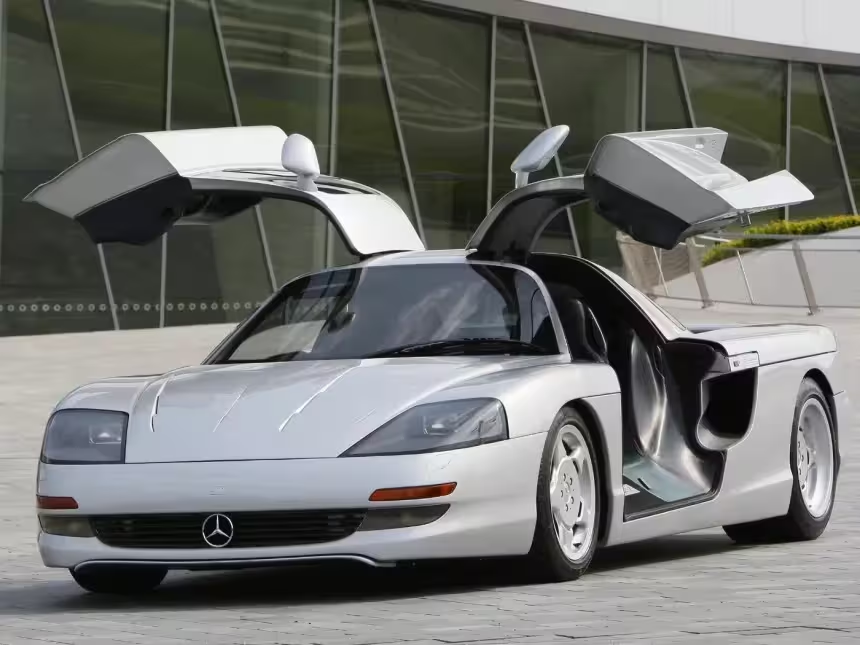
Mercedes-Benz C112 (1991): The Mercedes C112 concept debuted at the 1991 Frankfurt Motor Show and drew at least 700 blind orders, yet Mercedes declined to put it into production. Styled under Bruno Sacco’s design team and built by Carrozzeria Coggiola in Turin, the mid-engine supercar used the then-new 6.0-liter M120 V12 from the S-Class, rated at 408 PS (402 HP) and 580 Nm (428 lb-ft), mated to a six-speed manual. The C112 previewed technologies that only reached production years later: an early form of Active Body Control suspension, electronically controlled rear-wheel steering, tire-pressure monitoring and radar-guided cruise control. It also featured active aerodynamics, including a deployable rear wing that could act as an airbrake. Performance was quoted as 0–100 kph in 4.9 seconds and a top speed of 309 kph (192 mph), with 998 kg (2,200 lb) of downforce at top speed. Mercedes executives concluded the brand did not need a flagship supercar despite the interest.
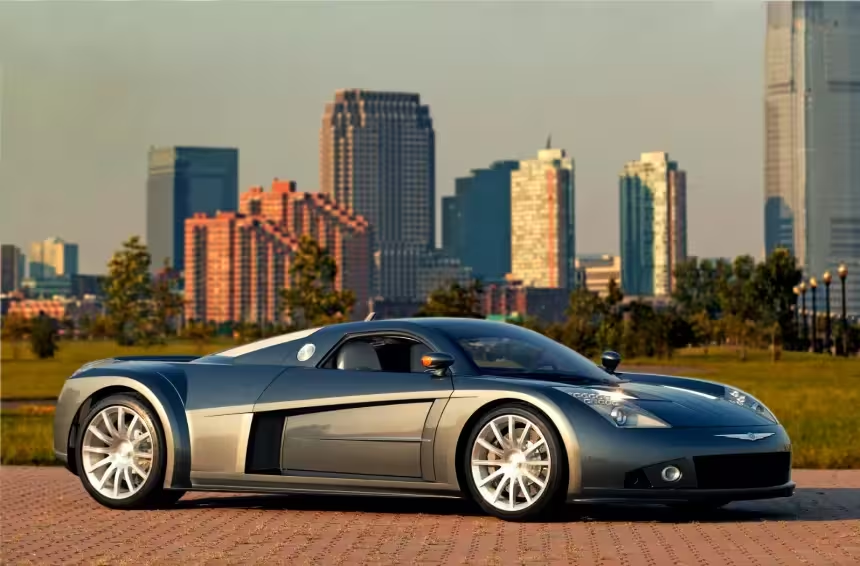
Chrysler ME Four-Twelve (early 2000s): Unlike most styling exercises, the Chrysler ME Four-Twelve was a running prototype whose name described its layout: mid-engine, four turbochargers, twelve cylinders. Developed during the DaimlerChrysler era, the project used a resurrected 6.0-liter M120 V12 fitted with four turbochargers through collaboration between AMG and engineers associated with Pagani. Output was quoted at 862 PS (850 HP) and 1,152 Nm (850 lb-ft). Construction employed a carbon-fibre and aluminium honeycomb passenger cell and a Ricardo-supplied seven-speed dual-clutch transaxle; curb weight was quoted at 1,310 kg (2,888 lb). Published figures included 0–60 mph in 2.9 seconds and an estimated top speed of 400 kph (248 mph). Chrysler ran at least one detuned prototype at Laguna Seca and had public expectations of production in 2006, but the program was cancelled—most likely for commercial reasons related to the investment required, though reports at the time suggested internal and partner sensitivities as well.

Ambitious concepts halted by cost, packaging or the financial crisis
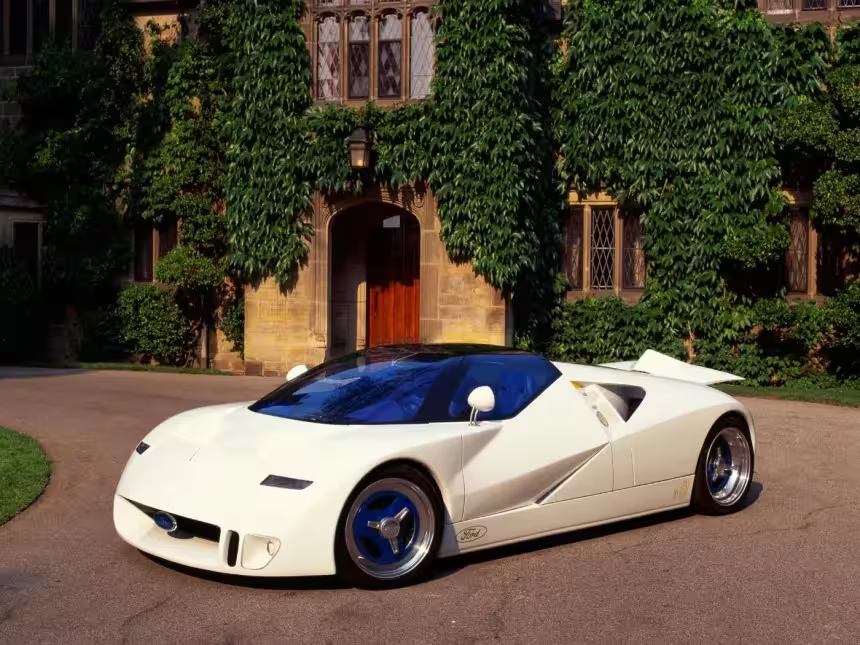
Ford GT90 (1995): Shown at the 1995 Detroit Auto Show as a technological and styling statement, the GT90 was built in secret in roughly six months at an estimated cost of $3 million. It used an extended version of the Jaguar XJ220’s aluminium honeycomb chassis and borrowed double-wishbone suspension and a five-speed manual. The powertrain was a one-off 5.9-liter, 48-valve V12 derived from Ford’s Modular V8 family, equipped with four Garrett turbochargers and quoted at 730 PS (720 HP) and 895 Nm (660 lb-ft). Ford quoted estimated performance of 0–60 mph in 3.1 seconds and a top speed around 407 kph (253 mph). The GT90 remained a one-off exercise and did not enter production, though it became widely known through video games and magazines.
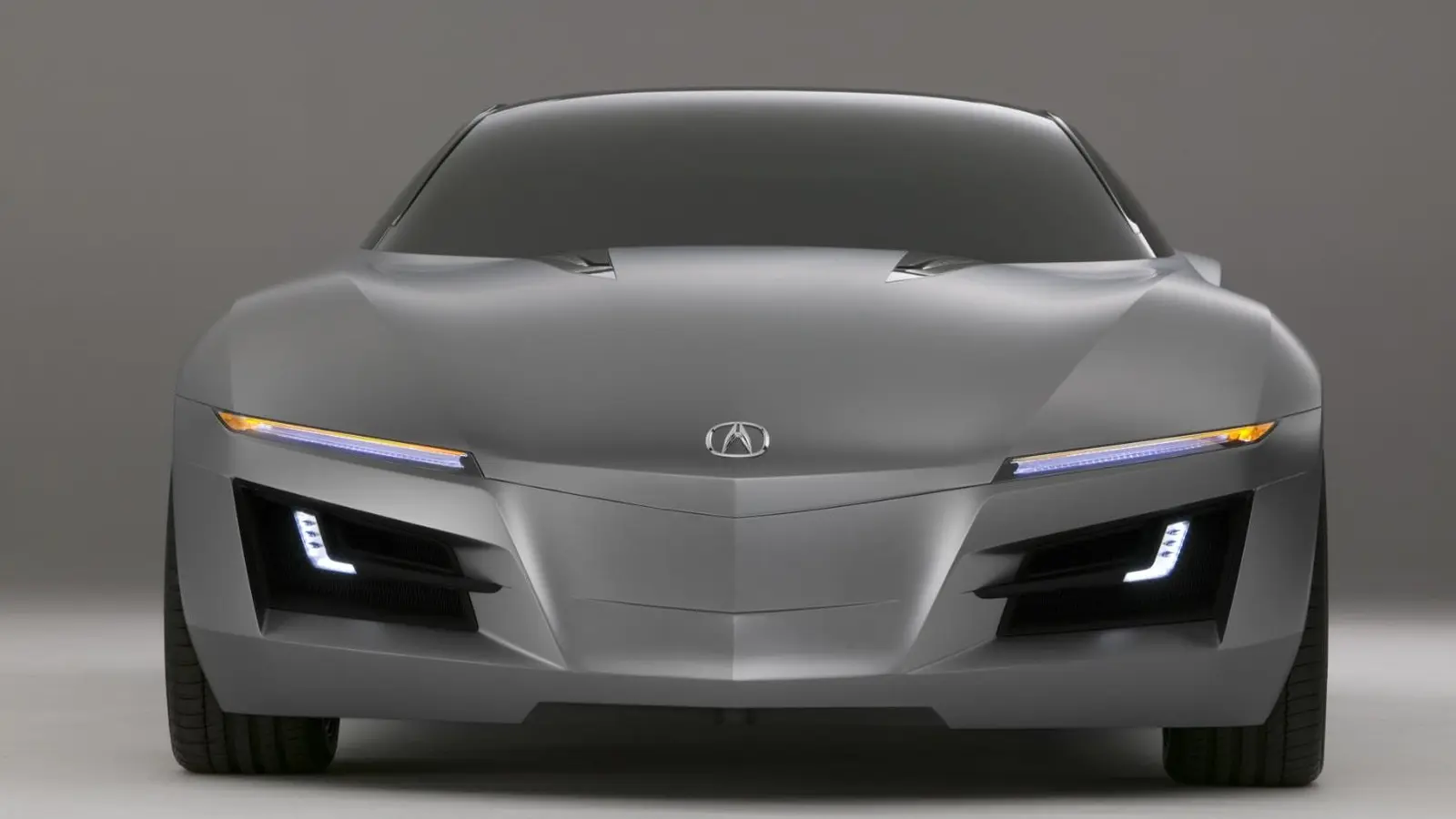
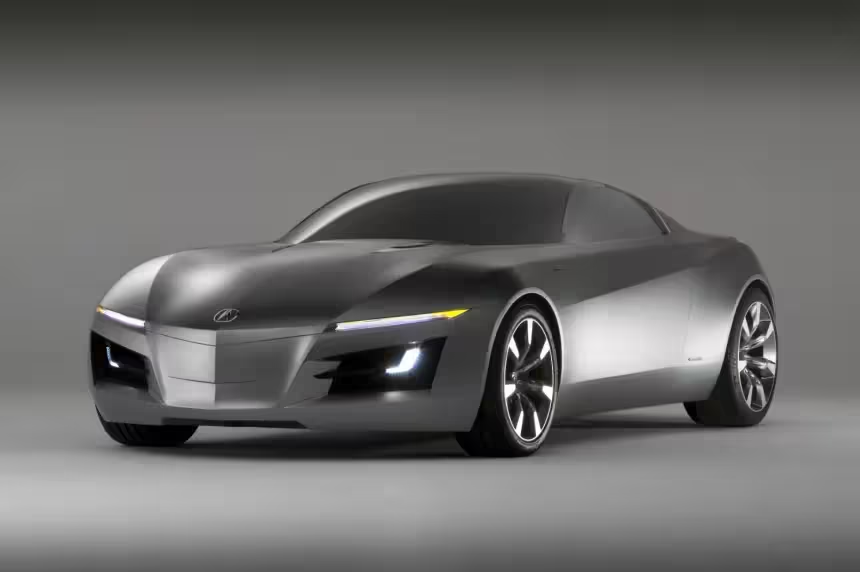
Acura Advanced Sports Car Concept (2007): Revealed at the 2007 Detroit Auto Show as a hint at an NSX successor, the Acura Advanced Sports Car Concept was a non-running show car described by Honda executives as a front-engined coupe with a naturally aspirated V10 and SH-AWD all-wheel-drive. Reports at the time placed displacement around 5.0 litres with expected output in the 500–600 HP range. Honda tested camouflaged prototypes on the Nürburgring and intended a successor to arrive around 2010, but development was halted after the 2008 financial crisis and Honda’s withdrawal from Formula 1. Camouflaged prototypes subsequently served as the basis for the HSV-010 GT race car that competed in Japan’s Super GT series from 2010 to 2013.
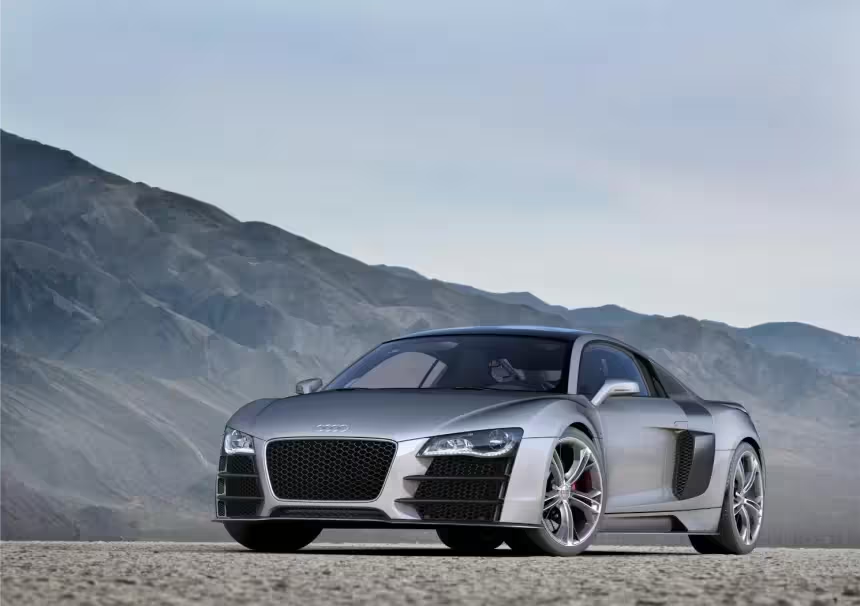
Audi R8 V12 TDI (2008): Pushed by Ferdinand Piech and unveiled at the 2008 Detroit Auto Show, the R8 V12 TDI fitted a 6.0-liter twin-turbo V12 diesel behind the seats, quoted at 500 PS (493 HP) and 1,000 Nm (738 lb-ft). Audi specified a six-speed manual driving all four wheels and published figures of 4.2 seconds to 100 kph (62 mph) and a top speed above 300 kph (186 mph). Packaging challenges were significant: the V12 diesel added roughly 300 kg (661 lb), required about 20 percent larger cooling vents and a NACA duct in the roof to feed intercoolers, and prompted suspension and brake upgrades. Audi concluded the cost of re-engineering the R8 around that engine could not be justified in the prevailing economic climate, and the project was not carried forward to production.


Leave a Comment
Comments
No comments yet. Be the first.