
Germany's 2027 Car of the Year competition produced a clear headline: in every category the winner is a fully electric model. The results, drawn from votes by a panel of 47 judges—mostly members of the German motoring press—and analysed by AItastic of Mainz, show a striking concentration of electric vehicles among the contenders and winners, even as some manufacturers have recently dialled back EV investment because sales growth has cooled in parts of the world.
What the judges saw and the headline figures
The selection process covered 109 eligible models. According to AItastic's review of the voting data, all of the top 20 cars in the judges' rankings were battery electric, and only four internal-combustion models made the top 30. The jury evaluated entries on engineering excellence, design progress, efficiency, safety, value, and the vehicle's success at performing its expected role. Angus MacKenzie, a MotorTrend writer and long-time juror on car-of-the-year panels, was among the judges and contributed the overview of the results.
Those assessments exposed a pattern: electric cars scored highest for importance and impact, comfort, value for money, and safety. Internal-combustion cars still led in design and driving pleasure. Hybrid models, including plug-in hybrids, did not top any evaluation category. Judges described hybrids as broadly capable but not best-in-class in any particular metric—MacKenzie likened them to all-season tyres, competent across conditions but not the best in any single one.

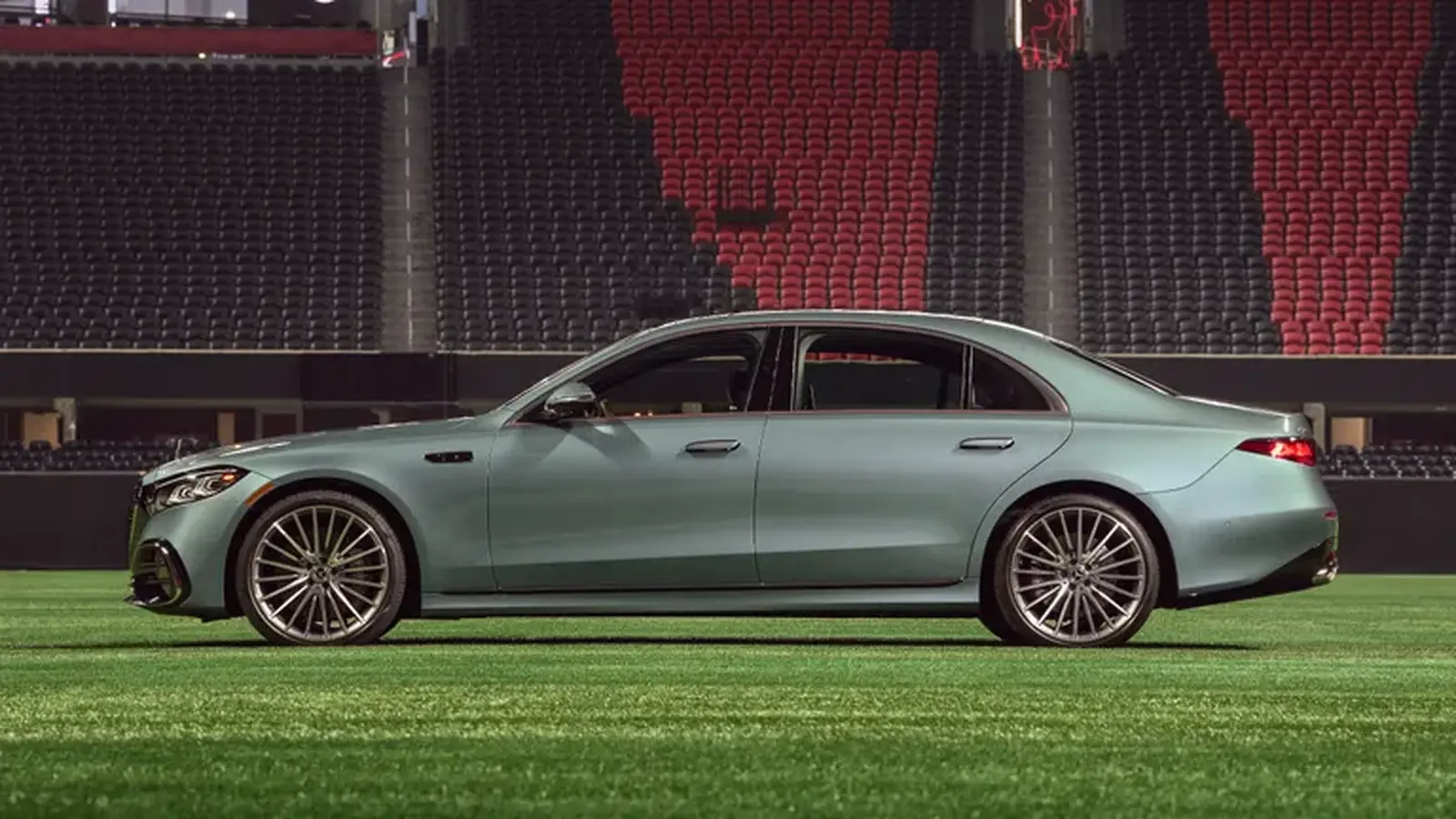
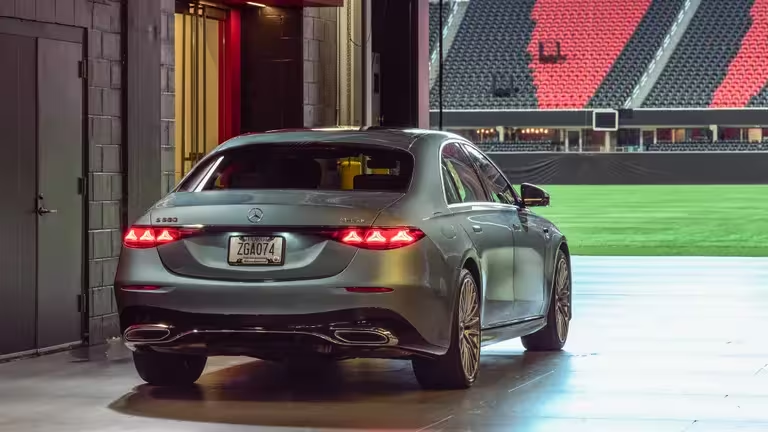
The awards were announced at a public event in front of the Mercedes-Benz Museum in Stuttgart attended by about 15,000 people. Mercedes-Benz chief executive Ola Källenius presented MotorTrend's Car of the Year 2027 to the Mercedes S-Class at that ceremony, marking the first time MotorTrend has revealed its Car of the Year outside the United States. The announcement coincided with the end of a nine-month, 64,000-kilometre world tour undertaken by three S-Class cars to commemorate the 140th anniversary of Carl Benz's Patent-Motorwagen.
Category winners and technical highlights
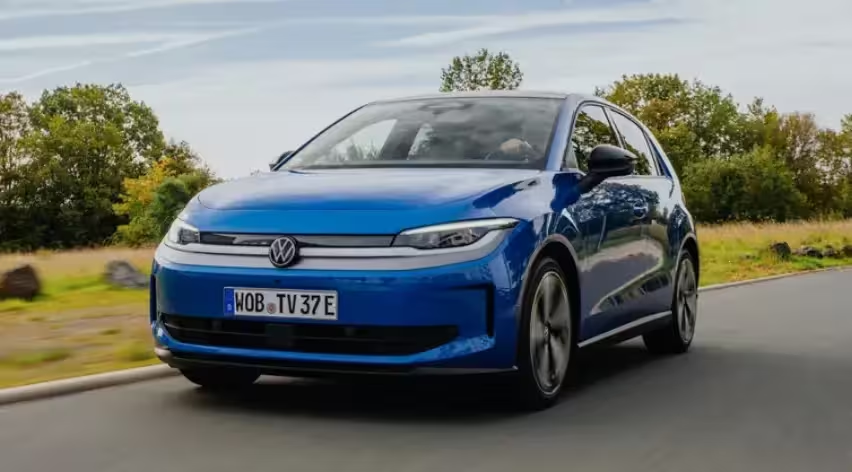
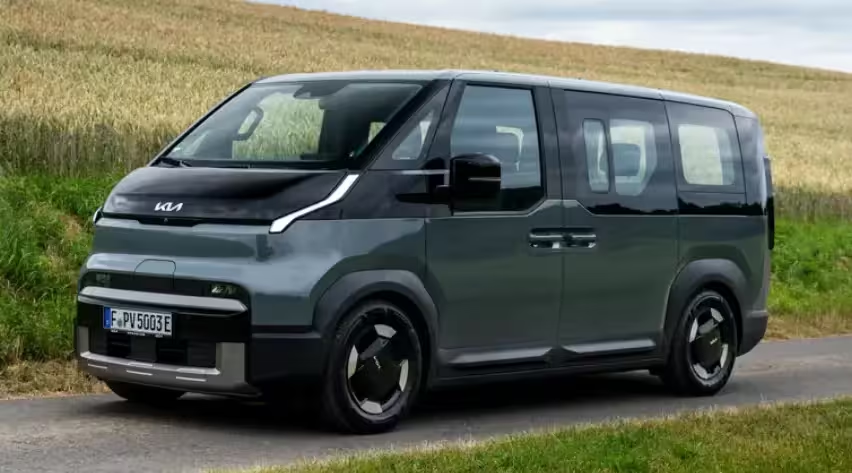
The Germany competition ultimately named five category winners, each fully electric: Volkswagen ID.Polo (best budget car), Kia PV5 (best compact), Mercedes-Benz GLC (best premium), Xpeng X9 (best luxury), and Hyundai Ioniq 6 N (best sports/performance). The panel highlighted technical approaches and platform choices that illustrate current EV development trends.
Volkswagen's ID.Polo was singled out as an important indicator of VW Group's next phase in EV design: smaller, more emotionally engaging cars that still aim for affordable pricing. The ID.Polo uses a new APP290 electric motor that VW says is about 25 kilograms lighter than the APP550 used in the ID.4 thanks to a simpler, water-cooled layout. The base ID.Polo in Germany is priced from under $28,000 and pairs a 114-horsepower motor with 264 newton-metres of torque, front-wheel drive, a 37-kilowatt-hour lithium-iron-phosphate (LFP) battery, and a 0 to 100 km/h time of 10.6 seconds. Volkswagen estimates an EPA-equivalent range near 282 kilometres for that battery. The flagship ID.Polo uses a 208-horsepower motor with 290 Nm, a 52-kWh nickel-manganese-cobalt (NMC) battery, a claimed EPA-equivalent range of about 386 kilometres, and a 0 to 100 km/h time of 7.1 seconds; its German price is around $49,000. The panel noted that the flagship's price is roughly 15 percent higher than the base Tesla Model 3, while the Tesla offers greater power and range.
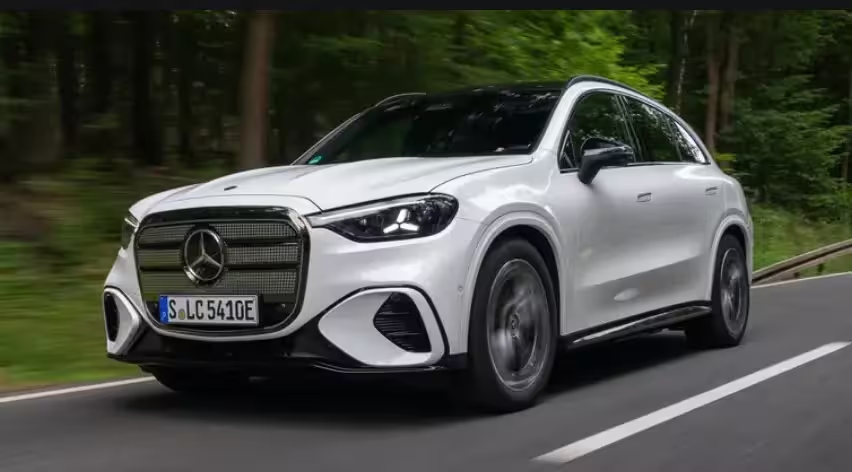
Kia's PV5, the best compact winner, is the first Hyundai Motor Group product built on the new E-GMP.S architecture for commercial-focused electric vehicles. Relative to the standard E-GMP used for the Ioniq 5 and EV6, E-GMP.S pushes the driver forward, contains a smaller electric motor and power electronics package behind the front bulkhead, and seats battery cells directly inside the pack without assembling modules first. The result is a flat, lower floor that runs from behind the driver's knees to the rear of the vehicle and supports multiple body types from passenger van to chassis-cab. The PV5 reveals its commercial roots in firmer cabin plastics and occasional suspension noise over rough surfaces, but testers found it offers good ride quality, useful equipment, and strong cargo capacity. In value terms the judges noted the PV5 undercuts the base Volkswagen ID.Buzz by about 25 percent while delivering superior technical performance and range.

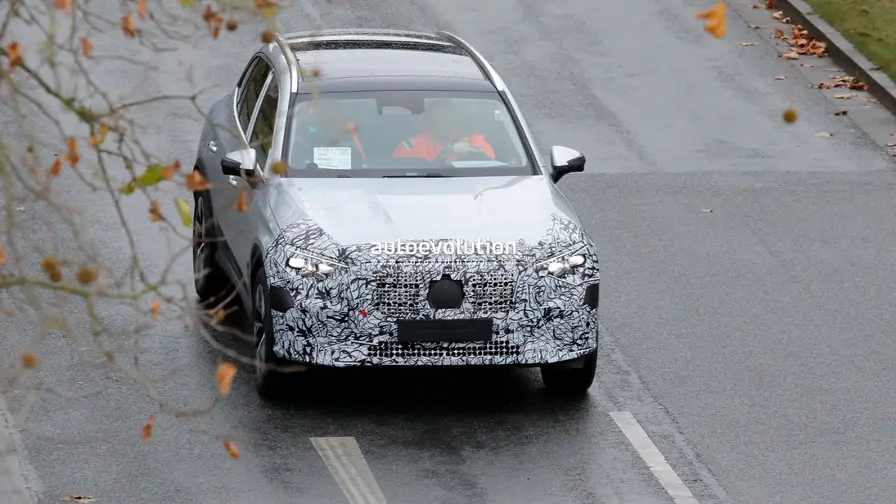
Mercedes-Benz's GLC won the premium category as the first production vehicle on the manufacturer's new MB.EA EV architecture. MB.EA, planned to underpin future electric C-Class, E-Class and S-Class sedans as well as GLE and GLS SUVs by 2029, brings more powerful Mercedes-developed electric motors, an 800-volt electrical architecture capable of very fast charging, new cell chemistries aimed at lower cost and greater range, a software-centric vehicle architecture running the brand's MB.OS operating system, and provisions for level 3 autonomous driving support. Judges praised the GLC for preserving Mercedes brand identity in appearance and driving character; its decorative, illuminated grille houses numerous sensors and the cabin and ride character were judged close to traditional Mercedes expectations. MacKenzie wrote that the optional air suspension delivers a smooth, controlled ride he compared favourably to the S-Class.
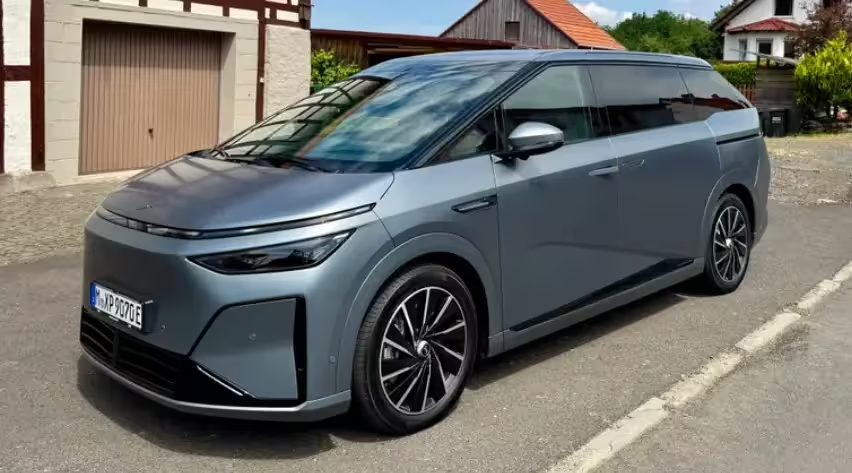
Xpeng's X9 was a surprise pick as the luxury winner. Built on Xpeng's second-generation SEPA 2.0 skateboard platform with 800-volt electrics and the firm's X-EEA processing architecture, the X9 uses large castings at either platform end to locate suspension components, motors and related systems. Inside, the X9 offers a roomy cabin and independent second-row seats that recline and adjust ergonomically at the press of a button. Despite its large volume, judges found the car remarkably composed and quiet on the road, delivering a limousine-like rear-seat experience. The base X9 starts at about $100,000, which the jury noted is roughly 25 percent less than the cheapest Mercedes S-Class in Germany.
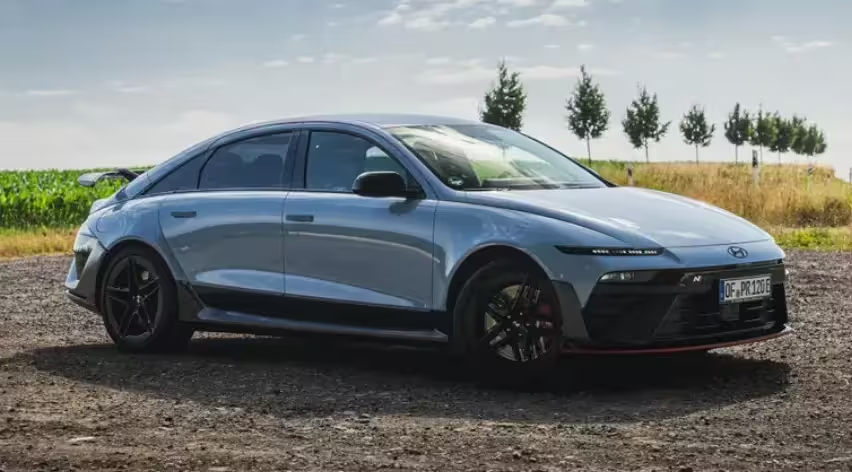
In the sports and performance category the Hyundai Ioniq 6 N beat the expected favourite, the Porsche 911 Turbo S. Judges said the Ioniq 6 N matters because Hyundai has developed software and hardware to improve driver engagement on EVs: these include simulated engine sound tied to wheel speed, momentary torque cut to simulate gearshifts and help chassis balance, regen braking used to emulate shift feel, and driver-adjustable torque distribution between front and rear axles. MotorTrend's reporting noted Mercedes AMG engineers referenced the Ioniq 5 N and Ioniq 6 N as benchmarks while developing their own high-performance electric models. The Ioniq 6 N was also praised for a balanced chassis, precise steering and strong brakes; testers found its simulated sound helpful for judging corner entry and its simulated shifts useful for maintaining chassis balance through corners.
Beyond category trophies, the voting data highlighted a broader industry shift: Chinese brands earned top marks for value for money in the judges' assessment, with Japanese and South Korean brands following, European marques next, and American brands last on value. Separately, market figures reported alongside the awards show Chinese brands gaining ground in Europe—by September they accounted for close to 15 percent of new-car sales in the EU and UK, and forecasts cited at the event expect Chinese vehicle sales in the region to reach about 1.3 million units in 2026.
While the judges concluded that electric cars are closing the gap on engineering, features, safety and value, they also acknowledged that commercial considerations remain decisive for buyers. Purchase price, charging infrastructure, usable range and total cost of ownership continue to influence customer choice. The Germany awards underline both the technical progress of EVs and the rising competitive pressure on established European brands from Chinese and Korean manufacturers.

Leave a Comment
Comments (1)
Wow, all winners EVs? Kinda wild. Signals real progress, but charging and price still worry me. Fingers crossed.