

Investors Shift From Bitcoin to Major IPOs, Then Return
Coinbase CEO Brian Armstrong says a repeating market dynamic helps explain short-term Bitcoin weakness: investors often liquidate crypto positions to bid in large initial public offerings, then cycle capital back into Bitcoin. Armstrong argues that when monetary expansion and inflation remain concerns, Bitcoin's role as an inflation hedge and store of value only grows more relevant.
Why rotation matters
Armstrong described what he sees as a recurring capital rotation: during the moments when blockbuster listings arrive on public markets, some investors reduce their crypto exposure to free up cash. After those allocations settle, capital tends to flow back into digital assets. This behavior can create concentrated selling pressure on Bitcoin and other cryptocurrencies over short windows, even as long-term demand fundamentals stay intact.
ETF outflows spiked around the Anthropic IPO
Data from market trackers showed meaningful withdrawals from US spot Bitcoin exchange-traded funds in the days surrounding Anthropic’s debut on Nasdaq. According to aggregated figures, funds recorded several hundred million dollars in net redemptions across November 18–19, with BlackRock’s iShares Bitcoin Trust and Fidelity’s Wise Origin among the larger contributors.
Numbers and context
On November 18, spot Bitcoin ETFs registered roughly $306 million in net outflows, led by BlackRock’s product and Fidelity’s fund. The following day, withdrawals accelerated to about $582 million, a session that included the largest daily redemption yet for one of the major ETFs since launch. Altogether, near $889 million exited these funds across the two sessions. These fund flows do not explicitly prove proceeds were directed into Anthropic shares, but the timing is consistent with investors rebalancing ahead of a high-profile tech IPO.

Anthropic’s public offering and the IPO effect
Anthropic, an AI company, began trading under the ANT ticker at an $83 opening price. After underwriters exercised their allotment option, the offering generated approximately $93.5 billion in gross proceeds. The company received roughly $91.6 billion before fees, and an accompanying private placement added another $26 billion — producing a combined gross raise near $119.5 billion. Such massive capital events can divert liquidity from other asset classes temporarily, helping explain episodic pressure on crypto prices.
Short-term market mechanics
Large IPOs can pull funds out of ETFs and other liquid holdings as institutional and retail participants adjust cash positions to acquire new equity allocations. For crypto markets, which are still maturing and can be more sentiment-driven than traditional markets, these reallocations can magnify volatility, particularly when the events coincide with broader macroeconomic concerns like inflation or weaker tech equities.

Coinbase’s push into AI-driven finance and payments
Beyond market commentary, Armstrong outlined Coinbase’s strategic work to integrate cryptocurrency infrastructure with artificial intelligence. He envisions AI agents acting as personal financial assistants that help users manage portfolios and make transactions via crypto-based accounts and payment rails.
Products and protocols under development
Coinbase has been building financial accounts and permissioned access so AI applications can operate on behalf of users without exposing entire portfolios. The company’s Coinbase for Agents initiative allows AI tools to trade crypto, access derivatives and equities, and manage segregated portfolios with spending limits. Coinbase also introduced a digital payment protocol, x402, designed to let software buy online resources with crypto without a traditional checkout flow.
Real-world traction on Base and the x402 protocol
Research from blockchain analytics firm Chainalysis reported that the x402 protocol powered a large volume of on-chain payments on Coinbase’s Base network. Through July 1, 2026, Chainalysis counted roughly 138 million payments using the protocol for services such as AI inference, financial data feeds, software code reviews and API access — illustrating how crypto rails can enable machine-to-machine commerce and microtransactions at scale.
Implications for crypto adoption
By enabling AI agents to hold and spend digital assets under controlled permissions, Coinbase is pushing toward a future where automated software can transact directly and autonomously on behalf of users. This approach could increase utility for stablecoins and other programmable money while broadening on-chain demand beyond purely speculative flows.
Outlook for Bitcoin and investor behavior
Armstrong’s central point is simple: investor rotations into sizable IPOs can explain pockets of selling in Bitcoin, but they do not necessarily signal a permanent loss of interest. For investors worried about continued money printing and inflation, Bitcoin remains an attractive hedge and portfolio diversifier.
What traders should watch
Market participants should monitor ETF flows, large equity offerings, and macro indicators such as inflation expectations and monetary policy signals. As crypto infrastructure like payment protocols and AI-enabled account services mature, demand drivers may diversify — reducing the sensitivity of Bitcoin prices to episodic capital shifts tied to single large IPOs.
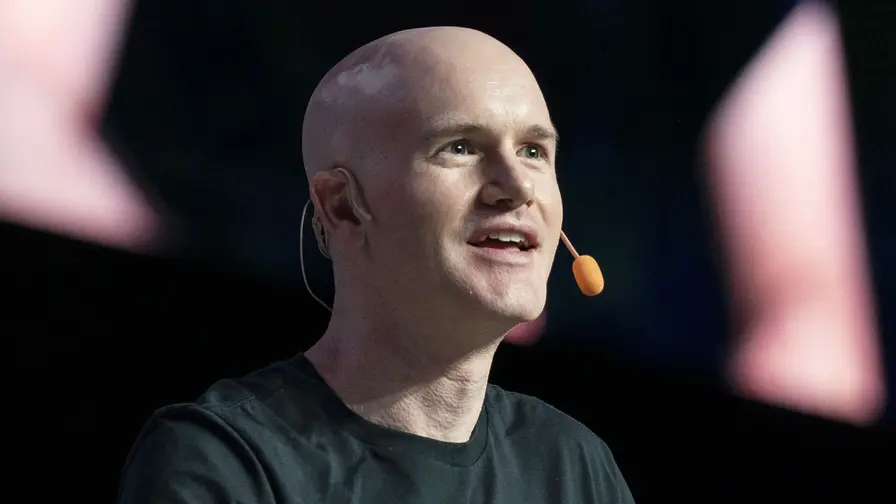
In short, short-term liquidation for major stock launches has been a recurring theme, but the broader narrative for Bitcoin — as an inflation-sensitive asset and a programmable money layer for AI-driven commerce — remains intact according to industry leaders.

Leave a Comment
Comments (2)
wow didnt expect AI agents to actually spend crypto, thats wild. if x402 scales microtransactions could boom, but security and perms need to be tight..
Is this for real? Selling BTC to buy IPOs kinda makes sense, but hundreds of millions out in 2 days? smells like timing & algos, not long term. curious if retail followed