
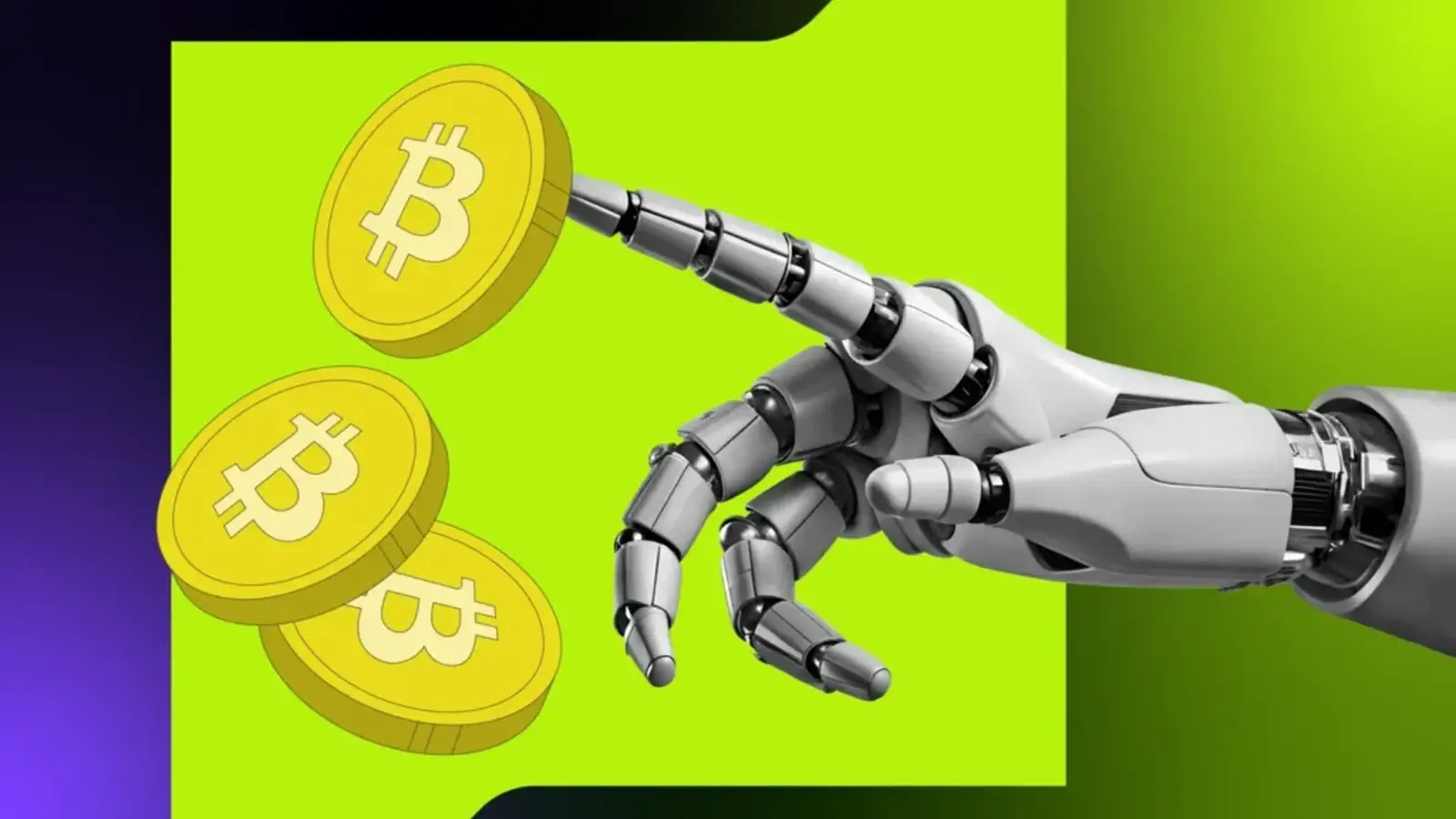
AI-driven math breakthroughs raise fresh crypto alarm
Recent advances in artificial intelligence research have reignited concerns that AI, not quantum computers, could become the first force capable of undermining the cryptographic foundations of Bitcoin, Ethereum and other blockchain systems. Reports that top AI labs have made major mathematical progress — including proofs bearing on long-standing complexity questions — have prompted renewed scrutiny of elliptic curve cryptography, RSA, and the digital-signature schemes that secure crypto wallets.
Why the conversation matters for blockchain security
Cryptocurrencies rely heavily on mathematical problems that are hard to solve with today's computers. Bitcoin and many Ethereum accounts use the elliptic curve digital signature algorithm (ECDSA) and related elliptic curve schemes. If an efficient algorithm were discovered that solved the elliptic curve discrete logarithm problem at scale, attackers could potentially derive private keys from public keys and authorize transactions without wallet owners' consent. Historically, the primary worry has been quantum computers; now AI-accelerated research may shorten timelines dramatically.
What prompted the recent warnings
Warnings escalated after prominent computer scientist Scott Aaronson — a professor at the University of Texas at Austin and former OpenAI researcher — said he had reliable intelligence that AI labs were withholding important cryptographic findings. Aaronson's comments followed publication activity from OpenAI and Anthropic: both groups released formal proofs resolving a decades-old problem in algebraic complexity theory, specifically Valiant's VP ≠ VNP conjecture. While solving this conjecture is not the same as breaking cryptography, it signals the rapid maturation of AI-assisted mathematical discovery.
OpenAI, Anthropic and the speed of math research
Anthropic credited an internal Claude research model for its formalization and published results, including machine-checked proofs using Lean. OpenAI likewise disclosed that it achieved a related result weeks before public posting. OpenAI's chief scientist also described unprecedented acceleration in mathematical progress from upgraded internal models that began generating solutions to problems researchers had long wrestled with. Observers caution that faster math discovery increases the likelihood of uncovering cryptanalytic breakthroughs.
How realistic is an AI-based cryptographic break?
There is an important distinction between proving high-level complexity results and producing a direct, practical attack on deployed cryptography. The recent proofs do not themselves provide a recipe for breaking ECDSA or RSA. Still, industry commentators and some researchers believe that AI tools could soon assist in finding efficient algorithms for specific hard problems. Unlike quantum attacks, which require advanced quantum hardware, an algorithmic breakthrough driven by AI could potentially run on classical infrastructure and therefore pose an immediate threat.

Glassnode's exposure estimate for Bitcoin

Blockchain analytics firm Glassnode has quantified the potential exposure. Its analysis suggests roughly 7.12 million BTC — approximately 35.4% of Bitcoin's issued supply — are associated with addresses that publicly expose keys and could be at risk if elliptic curve cryptography were compromised. Address reuse alone accounts for 25.8% of circulating BTC, and exchange-held funds represent about 11.6% of total supply. Certain address formats and Taproot outputs also reveal public keys by design, increasing the pool of vulnerable assets.
Responses from the Ethereum ecosystem and developers
The Ethereum Foundation has explicitly flagged AI as a more immediate systemic risk than quantum computing and is accelerating efforts to replace elliptic curve primitives with hash-based alternatives. Hash-based cryptography offers resistance to both quantum and some AI-assisted threats and is being evaluated for validator signatures, user accounts and cryptographic commitments used in data verification. The foundation has increased protocol security staffing and described the transition as more complex than the network's 2022 Merge.
Timelines, proposals and community planning
Ethereum research groups have mapped out potential timelines and design choices. Ethlabs proposed a 2027 transition plan and withdrew certain feature proposals from upcoming upgrades to allocate engineering resources toward security work. Individual researchers have suggested varied target dates — with suggestions as early as late 2028 — while the foundation keeps an internal completion goal around 2029 and plans a formal timeline review in early 2027. Meanwhile, Bitcoin developers are discussing proposals such as BIP 360 and BIP 361, which address public key exposure and the phased retirement of vulnerable transaction signatures, though these have not been activated.
What experts and commentators are saying
Industry voices remain divided on immediacy but agree on the need for preparedness. Some AI industry commentators have suggested that labs may be 'sitting on' undisclosed results, while respected researchers caution that rumors can become distorted as they circulate. Ethereum researcher Justin Drake warned that an AI-assisted breakthrough against ECDSA could arrive in months under worst-case assumptions. Others emphasize the difference between theoretical advances and practical cryptanalytic tools; nevertheless, the possibility of algorithmic discoveries capable of running on classical machines has elevated urgency across blockchain communities.
Mitigations and best practices for users and custodians
For individuals and custodial services, recommended steps include minimizing address reuse, migrating funds from legacy outputs that reveal public keys, and accelerating adoption of post-quantum or hash-based key schemes where feasible. Exchanges and large holders should consider proactive key management strategies and contingency plans that include multi-signature arrangements and gradual rollouts of upgraded cryptographic algorithms. Developers and protocol teams continue to evaluate backward compatibility, user migration paths and how best to phase in stronger cryptographic primitives without disrupting network functionality.
Outlook: adapt now, avoid panic later
The accelerating pace of AI-assisted mathematical discovery has changed threat modeling for blockchains. While there is no confirmed, public method today for breaking ECDSA or similarly deployed schemes, the combination of powerful models and ambitious research goals means that developers, researchers and custodians should treat AI-driven cryptanalysis as a real and evolving risk. Moving to hash-based or otherwise post-quantum-resistant cryptography, reducing public-key exposure, and adopting robust key-management practices are practical, forward-looking actions that can mitigate the risk before an exploit appears.

In short, the crypto industry must balance vigilance with technical rigor: track research developments from leading labs, test candidate cryptographic transitions, and accelerate defensive upgrades where possible. Preparedness and coordinated protocol-level responses offer the best chance of protecting billions in digital assets from unforeseen breakthroughs in AI-driven cryptanalysis.

Leave a Comment
Comments
No comments yet. Be the first.