

3 Minutes
Gilligan returns to the slow-burn he built his reputation on
Vince Gilligan, the creator behind Breaking Bad and Better Call Saul, is back with Pluribus — a new series that embraces the deliberate, patient storytelling fans have come to expect from him. In a recent interview with Esquire UK, Gilligan explained that he remains committed to narratives that simmer rather than sizzle, arguing that the rush toward instant, fast-paced content feels like fast food compared with the depth of a home-cooked story.
Pluribus was conceived as a four-season arc, roughly 40 episodes, a scope that allows Gilligan to develop characters and themes with the same meticulous craft that elevated his previous work. He describes the show as bigger and more challenging than his past projects, and that scale is part of the appeal: a broader canvas for moral complexity, slow reveals, and emotional accumulation.
Rhea Seehorn and familiar collaborations
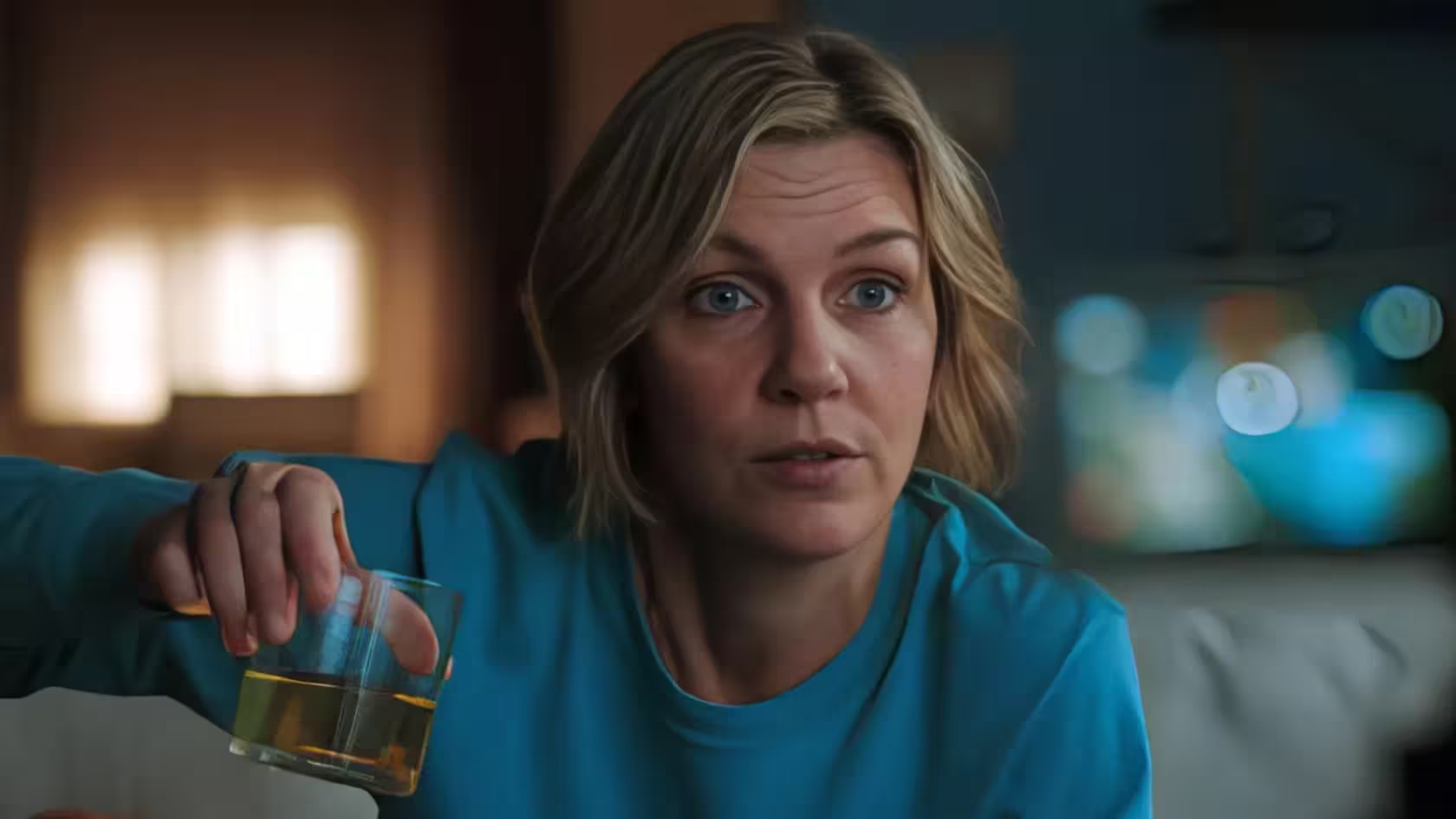
A key casting choice is Rhea Seehorn in the lead — a familiar Gilligan collaborator who won acclaim for her role in Better Call Saul. Seehorn’s presence signals both continuity and evolution: Gilligan values trusted partnerships while pushing into fresh tonal territory. Fans of Better Call Saul will notice echoes in performance and nuance, but Pluribus promises its own identity.
How Pluribus fits into current TV trends
In an era dominated by quick thrills, binge culture, and streaming algorithms that reward immediacy, Pluribus is a counterprogramming statement. The industry is increasingly split between high-concept, fast-turnaround series and long-form, director-led projects that demand patience. Gilligan’s decision to stick to a slow-burn philosophy is both a creative choice and a subtle critique of attention-economy television.
There are risks: some viewers accustomed to rapid plot progression may find the pace frustrating. Yet the payoff for others is deeper emotional resonance and richer character arcs — the same qualities that made works like Mad Men and The Wire enduring.
"Gilligan has always trusted the audience to wait for the next beat," says Elena Marquez, cinema historian. "Pluribus feels like a deliberate reclaiming of narrative time — the kind of show that rewards long-term engagement and careful watching."
Production notes, scheduling and reception
Gilligan’s team moved the first season’s finale up by two days so it would air on December 24, avoiding the marketing storm around other big-flagship releases such as Season 5 of Stranger Things. That scheduling decision highlights the competitive streaming landscape where timing matters as much as content.
Early fan reactions emphasize appreciation for Gilligan’s patience and Seehorn’s magnetic presence. Critics note the show’s ambition; some caution that its pace will be polarizing. Behind the scenes, Gilligan reportedly embraced bigger production challenges, signaling that Pluribus is designed to be both intimate and expansive.
Whether Pluribus becomes the next universally lauded Gilligan masterpiece or a divisive experiment, it’s a significant creative statement: a veteran writer-producer insisting that slow-burning television still has power in a fast-paced streaming world.


Leave a Comment
Comments
No comments yet. Be the first.