

From a Wild Pitch to a Dark Courtroom Thriller
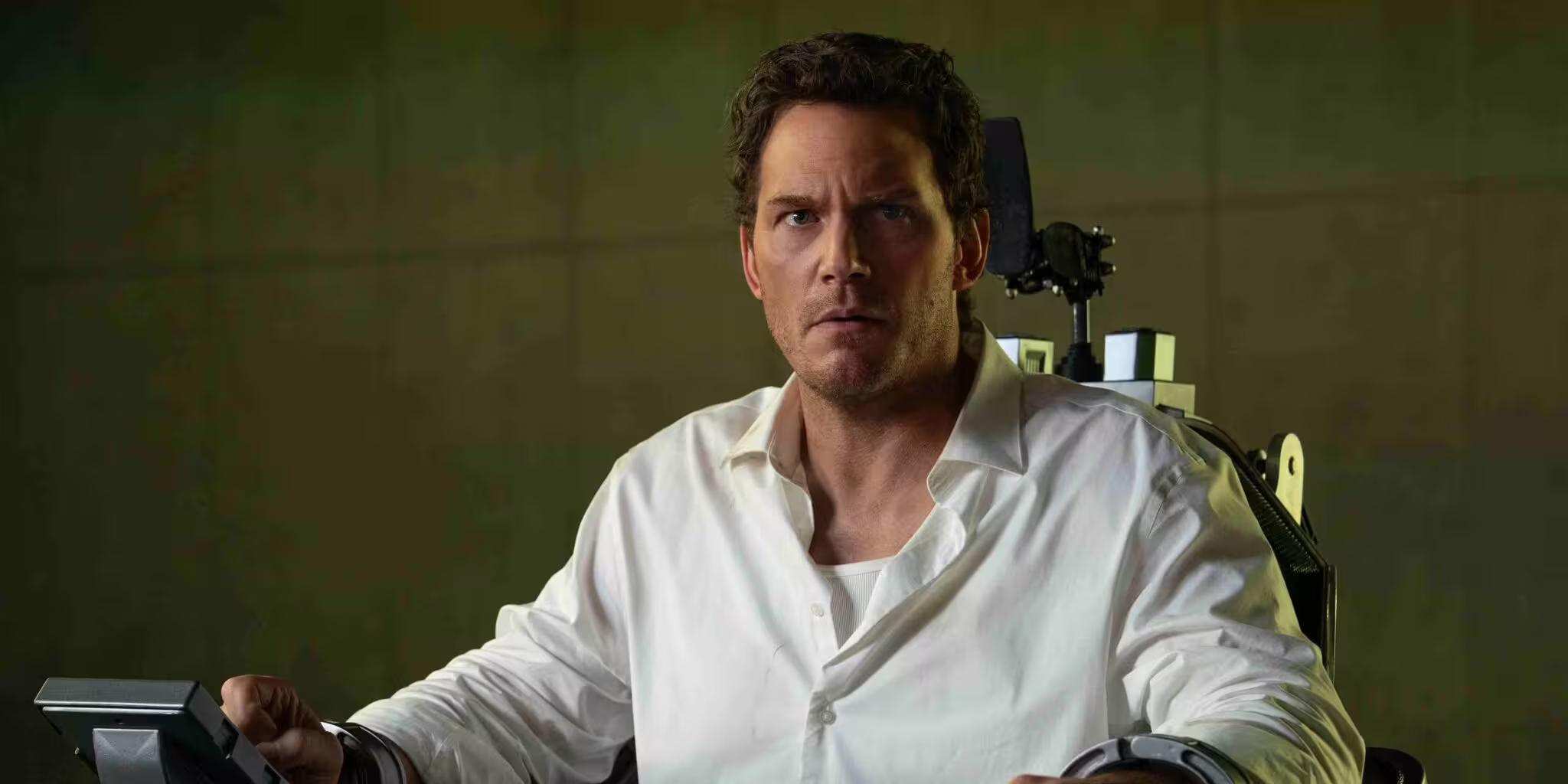
Chris Pratt recently admitted that early in production he toyed with a couple of eyebrow-raising ideas for Mercy's pivotal judge: casting Oprah Winfrey or even using a fully artificial intelligence performer. Mercy, a tense sci-fi courtroom drama built on a single, claustrophobic conceit, ultimately went a different route. Rebecca Ferguson plays Medox, the AI judge who sits in judgment of Pratt's character, Detective Chris Raven, accused of killing his wife. The film's premise is brutal and simple — defendants must convince an AI judge of their innocence within ninety minutes or face execution — and most of Mercy's drama unfolds with Pratt tethered to a chair, sparring with Ferguson's machine-like adjudicator.
Why Pratt's Ideas Sparked Debate
Pratt told Entertainment Weekly that his initial suggestions were quickly abandoned as impractical. He later described them as half-baked — and in hindsight, admitted he’s glad they never happened. Had Oprah been cast, the film’s dark tone might have tilted toward something almost satirical; an AI actor could have raised thorny ethical and technical questions about performance, authorship, and the future of human artistry.
Those possibilities aren't idle hypotheticals. Over the past few years Hollywood has seen a rising interest in synthetic performers and digital likenesses — from de-aging tech to AI-generated extras — and Mercy landed squarely in that cultural conversation. Pratt himself has grown vocal about AI actors, calling them imperfect imitations that can't replace human nuance. That stance mirrors broader industry anxieties about jobs, creative credit, and the unpredictable aesthetic results when algorithms attempt to replicate emotion.
Comparisons and Context
Mercy is part courtroom drama, part near-future sci-fi —think 12 Angry Men filtered through Ex Machina’s moral questions and the procedural intensity of a Black Mirror episode. Rebecca Ferguson, who has showcased range in films like Dune and the Mission: Impossible franchise, brings a calibrated coldness to Medox that anchors the film’s high-concept stakes. Pratt, better known for Guardians of the Galaxy’s roguish humor and Jurassic World’s action beats, leans into a darker, more introspective register here, reminding viewers he can carry tense, dialogue-heavy scenes.
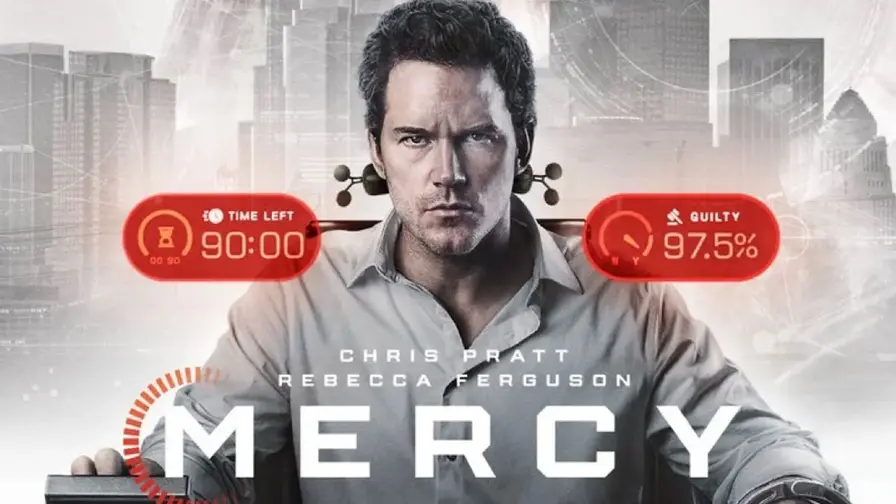
Where Ex Machina probes a single A.I.’s consciousness and I Am Mother explores caregiving machines, Mercy asks a different question: can a legal system governed by code deliver justice — and how terrifying is an algorithm empowered to kill?
Reception: Critics vs. Audiences
Critics have been largely hostile; Rotten Tomatoes lists a critics' score around 20%, criticizing Mercy for uneven execution and a premise that outstays its welcome. Yet audience ratings tell a different story: roughly 81% of viewers have reported enjoying the film. That split suggests Mercy resonates with genre fans who appreciate tight, high-concept thrillers, even when critics find flaws.
Social media conversations reflect both camps. Some praise the film’s commitment to a single-location, high-stakes narrative and the performances of Pratt and Ferguson. Others fault pacing and logic gaps — and many remain fascinated by the almost-meta idea that an AI could be imagined as a full-fledged performer.
"Mercy taps into current anxieties about machines and morality," says film critic Anna Kovacs. "While the movie isn't flawless, its willingness to stage a stripped-down debate between human frailty and algorithmic certainty makes it compelling. It's a provocative addition to modern sci-fi court dramas."
Why Mercy Matters — Even If Imperfect
Mercy may not convert the skeptics, but it contributes to an important conversation about technology's place in storytelling. The film's production anecdotes — from Pratt's offbeat casting ideas to the decision to center an actor like Ferguson as the cold, articulate face of an AI judge — highlight how creative choices steer tone. Mercy also demonstrates that low-to-mid-budget sci-fi can still provoke discussion: about justice, about performance, and about whether cinema should embrace or push back against synthetic artistry.

Whether Mercy will be remembered as a provocative misfire or a cult favorite for fans of tense, moralistic sci-fi remains to be seen. For now, it stands as a curious film that dared to ask whether an algorithm should hold a gavel — and whether we, as an audience, are ready for the answer.

Leave a Comment
Comments (2)
Can an algorithm be fair? sounds like a neat premise but 90 mins to prove innocence sounds absurd, pacing probs the real issue not tech. if that's real then yikes
Wow, Oprah as a judge? That would've turned Mercy into satire real fast. AI actor tho... creepy but kinda brilliant. Glad Ferguson played the machine, still gives me chills, Pratt pulling a weird wild pitch lol