
Why The Final Reckoning isn’t Cruise’s best — but it shocks in the right ways
Tom Cruise’s latest Mission: Impossible entry, The Final Reckoning, may not eclipse Fallout as his most daring long-form adventure, but it delivers two action set pieces that will be discussed by fans and filmmakers for years. The film feels tonally like a franchise coda—think of Avengers: Endgame for superhero sagas—offering closure, spectacle, and a clear narrative finish for Ethan Hunt. What lifts the movie, however, are two visceral, mostly practical stunts: an intense underwater retrieval and a dazzling biplane chase.
Underwater pressure: the submarine sequence
About halfway through the film, the plot forces Ethan into a sinking submarine to recover a critical McGuffin. The sequence follows the classic rule of escalation: everything that can go wrong does. Doors jam, compartments flood, and the submarine drifts toward a cliff-like drop. The tension tightens when his escape route funnels into a torpedo tube and his diving suit snags—transforming gear into a weapon against him. The result is claustrophobic, breathless cinema: an action scene built on timing, physics, and genuine peril rather than quick cuts and CGI trickery.
The biplane that steals the show
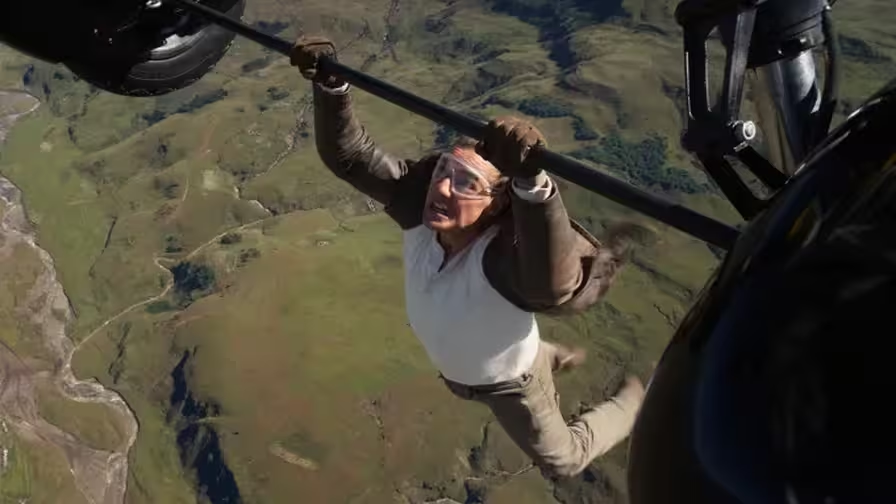
The film saves its most headline-grabbing stunt for the third act: a biplane chase that was teased in early trailers and finally pays off. An enemy flees in a brightly painted vintage biplane; Ethan hops into another—two contrasting planes (one vivid red, the other sunflower yellow) slicing the sky—and the pursuit becomes almost balletic. Tom Cruise hangs from the wing, spins and reels in a sequence that blends comic-book flair with real-life risk. Visually, it’s pure cinema; practically, it’s the kind of stunt that has defined Cruise’s career.
Context and what it means for action cinema
These sequences arrive at a moment when big-budget action is split between digital spectacle and practical stunts. Cruise continues to champion the latter, echoing set pieces like the elevator shootout in The Matrix or the car chase in The French Connection in terms of iconic status. The Final Reckoning reminds us why audiences still respond to tangible danger on screen: practical effects age differently, creating a shared gasp that editing alone rarely produces.
Trivia and reception: reports from set mention rigorous breath-hold training and multiple rehearsal flights for safety; fans online have already nominated both scenes for “best stunt” lists. Critics are split on pacing and story, but almost everyone concedes the movie’s physical set pieces succeed.
A spirited finale and two unforgettable stunts make The Final Reckoning essential viewing for action fans—even if it’s not Cruise’s single best film. It’s a reminder that sometimes, in modern cinema, the simplest combination—actor, stunt, and risk—still wins the room.

Leave a Comment
Comments
No comments yet. Be the first.