
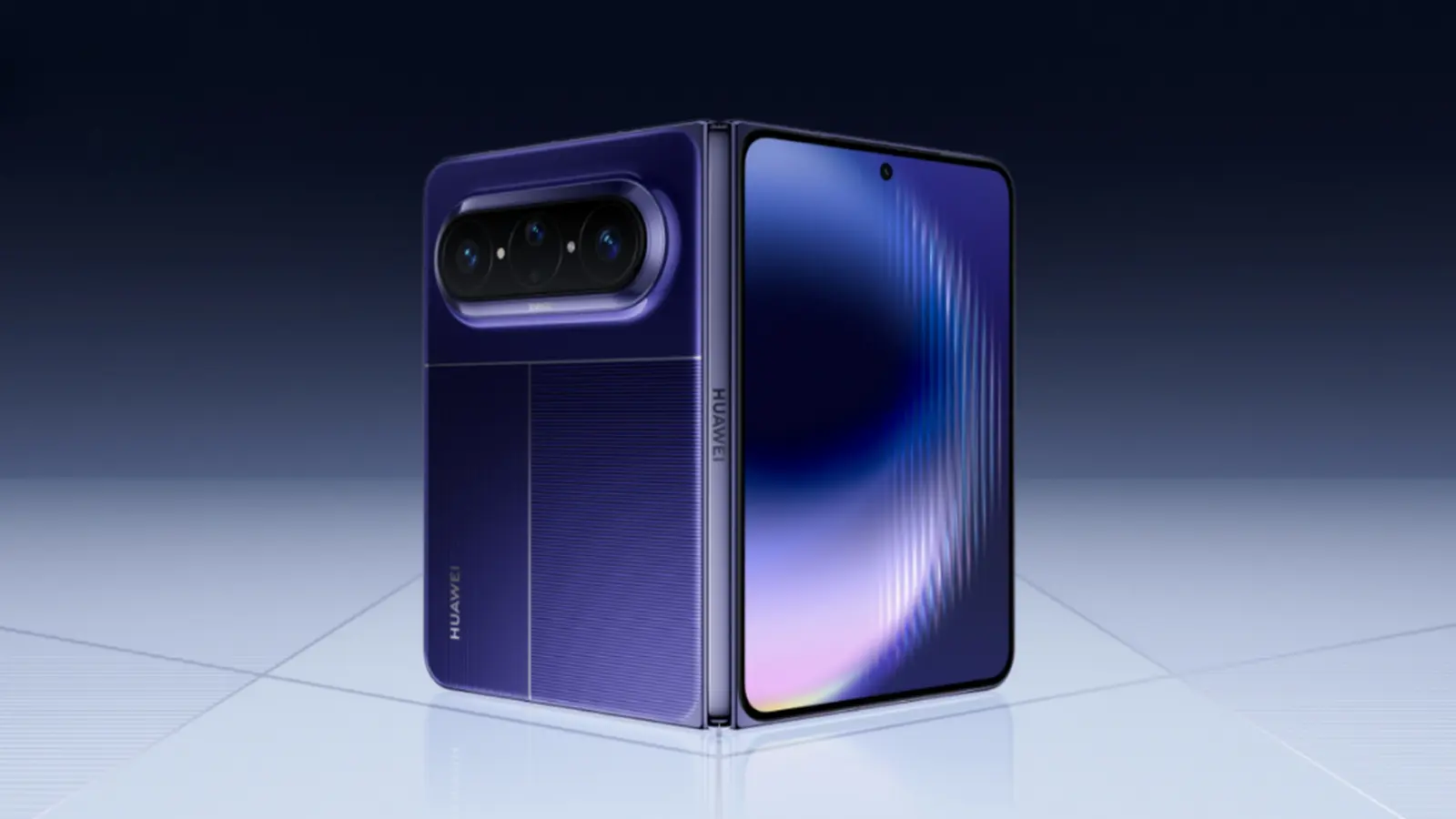
Open it and the screen feels eerily familiar — like a small sheet of paper you already know how to use. That was the point behind Huawei's newest horizontal foldable: design that behaves like everyday objects, not like a gadget from a concept video.
Yu Chengdong, Huawei’s Executive Director and chairman of the Terminal BG, has been explicit about one stubborn gripe the team wanted to fix: awkward content scaling when a foldable switches between compact and open modes. The cure they chose is simple and clever — a √2:1 aspect ratio when unfolded, inspired by the A4 page. The result is smoother transitions for documents, websites, and videos, and fewer moments where content looks stretched or tiny.
But the ratio is only part of the story. Engineers measured how people actually hold and read devices — typical viewing distance hovers near 30cm — then tuned bezel width, text scaling and common content ratios to match those habits. The aim wasn’t to build the biggest inner screen. It was to build the most comfortable one. When you open the Pura X Max, it aims to feel like a pocketable tablet, not a distorted, awkwardly shaped display.

And buyers noticed. According to analyst @RDObservation, the Pura X Max family pushed roughly 343,700 units in its first month on sale (late May 2026), a higher figure than any Huawei foldable achieved during the same launch window. Even more telling: the premium Collector’s Edition made up about 198,500 of those sales, underlining appetite for high-end configurations.
Counterpoint Research corroborates the trend, showing the Pura X Max outpacing previous Huawei models such as the Mate X7 and earlier Pura X units in initial weeks. So what’s driving this momentum? Practical design choices and HarmonyOS optimizations make the device act less like an experiment and more like a usable daily tool.
The Pura X Max didn’t just set a sales mark — it sold at premium levels while convincing people that a foldable can be genuinely practical.
There’s a subtlety here. Most early foldable thinking focused on novelty: bigger screens, thinner hinges, splashy form factors. Huawei’s team flipped that script by asking mundane questions: How do people read email on a folded device? How far do their eyes travel across a screen? The answers led to engineering compromises that make sense in the real world.
Is this a permanent shift or a temporary spike? It’s too early to tell. But the Pura X Max’s early performance suggests a clearer path for foldables — one that prioritizes ergonomics and content fidelity over headline specs alone. If more manufacturers follow, the next few years could look less like a parade of prototypes and more like a steady evolution toward practical multi-form devices.

Leave a Comment
Comments
No comments yet. Be the first.