
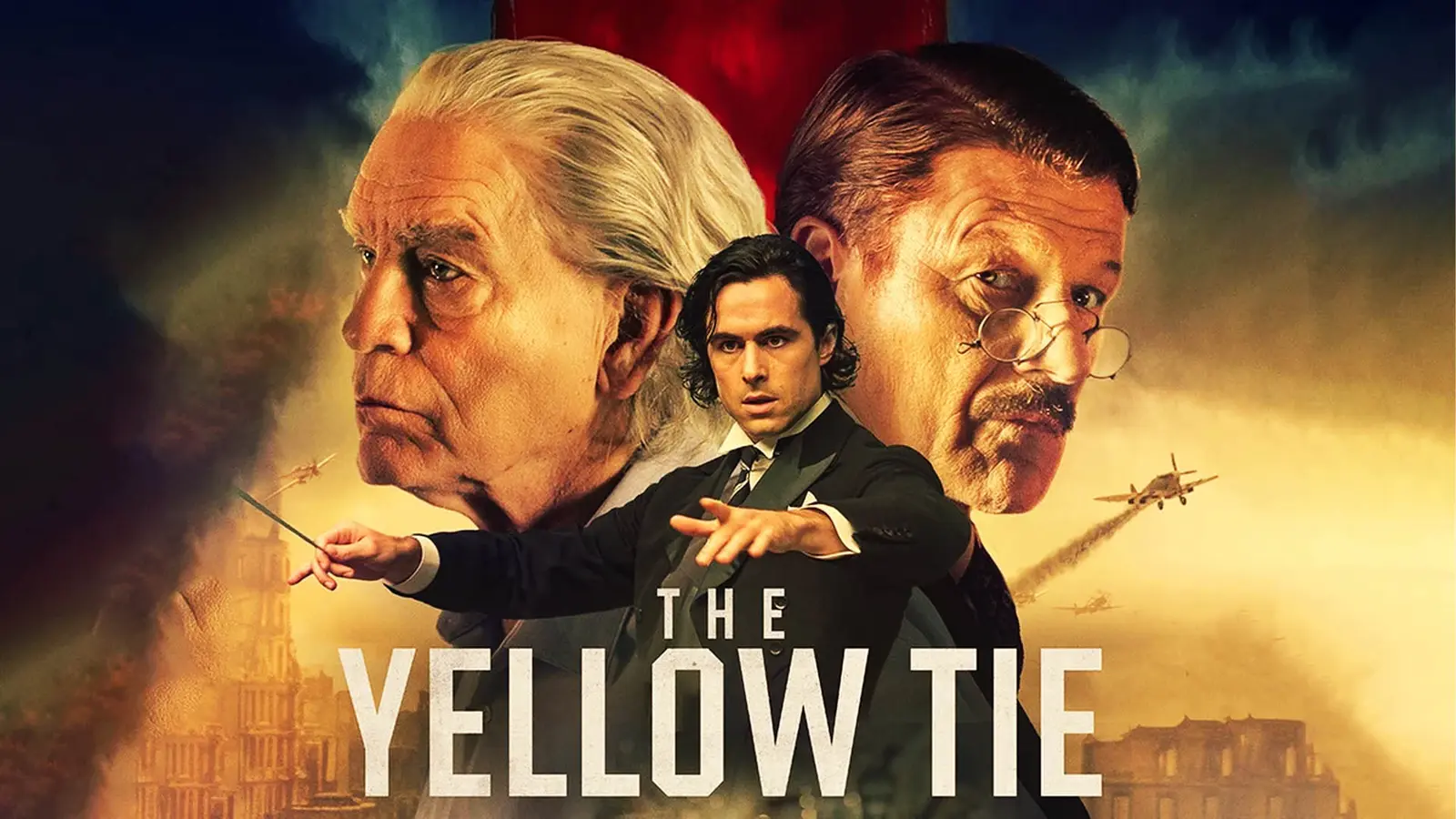
"Always follow the truth. Beauty is only bait." That line anchors The Yellow Tie and hums through its 145 minutes like a recurring motif. Short, sharp. Then it lingers.
Serge Yvan Celibidache—son of the legendary conductor Sergiu Celibidache—makes a deliberate, almost ascetic film about a complex man. He resists the easy seduction of spectacle. The movie could have been a glossy string of performances: flashy crescendos, applause, montage after montage of triumph. Instead, it chooses a quieter obsession: how does one live a life devoted to the moment, to the unfiltered experience of music?

Ben Schnetzer embodies the young Sergio with restless precision; John Malkovich, in the later years, is a study in brittle magnetism. Kate Phillips brings a grounded, luminous presence as the woman who steadies him. Brief turns—Sean Ben among them—stick because the film insists on truthful gestures over theatrical flourishes. The casting is precise. The chemistry is lived-in, not announced.

If you expect a conventional music biopic—Michael-style excess, a parade of headline-making performances—you'll be surprised. Celibidache's film borrows from the discipline of Zen. It privileges the immediate. It asks the viewer to slow down, to listen, and to be present. Scenes of performance are not set-pieces for adulation. They are moments of revelation. The camera lingers on breath, on trembling fingers, on faces in the dark. Little epiphanies arrive without fanfare.

The pacing is patient but never indulgent. Some sentences are long. Some are one word. This is intentional. The rhythm of the film mirrors the life it portrays: a temperament that refuses to be hurried, a creative mind that unfolds in layers. Tension is built through suggestion rather than explanation. Questions hover. Which decision mattered most? Which regret shaped the art? We feel the knots without being handed a neat unraveling.


Visually, The Yellow Tie is meticulous. Every frame is composed with the care of a score. Yellow light threads through pivotal sequences—dawn-like, warm, almost ritualistic—and the titular tie becomes more than an accessory. It is a symbol of rebellion, reconciliation, and the hard-won peace that arrives at the end of an arduous creative life. When the tie returns to the protagonist, we sense more than a costume change; we sense a life closing a circle.
Those who make films about musicians often fall into the trap of turning performances into music videos. This film refuses that shortcut. The concert scenes serve narrative and psychological truth. The soundtrack is woven into the fabric of the story, carrying emotional weight without dominating it. If you know the composer’s catalogue you may detect echoes and callbacks; if you don't, the music still lands, because the score is used to deepen mood rather than to showcase virtuosity alone.

What makes the movie humane is its choreography of relationships. Friendships, romantic ties, and familial tensions are all drawn with an economy that feels earned. Even characters who appear briefly leave emotional traces, as though memory itself were a character in the film. The director has a knack for revealing interior life through small, sensory details—an offhand comment, a held gaze, the way a hand hovers over a piano key.
The Yellow Tie isn't preachy about its philosophy. Zen is felt, not lectured. The film invites viewers into a contemplative mode: to watch slowly, to ask which questions are worth asking. It performs a kind of cinematic meditation, where the point is not always to answer, but to arrive at the question with clarity.
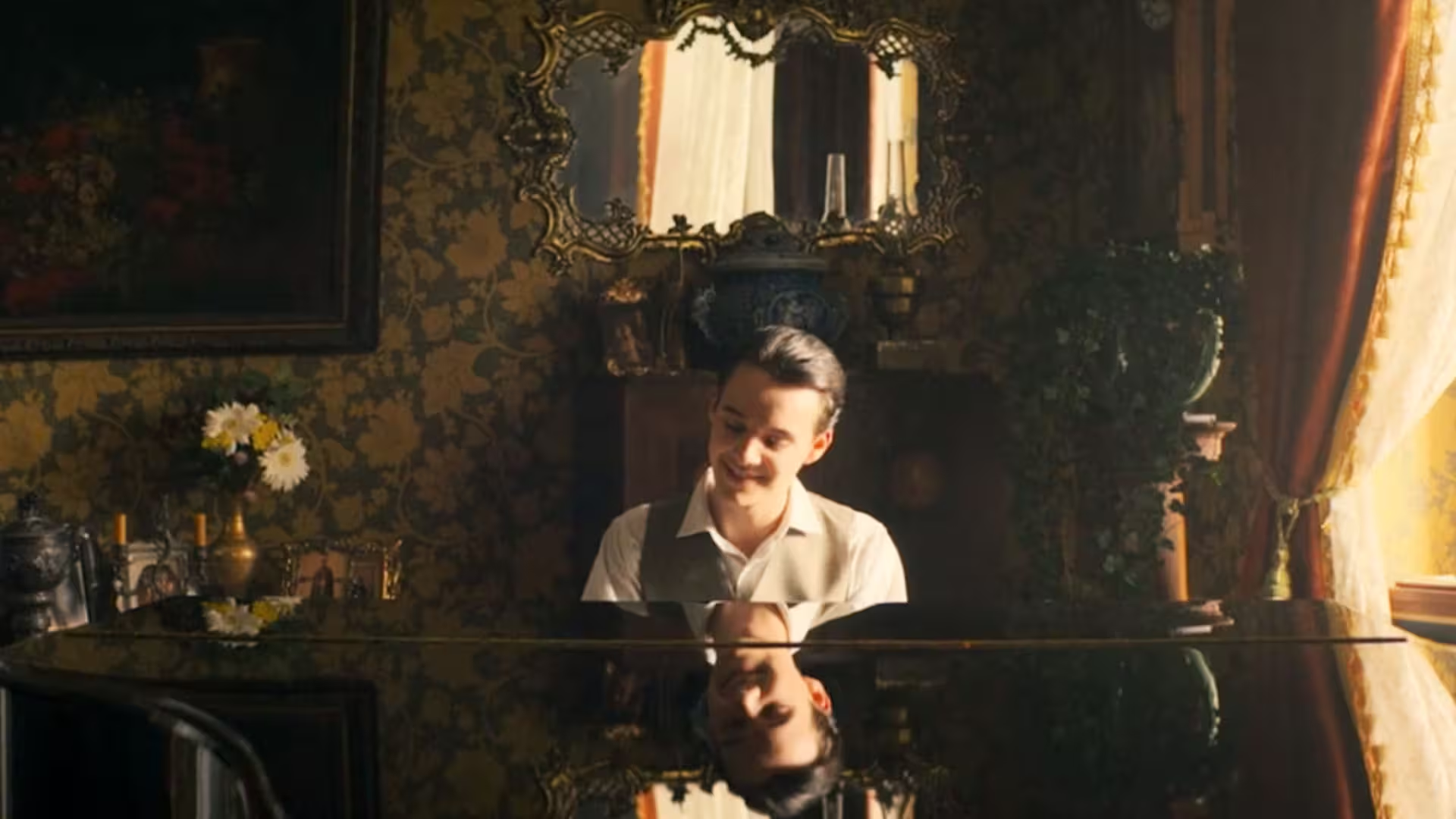
There are ambitions here that pay off. Mise-en-scène, sound design, and actorly restraint come together to produce something rare in music-centered cinema: a film that privileges the art of film itself. It asserts, quietly and confidently, that a music biopic should behave like a piece of cinema first and a concert film second.

Does it always succeed? Not completely. At times the film's reverence verges on sanctimony. A few subplots remain deliberately hazy—by design, perhaps—but some viewers may crave firmer lines. Yet those are small prices to pay for a work that consistently aims higher than nostalgia or spectacle.

For anyone tired of reductive musician portraits, The Yellow Tie offers a roadmap: marry performance to narrative, let silence speak, and always keep the present moment alive. A bold model for future adaptations. I give it 9 out of 10, and a recommendation to see it on the big screen so the yellow light can find you there.

Leave a Comment
Comments (2)
Is it really Zen or just arty avoidance? sounds tempting but i'm skeptical, maybe too reverent, maybe exactly what slow cinema needs.
wow didnt expect that — uh wait no dash, lol. This makes me wanna see it asap, Ben sounds electric, Malkovich brittle, yellow light pls...