
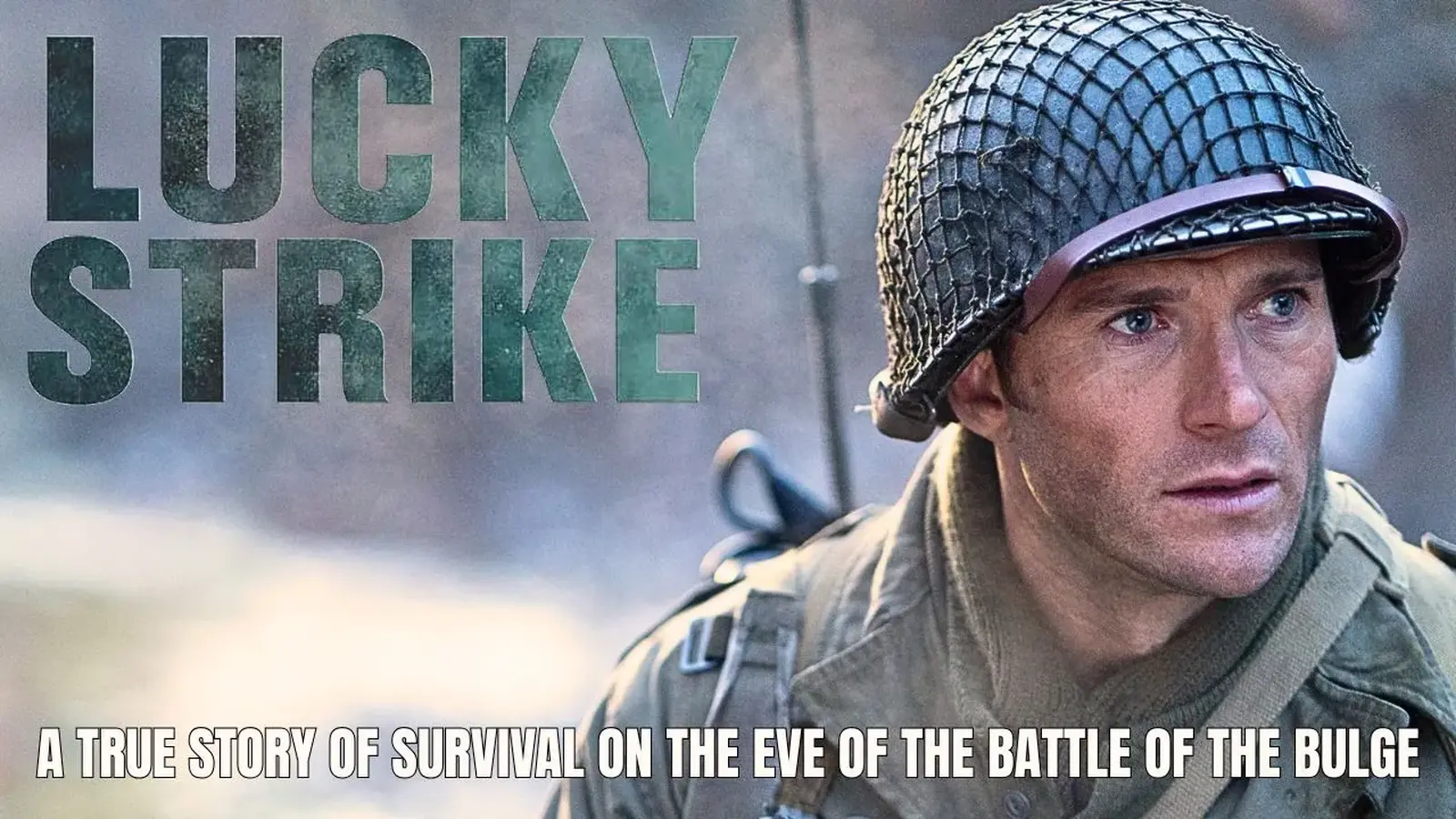
There’s a strange kind of silence that follows Lucky Strike. It isn’t the quiet of a great film lingering in your head; it’s the quieter hush of something competent that never truly connects.
Rod Lurie’s latest war picture puts Scott Eastwood at the center of a familiar survival tale set during the Ardennes offensive. Eastwood plays Captain John Cassel, a wounded American soldier stranded behind enemy lines, a role that follows the tried-and-true blueprint of lone-man-against-odds war dramas. Colin Hanks and Onjanuwa Ellis-Taylor round out the cast, and the production values—cinematography, period detail, stunt work—are often impressive enough to convince you you’re in winter-bound Europe circa 1944.
So where does the film stumble? It’s less about the lack of craft and more about the missing spark. The movie delivers steady thrills: a chase here, a firefight there, moments that could have had real sting. Instead, the emotional engine rarely catches fire. Scenes land, but they don’t haunt.

Critics have been mixed. On Rotten Tomatoes the film sits at 58 percent from 38 reviews; Metacritic registers a lower average, 46 out of 100 based on seven critics. That split says something: many reviewers acknowledge the film’s technical strengths while arguing it doesn’t break new ground in an already crowded subgenre.
Voices across outlets reflect that ambivalence. The New York Times’ Nicholas Rapold scored it 70/100 and framed Lucky Strike as a blend of survival thriller and nostalgic salute to wartime heroism—watchable, occasionally stirring, but rooted in a sentimental mode that feels a touch old-fashioned. Variety’s Owen Gleiberman gave it a 60, describing Lurie’s direction as tidy and capable—neatly staged sequences that never quite become magnetic.
On the other hand, The Hollywood Reporter’s Frank Scheck (50/100) praised the film’s craft yet argued it never finds the narrative momentum it needs. More severe critics landed harder. Screen Rant’s Alex Harrison rated it 30, calling Lucky Strike oddly familiar to the point of mimicry and lacking the cinematic magic that lets historical films suspend disbelief. RogerEbert.com offered one of the harsher takes (12/100), dismissing the film as overly patriotic and emotionally vacant.
In short: Lucky Strike looks the part and sometimes feels like it does the job, but it seldom surprises you.
That gap between form and feeling is the film’s core dilemma. If you hunger for disciplined wartime set-pieces and a lead performance that carries quiet resolve, Lucky Strike will satisfy. If you’re after a fresh angle on World War II storytelling—something that reframes the familiar into something uncanny or revelatory—you may leave the theater wanting.
Either way, the film is worth a look for fans of the genre and viewers tracking Scott Eastwood’s steady arc. And for anyone curious about how modern filmmakers revisit mid-century heroics, Lucky Strike is a tidy, if ultimately modest, addition to that conversation.
Will it become a hidden favorite or simply another wartime footnote? That choice might come down to what you expect from a war movie: comfort and craft, or a jolt of something new.


Leave a Comment
Comments
No comments yet. Be the first.