
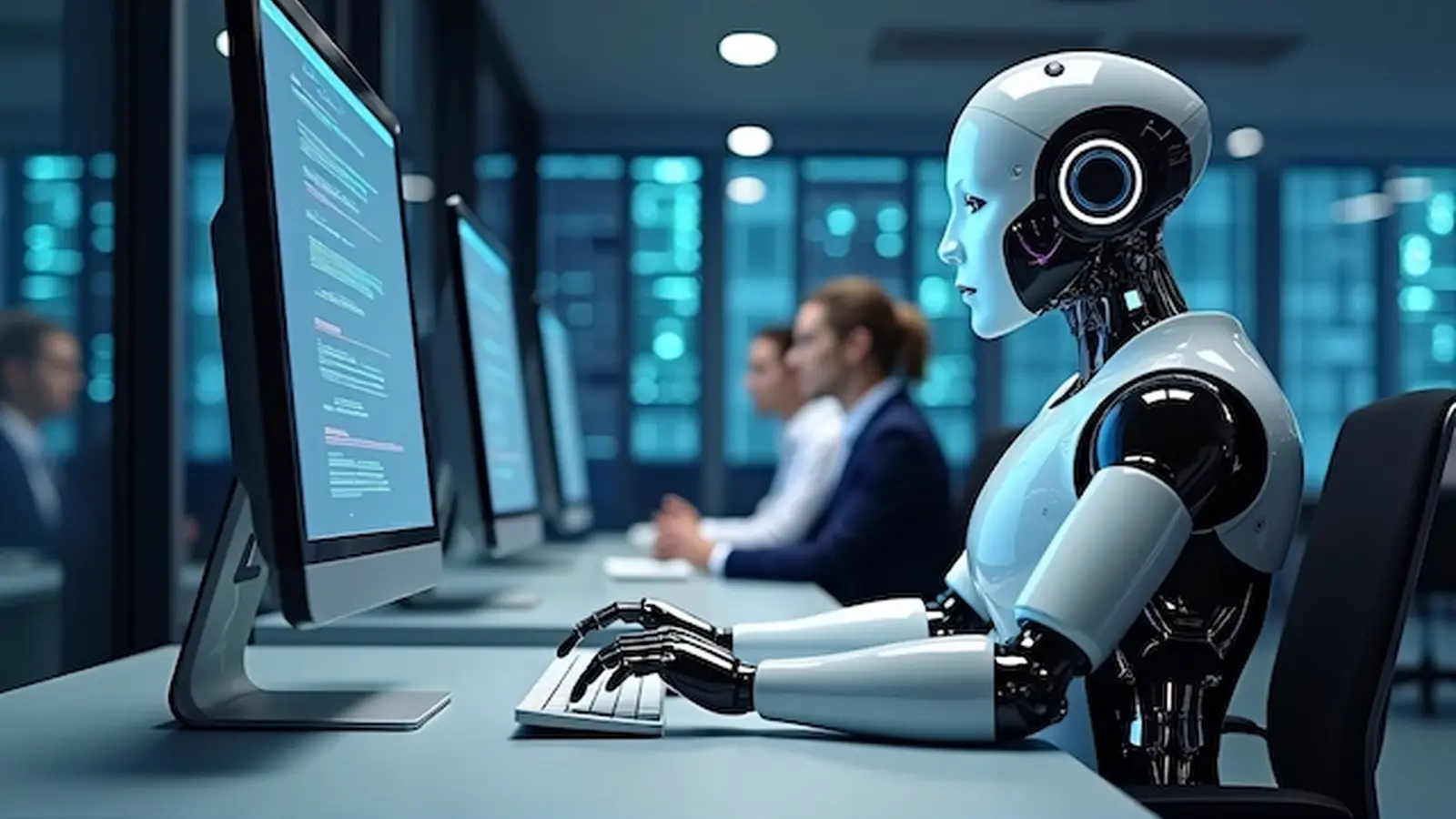
Picture the office of tomorrow: fewer entry-level desks, more humming servers. It’s not a sci‑fi pitch. It’s a warning from Anthropic’s CEO, and it lands hard.
Dario Amodei told CNN that the rapid strides in artificial intelligence could eliminate up to 50% of basic administrative and office roles within one to five years. He added that unemployment could climb by 10 to 20 percentage points as these routine tasks are automated.
The most striking part of Amodei’s comparison is how quickly capability has scaled. A few years ago, he says, AI models performed like a sharp high‑school student. Today, they behave more like a top university undergrad — and in some cases, they already surpass that level. The implication is simple: tasks we once reserved for new hires are now squarely in AI’s wheelhouse.

That matters because junior staff typically handle repeatable workflows: data entry, first‑pass customer responses, basic document drafting, scheduling. These are precisely the activities current models can replicate or accelerate. When the machinery starts to do the heavy lifting, the human roles that depended on those predictable inputs are the first to shrink.
Speed is the real disruptor here. Previous waves of automation unfolded over decades, giving labor markets time to adapt. This time, progress is compressed. Companies can deploy capable models quickly, and that shortens the window for retraining, regulatory adjustments, and social safety nets.
So what should employers and policymakers do? Rethink job design. Invest in reskilling that targets higher‑value human skills — judgment, complex problem solving, interpersonal nuance. Experiment with human‑AI teaming models that preserve learning opportunities for newcomers while taking advantage of automation. And yes, consider transitional policies to blunt immediate economic pain.
There are winners and losers in every technological shift. The question isn’t whether AI will change office work — it already has. The harder question is how we manage the messy transition so people don’t get left behind.
This change will be disruptive; the safer bet is to prepare, not panic.


Leave a Comment
Comments
No comments yet. Be the first.