
It was a close race — and this time iQOO edged ahead. The AnTuTu benchmark chart for June 2026 landed with familiar faces at the top, but a subtle shift in the pecking order has the iQOO 15 Ultra wearing the crown.
iQOO’s flagship posted an average score of 4,142,923, narrowly beating the gaming stalwart +RedMagic 11S Pro, which scored 4,101,393. Small margins. Big bragging rights. Both handsets lean heavily into performance-first design: aggressive active cooling systems, firmware tuned for sustained loads, and thermal plumbing that lets silicon sing under pressure.
So what actually made the difference? It wasn’t a single flashy spec. It was the sum of many small advantages — heat management that stops throttling early, software that prioritizes frame-time stability, and power delivery optimized for peak bursts. In short: the 15 Ultra turned short-lived horsepower into sustained pace, and that matters in real-world gaming and heavy workloads.
Surprising to some, the +RedMagic 11S Pro — the only phone in the top ranks running an overclocked Snapdragon 8 Elite Gen 5 SKU — fell to second. Overclocking brings headroom, yes. But raw clock speed isn’t everything. Efficiency under sustained stress and the device’s ability to keep clocks high without overheating are what separate a leaderboard finisher from a fleeting champion.
Look beyond the top two and a clear pattern emerges: Snapdragon 8 Elite Gen 5 dominates flagship market performance. Among the top ten AnTuTu entries for June, only one device runs MediaTek silicon. That outlier is the iQOO 15T, powered by the Dimensity 9300, which lands in ninth place with an average score of 3,809,793 — a respectable result, but not enough to challenge the Elite-equipped machines.
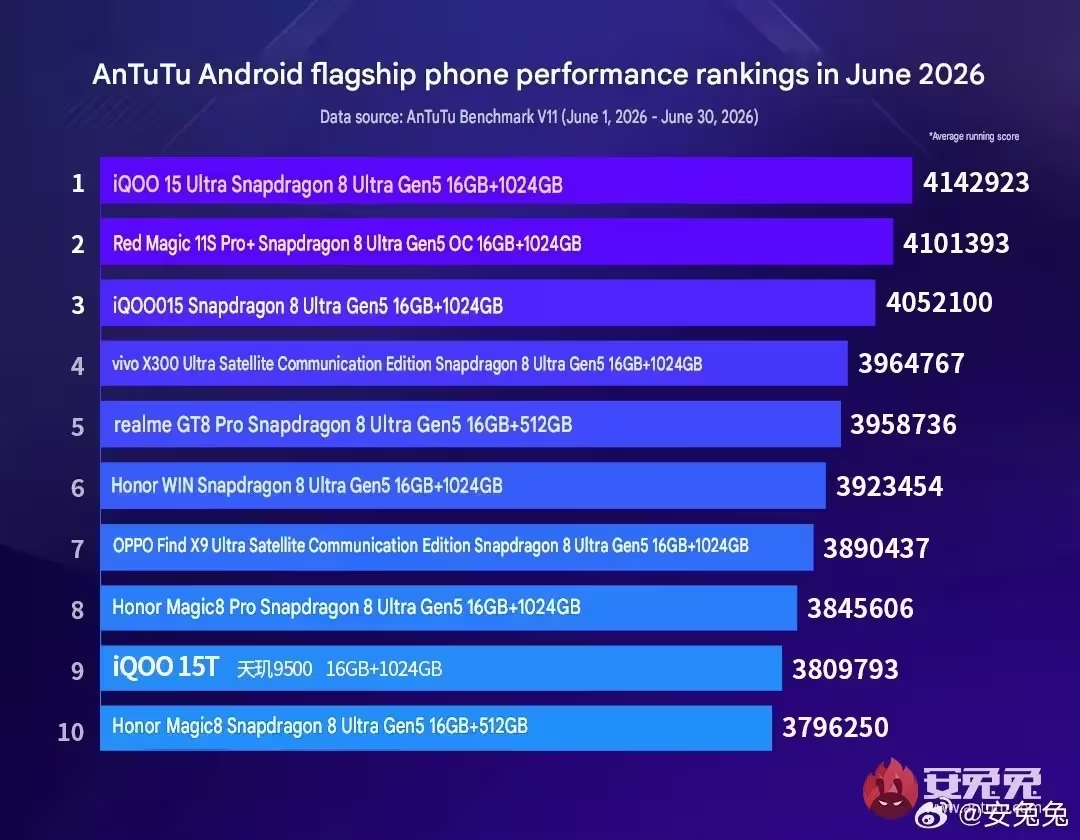
And note who’s missing. Phones using the standard Snapdragon 8 Gen 5 are conspicuously absent from the leaderboard. The reason is blunt: the standard Gen 5’s performance sits closer to last-generation flagship chips than to the Elite-tier silicon introduced this cycle, leaving it unable to compete at the very top where thermal tuning and peak sustained throughput are decisive.
This month’s list tells two stories at once. One is technical — silicon matters, but integration matters more. The other is strategic: manufacturers chasing benchmark supremacy increasingly invest in holistic performance packages, not just raw cores and clocks. The result is a top chart populated with gaming-focused devices that treat cooling, power delivery, and software as first-class features.
For buyers, the takeaway is simple: if you demand the absolute best in sustained performance — whether for gaming, content creation, or heavy multitasking — pay attention to how a phone manages heat and power, not just peak benchmark numbers. Benchmarks like AnTuTu reveal gaps between theoretical horsepower and usable, real-world performance. Which phone feels faster over an hour of gameplay? That’s the question these scores aim to answer.
Expect more tight races ahead. With OEMs iterating on cooling systems and chipmakers refining Elite-tier silicon, next month’s leaderboard could look different. Stay tuned — and maybe pack a charger.


Leave a Comment
Comments
No comments yet. Be the first.