
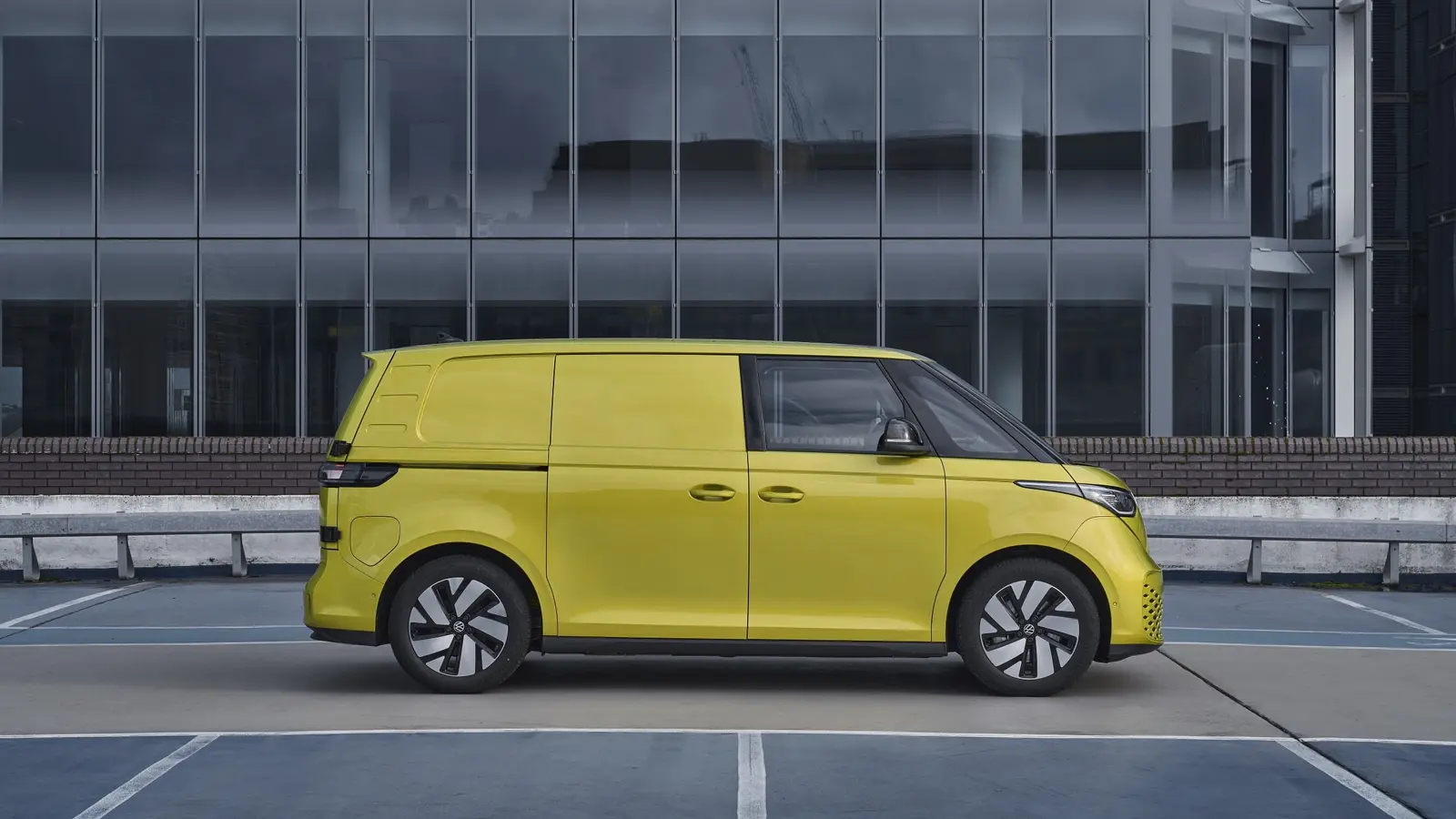
Volkswagen trims price and boosts range for ID. Buzz Cargo
Volkswagen Commercial Vehicles has introduced a revised entry-level ID. Buzz Cargo for the UK market, cutting the asking price while improving real-world usability for tradespeople and fleet buyers. The new base model swaps the outgoing 59-kWh pack for a more efficient 58-kWh battery and delivers up to 218 miles (351 km) WLTP on a single charge — about 17 miles more than before — at a lower cost.

What changed and why it matters
This update isn't just about shaving pounds from the sticker. Volkswagen has repositioned the ID. Buzz Cargo to be more competitive in a crowded light commercial vehicle segment that includes the Kia PV5, Ford E-Transit Courier, and Renault Kangoo E-Tech. The new base price in the UK starts at £29,995 before VAT, representing a £5,655 saving compared with the previous entry-level variant. Buyers can potentially reduce the effective price further by claiming the Plug-In Van Grant, which currently deducts £5,000 off the advertised sum.
For many fleet managers and sole traders, that combination of lower upfront cost and government support makes the switch from diesel to electric more feasible without compromising capability.

Performance and efficiency gains
Alongside the slightly smaller but more efficient battery, Volkswagen has raised motor output from 170 to 190 metric horsepower (about 168 to 187 mechanical hp). The manufacturer has not specified the exact technical changes behind the power bump, though improvements in cell chemistry and powertrain calibration are likely contributors. The extra muscle should help the van feel brisker when merging or carrying heavier loads on motorways.
Key specs at a glance:
- Battery: 58 kWh (improved cell efficiency)
- WLTP range: up to 218 miles / 351 km
- Power: 190 PS (approx. 187 hp)
- V2L output: 2.0 kW continuous, peaks up to 3.6 kW
- Cargo area three-pin socket: standard

Vehicle-to-load: a practical tool for trades and events

One of the most practical additions is vehicle-to-load (V2L) capability now offered across the entire ID. Buzz Cargo line-up. The system lets users power external kit directly from the high-voltage traction battery via a regular three-pin socket in the load bay. Volkswagen quotes 2.0 kW continuous output with short peaks up to 3.6 kW, enough to run power tools, lighting rigs, mobile workstations, or even a kettle — in short, the kind of kit that previously required a separate generator.
For on-site electricians, mobile techs, and event support crews, V2L turns the van into a mobile power hub and reduces the complexity of running job sites. It also highlights one of the practical advantages of battery-electric vans beyond zero tailpipe emissions.

Software, safety and connectivity
The ID. Buzz Cargo gets the ID. 6.0 software update, which refreshes the infotainment with an integrated app store and expands the capabilities of Connected Travel Assist. The enhanced driver assistance suite can now bring the vehicle to a stop automatically when conditions require, improving safety in urban and congested traffic.
Market positioning and who should consider it
With reduced cost, more range, increased power, and useful features like V2L, Volkswagen has sharpened the ID. Buzz Cargo's value proposition. The van is aimed at buyers who need a practical, emissions-free workhorse without a large premium over combustion alternatives. Fleet operators who prioritize total cost of ownership, and self-employed tradespeople who need on-board power, will find the updated spec especially appealing.

Highlights for potential buyers:
- Lower upfront cost for fleets and small businesses
- Practical V2L capability for on-site power needs
- Improved WLTP range for longer daily routes
- Competitive positioning against key rivals in the EV van segment

Whether you run a single van or manage a mixed fleet, the updated ID. Buzz Cargo narrows the gap between diesel convenience and EV economics. For many UK operators evaluating the move to battery-electric vans, these changes make that decision considerably easier.

Leave a Comment
Comments
No comments yet. Be the first.