
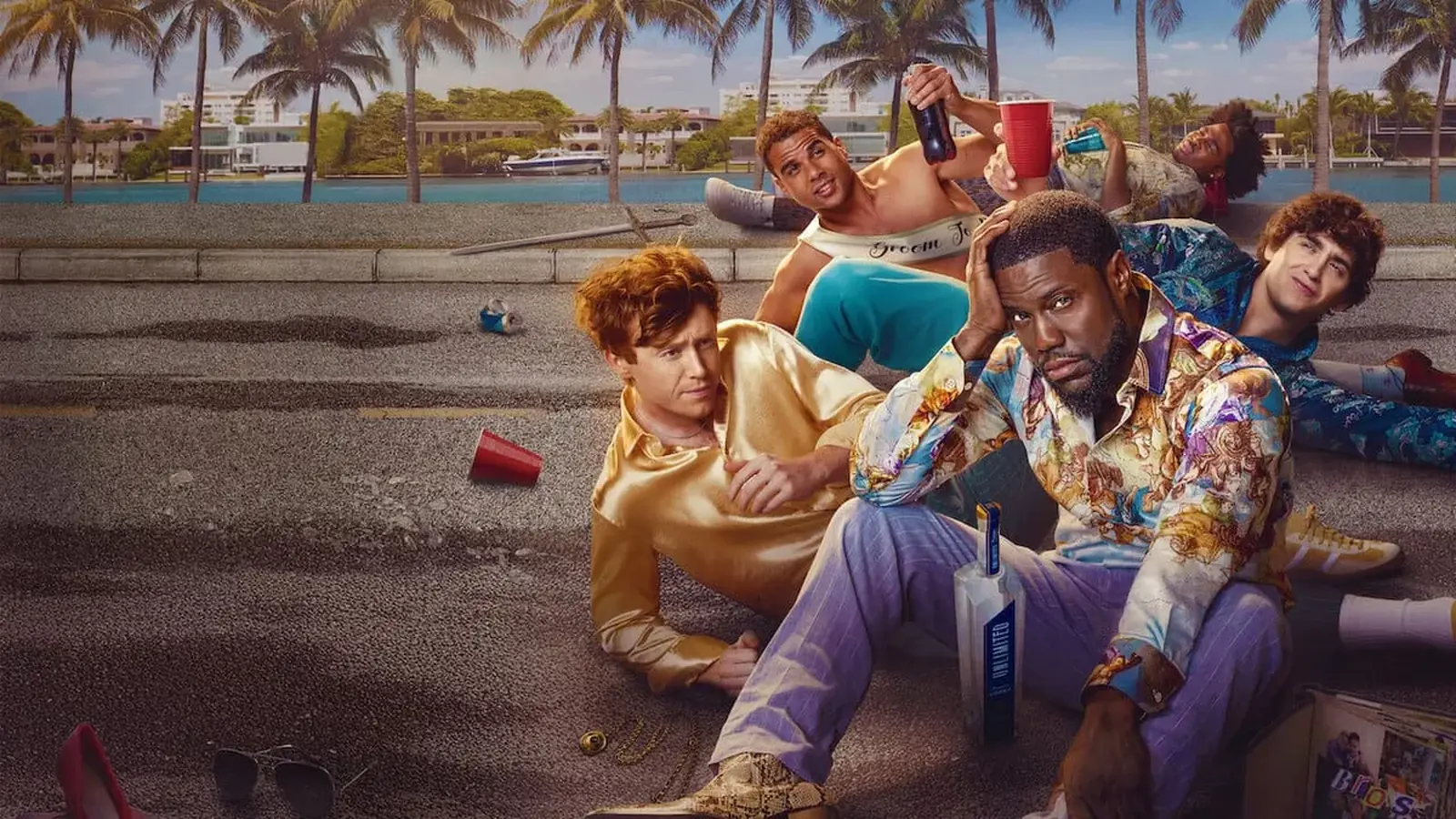
You go to a Kevin Hart movie expecting at least a few belly laughs. 72 Hours gives you the setup and then spends most of its runtime searching for a punchline it never quite finds.
Tim Story, who once brought kinetic energy to blockbusters like Fantastic Four, treats this film like a sketch that never learned to grow. The premise is deceptively simple: a man secludes himself in a Miami villa for 72 hours to promote a product. It sounds like a tight, high-concept comedy. Instead, Story layers in touristy scenery and blunt sexual gags as if spectacle could paper over a thin script. Blocking is loose. The film rarely settles into a clear rhythm. Scenes float; characters drift. What should have felt like intentional chaos reads as indecision.
The screenplay, credited to three writers including John Hurwitz, keeps promising beats at arm's length. Hurwitz made his name with broad, rowdy comedies, but here the tone is neutered—almost apologetic. Characters shuffle from moment to moment without a consistent throughline. One minute they behave like caricatures, the next minute they’re supposed to carry genuine stakes. It leaves the audience guessing not about twists, but about motives. And a comedy that can’t define its leads has a hard time asking us to root for them.

Kevin Hart, as the central figure, does what he can. His instincts for rhythm and timing still register. But his rapid-fire delivery and recurring physical ticks feel like recycled tools rather than fresh improvisations. When Hart lands a line, it can still land hard. Too often, though, the delivery races ahead of the material, exposing the thinness beneath. The film leans on Hart’s charisma, then fails to build a world that supports it.
Michael Mando is an odd casualty. Usually magnetic, here he’s underwritten and scarcely present—less antagonist than an ominous cameo. With barely ten minutes of meaningful screen time, his character never becomes the foil the plot needs. Supporting players are a mixed bag. Mason Gooding and Marcelo Hernandez inject brief moments of color, while Cam Patterson and Ben Marshall do little to elevate flat scenes. Andy Garcia crops up as a winning cameo; his measured tone and quiet gestures bring the kind of controlled gravitas the rest of the cast rarely finds.


Where 72 Hours does show craft is behind the camera. Larry Blanford’s photography gives Miami some genuine cinematic moments. Wide, confident frames and a few striking extreme long shots let the city breathe; in those instances the film looks like it might have been something else entirely. Editor Peter Elliot keeps the pace moving with clean transitions. His choices during action beats and quieter exchanges are often the only reason scenes avoid ending in confusion, not because the material demands them, but because the editing is precise enough to suggest a mood the screenplay never commits to.

Christopher Lennertz’s score is competent but forgettable. It supports the film without surprising it. At times the music falls back on a safe palette of action and gangster motifs, which makes scenes sound like reruns of other movies rather than a project with its own voice.
So where did the promising idea go? Into an assembly of clichés and conveniences. The film flirts with sharper satire but prefers broad, adolescent humor. It withholds depth. Characters who could have offered texture are reduced to one-note reactions. The attempt to craft a young, modern comedy ends up feeling like a checklist of gen-Z signifiers and paparazzi-ready locations, rather than an anchored story with stakes.

72 Hours is not without moments—tiny sparks that reveal the filmmakers might have known what to do, given time or a different script. But sparks are not a strategy. The overall effect is a middling comedy that leans on star wattage and production gloss to mask narrative gaps. For viewers hoping Hart’s involvement signals a return to bolder studio comedies, this one will feel like a missed opportunity.
Final score from this desk: 4.5 out of 10.

Leave a Comment
Comments (2)
Is this even true? Mando only gets like 10 min?? wild. studio meddling or lazy writing maybe. curious to see if anyone else felt the same tho
wow, that review hits hard. Kevin still cracks a smile but the movie never picks a lane. script thin, jokes bail early, pacing feels off big time