
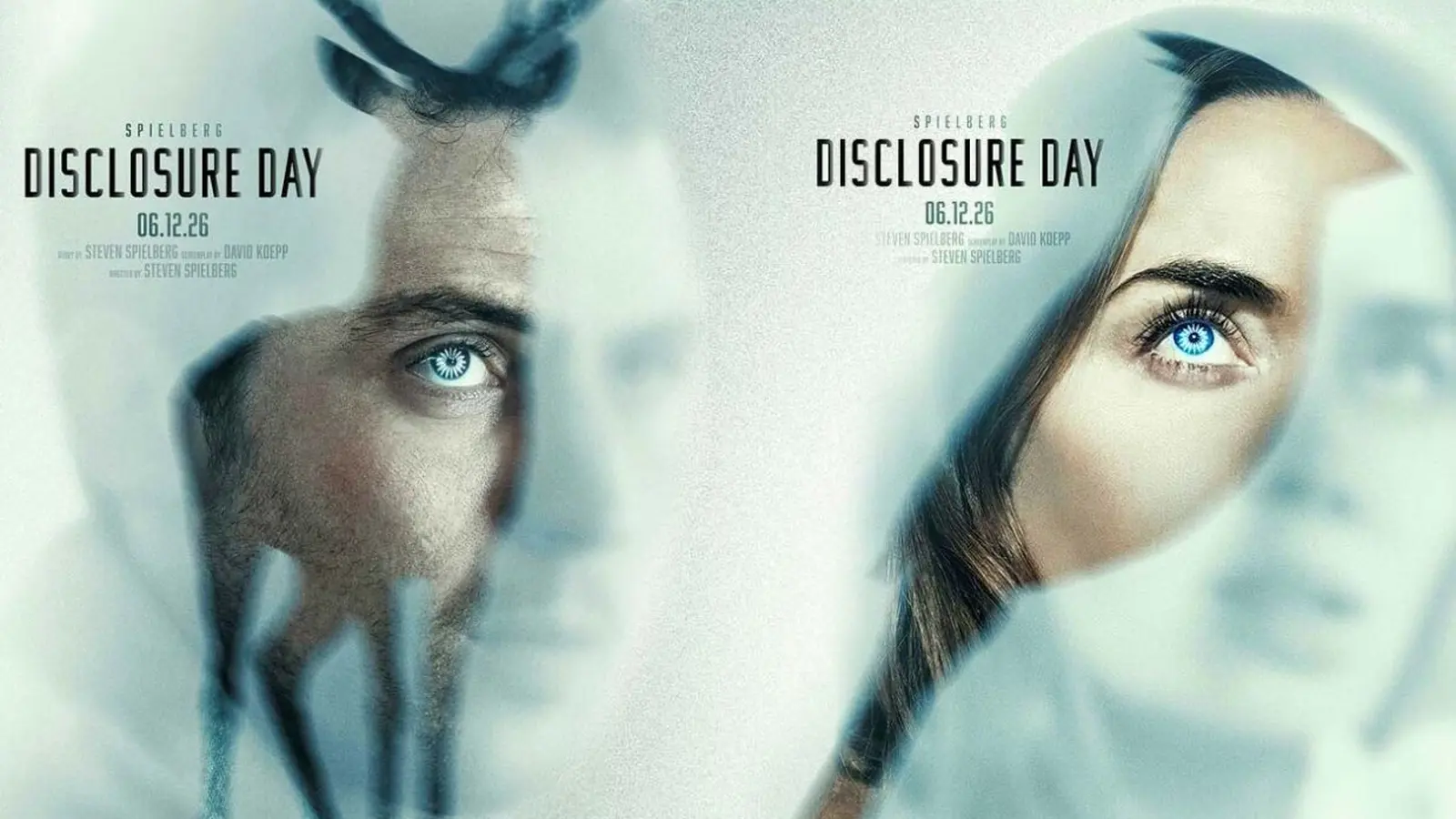
Remember the hush in a packed theater when the music cut and the unknown slid into frame? That feeling—electric, uncanny, unavoidable—used to be Steven Spielberg's specialty. Disclosure Day rarely summons that magic. Instead it reads like the work of a director circling familiar territory and coming up short.
This is not primarily a movie about aliens. It poses as one, but what it practically chronicles is the decline of a once-magnetic storyteller. The names on the poster—Emily Blunt, Josh O'Connor—promise something. The film rarely delivers.

Spielberg's best films balanced spectacle with soul. Jaws frightened, but it also taught us where to sit in a cinema and how to fear silence. Schindler's List burned its way into collective memory, and Saving Private Ryan rewrote how combat felt on screen. Those movies married craft and ethical inquiry; they left fingerprints. Disclosure Day tries to touch those fingerprints and only smudges them.
The film plunges you into the middle of an event without scaffolding. That approach can energize a story. Here it confuses. Important setup is missing. Characters arrive as moves on a chessboard rather than people you might root for or resent. Decisions happen. Scenes flip. Yet the viewer lacks the emotional map needed to care. Are they frightened? Are they lying? Why should we grieve them? The movie rarely helps us answer these basic questions.

When a director has long explored the idea of 'the other'—an outsider, an alien, a mirror for our own flaws—there is an expectation of depth. Spielberg once used the unknown to examine human behavior: fear, cruelty, tenderness. Disclosure Day narrows that encounter to bureaucratic concealment. The government as villain is a valid choice, but here it flattens into shorthand. Spies, secrecy, cover-ups—these are presented as plot mechanics rather than springboards for moral interrogation.

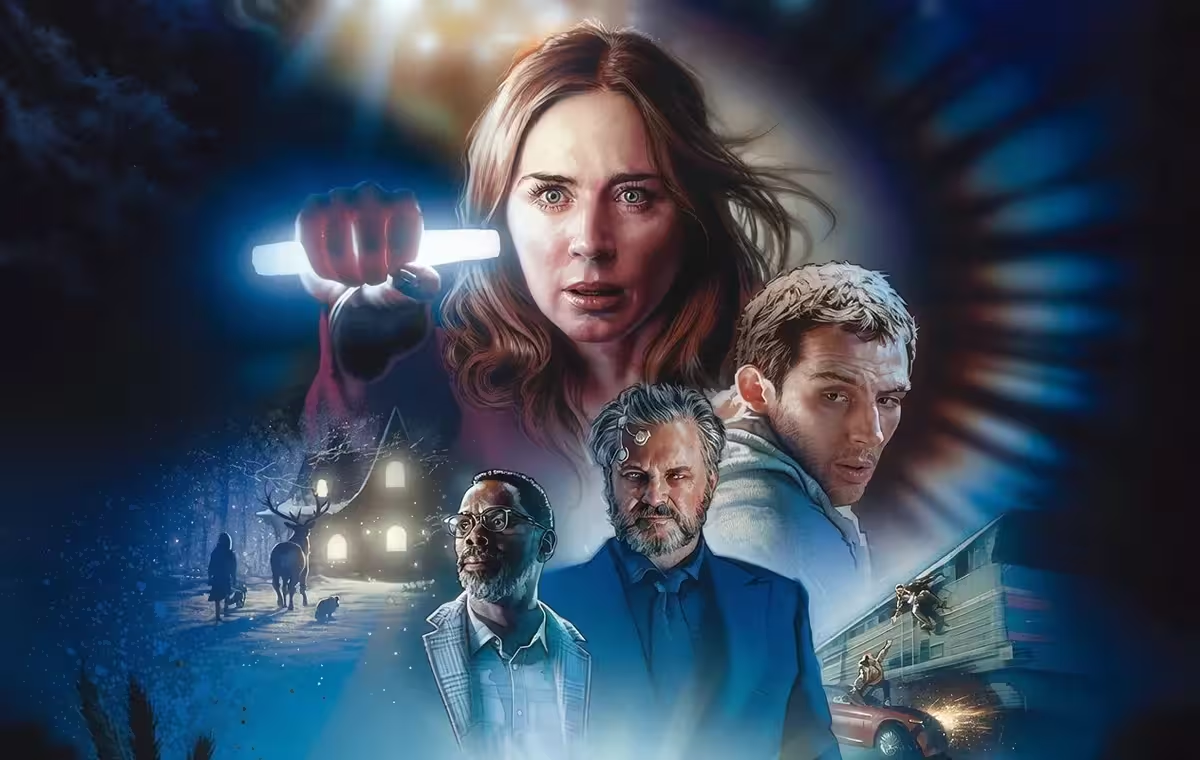
And then there are the characters. They feel like cardboard props wearing high-profile faces. Emily Blunt drifts through scenes as if searching for a character sketch that never arrives. She has the tools to make even small gestures mean something; the screenplay doesn't give her the chance. Josh O'Connor fares no better. Both actors try, and that counting effort is visible; talent fights the script and loses.
Dialogue often reads like briefing notes. Conversations inform rather than reveal. Chemistry is a pale echo; relationships are functional rather than lived. When a film relies on emotional payoffs, it must first deposit emotional currency. Disclosure Day makes few deposits.

Technically, the movie is frustrating. Editing stumbles between tempo and lull. Action sequences—which should snap the viewer to attention—land with little force. This is not merely a matter of thrills. A languid rhythm washes out dramatic urgency, and when set pieces should feel consequential they feel perfunctory. The score rarely grabs you, the cuts never quite land.
Then there are the visual effects. In a film built around the uncanny, VFX are central. Here they are often unconvincing. Spielberg once perfected the art of suggestion—show less, make the audience imagine more. Disclosure Day tries to split the difference and ends up showing too little of interest and too much that looks fake. The net result is a tone that’s neither eerie nor immersive.

Structure and logic also betray the narrative. Characters take actions that don't align with their limited histories. Plot turns feel engineered to move pieces instead of emerging organically from the film's world. That kind of dramaturgical friction breaks trust: if a movie asks you to suspend disbelief, it must first prove itself worthy of that suspension.
Most disappointing of all is the film's thematic thrift. It stomps across familiar ground—truth versus secrecy, fear of the unknown, institutional power—yet offers few fresh observations. Instead of mining the political terrain for human consequences, it skims headlines and returns predictable platitudes. For a filmmaker who has interrogated the ethics of war and the fragility of innocence, this restraint is puzzling.

Shot composition, lighting, and mise-en-scène, areas where Spielberg has historically spoken without words, feel oddly conservative here. Frames register information but not subtext. The camera records more than it interprets. Scenes become reports rather than experiences.
Watching Disclosure Day is a peculiar strain of fatigue: not the satisfying kind that follows emotional investment, but the wearying kind that comes from repeated promise and little fulfillment. You leave thinking less about aliens or leaks and more about a great artist who seems to have misplaced his compass.
Is this a total loss? No. There are moments—brief flickers—where a shot or a turn of phrase reaches for something larger. But briefness is the problem. The film gestures toward questions it never fully asks, and the result is a movie that feels like an echo of better works rather than an original statement.
If you care about cinema as a living history, Disclosure Day is a reminder that names are not guarantees. A great director can still misfire. That sting is part of watching any long career: the peaks make the valleys harder to accept.
My score: 4/10
Whether Disclosure Day marks a wrong turn or a temporary stumble, it is a film that asks us to reckon with the distance between reputation and work—between memory and the present. The question now is simple and a little cruel: will Spielberg respond, or will this be cataloged as another cautionary tale about creative fatigue?

Leave a Comment
Comments
No comments yet. Be the first.