
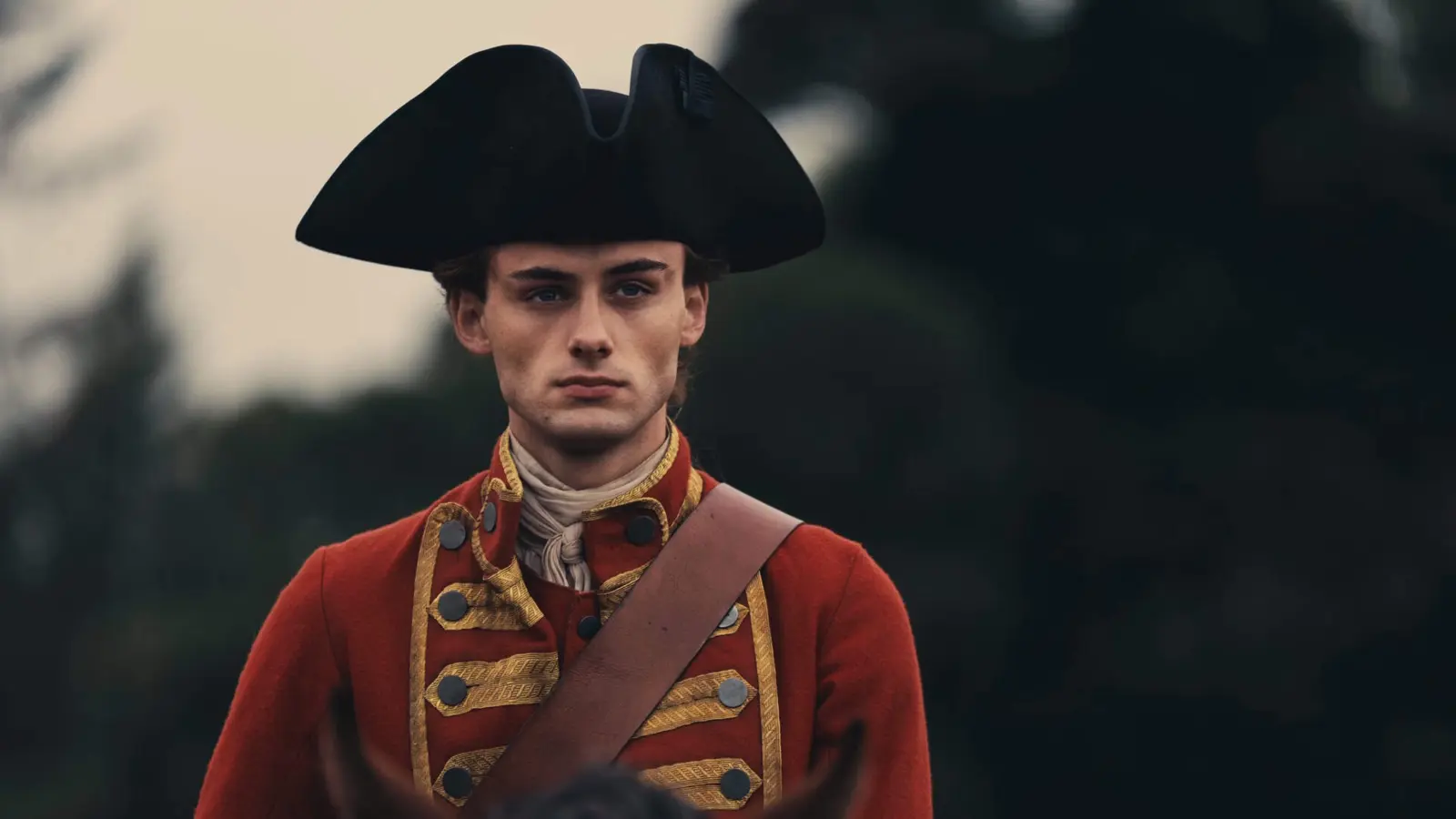
Some films arrive like a spark; others like a press release. Young Washington belongs to the latter. From its first act the movie assumes we already worship its subject, and then spends ninety minutes pointing to the shrine rather than lighting the candle.
Set in the rough-hewn years before a name became legend, the story follows George as a hungry, ambitious young man who signs with the British army, stumbles through frontier skirmishes, and endures betrayals that should have shaped him. This is fertile ground. Coming-of-age under fire. Choices that calcify into destiny. Instead, the film treats Washington as a well-known object and never builds him into one.

What’s missing is the slow alchemy. Filmmaking is an act of creation: a face becomes a character only when a movie gives it shape, voice, doubts, and contradictions. Young Washington keeps telling us who the man will be rather than showing how he becomes that man. The result: a parade of scenes that point outward—books, ominous close-ups, title cards about future greatness—without ever inviting us inside the mind of the young officer.
There are threadbare attempts at intimacy. A tentative paternal bond with a half-brother surfaces in a few uneven scenes and then evaporates, as if the relationship existed only to move the plot forward. A romance with a wealthy local woman could have humanized the protagonist, revealed softer or selfish edges, and made his later choices meaningful. The film abandons that too. These are missed chances, not mere omissions. They are the scaffolding the story needs to support a legend.

On the technical side, the movie oscillates between earnestness and clumsy shortcuts. A survival sequence in a frozen river—meant to be a crucible—plays as a series of quick cuts and undercooked close-ups. Two characters fall through the ice. We wait for panic. We get montage. No real danger, no breath held, no sense that these men might not make it. That lack of tension is revealing: the director rushes past hardship the way the script rushes past interior life.

And then there’s the film’s version of mythmaking. Little details are leaned on like ornaments: the boy reading Seneca at a too-young age, an overplayed reverence for books, a string of visual cues implying greatness. They smell less like truth and more like marketing. Great myths are earned by time and consequence, not assembled with clever images and a nostalgic score. When a movie must keep reminding you that its protagonist is historically important, it has already failed at dramatizing that importance.
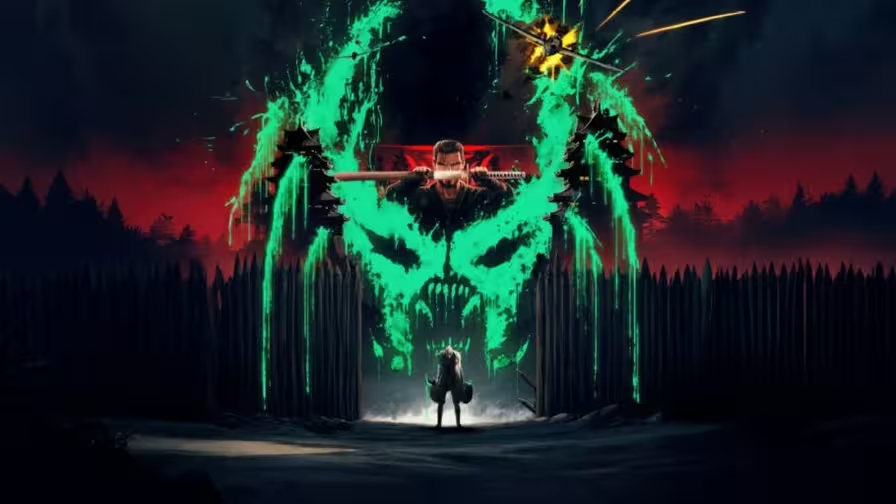
Acting and writing compound the problem. Performances feel tentative where they should be authoritative; lines land like placeholders. In a scene meant to show the psychological burden of command—soldiers lost under a young leader’s orders—the camera tries to manufacture weight with close-ups and slow motion. But if the performance and the script don’t sell the guilt, cinematic technique becomes decoration, not discovery. The audience needs to feel why a man carried an idea of duty, not be told to feel it.

There are interesting moments. The raw landscape sequences sometimes recall an almost documentary grit. The film flirts with tension and moral ambiguity. But these sparks never catch. The narrative keeps circling back to the same heuristic: announce the legend, then move on. That approach flattens complexity. History and heroism are messy. People are messy. A biopic should welcome mess.
Beyond the film itself is a larger cultural observation: myths are not produced by PR moves or cinematic shorthand. They grow inside societies, through deeds, through debate, through generations retelling a story until its edges harden. You can stage the origin, but you can’t manufacture reverence with a few evocative shots and a titular nod. Cinema’s job—when it aims high—is to translate history into lived experience, to make strangers feel like witnesses.
Young Washington wants to be an origin story but remains a checklist. It confuses the trappings of greatness for the work of making greatness believable. It mistakes repetition for depth and nostalgia for insight. The film releases on Independence Day and it wants the fireworks of patriotism; instead, it leaves the taste of pyrotechnics with no spark.
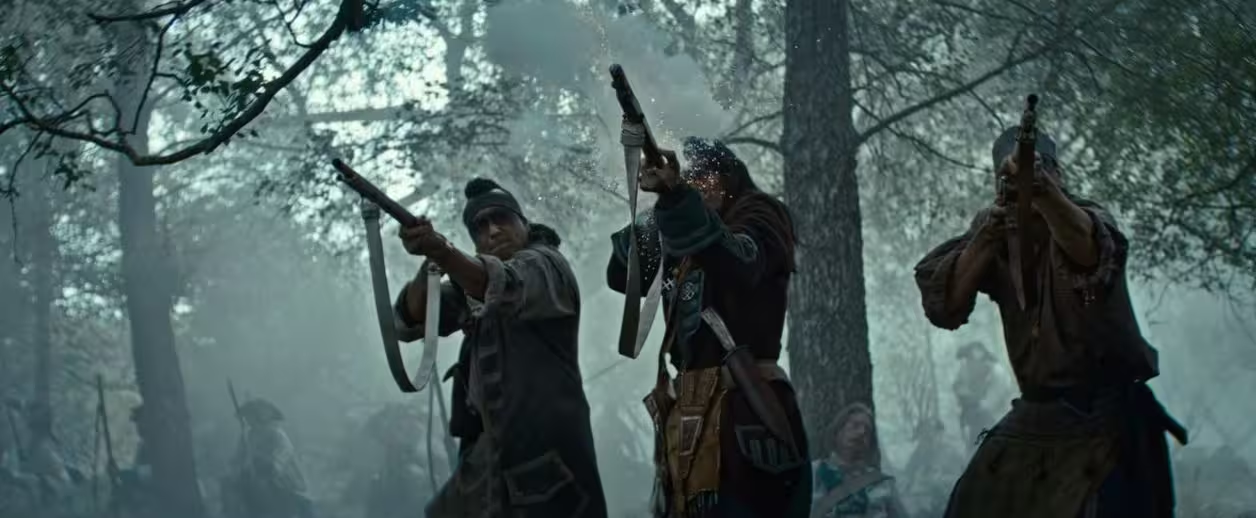
The central failure is simple: the movie needs us to accept Washington as inevitable instead of persuading us he was earned.
If you crave crisp historical tableaux and occasional visual beauty, there is something here to watch. If you hoped to witness a hero being born—messy choices, incremental transformations, the moral cost of leadership—this Young Washington will feel thin. It points at a man who becomes a foundational figure, but it never lets you live inside the becoming.
Score from this critic: 3/10.

Seen it? Tell us what stuck with you after the credits rolled.

Leave a Comment
Comments (2)
Is the director afraid of complexity? Movie keeps telling us to care, never lets us live the choice. Felt like watching a trailr for a legend, not the man.
Wow, what a letdown. Wanted a messy, raw origin story but got a checklist of moments, style over soul. A few scenes shimmer but mostly feels like marketing, sad.