
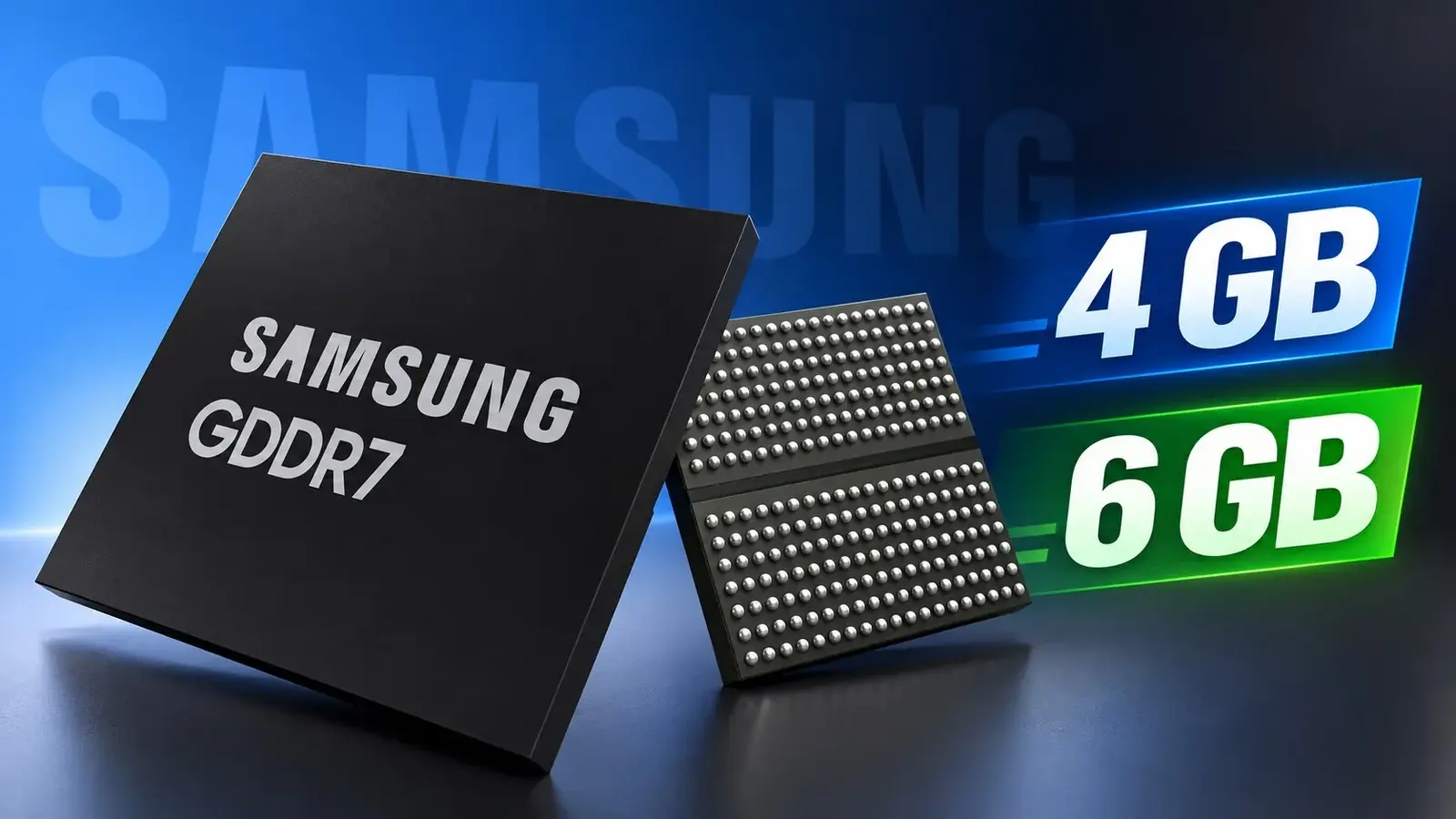
Memory makers report they will begin producing 4 gigabyte and 6 gigabyte GDDR7 memory chips within the next two years. That is the central claim in a recent note attributed to the source Golden Pig Upgrade, and it frames what could be a meaningful shift in how graphics cards are configured.
What was reported and the current situation
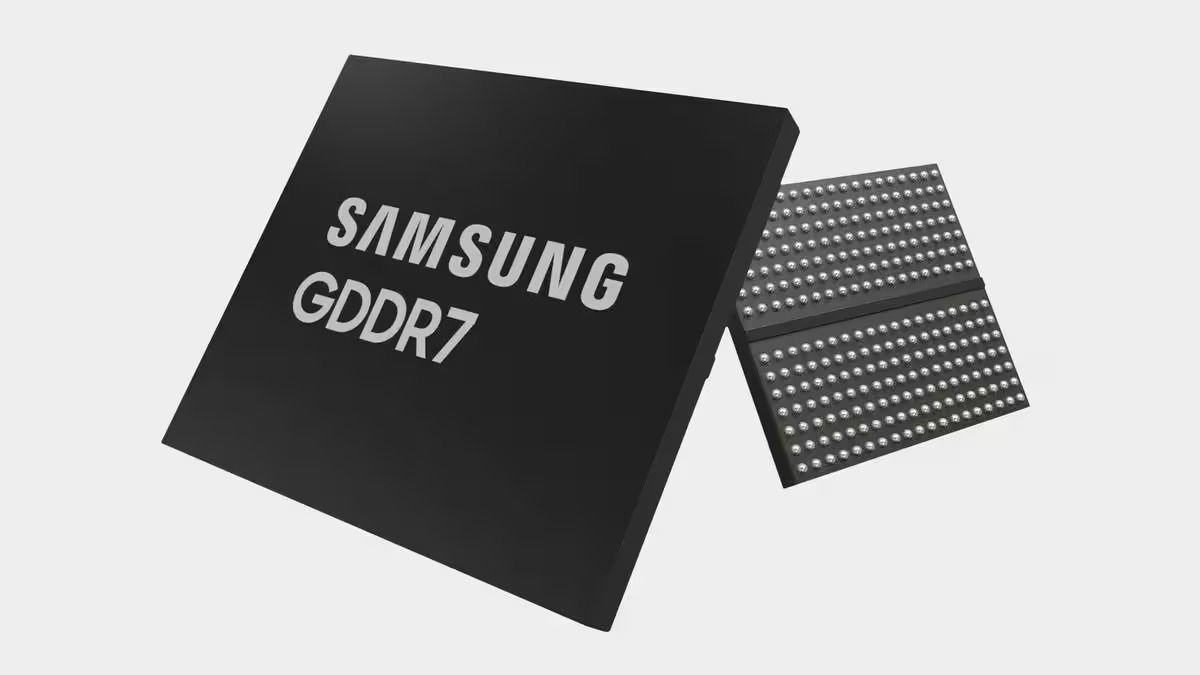
According to Golden Pig Upgrade, memory manufacturers plan to bring 4 and 6 gigabyte GDDR7 memory chips into production next year or the year after. If that schedule holds, higher-capacity chips would likely reach the market within about two years. The report does not make the change official, and the timeline is presented as the manufacturers plan rather than a confirmed product rollout.
For context, current GeForce RTX 50 cards based on Nvidia's Blackwell architecture still use 2 gigabyte GDDR7 modules. Earlier reporting suggested Nvidia had considered 3 gigabyte GDDR7 modules for a potential RTX 50 SUPER family, but the fate of those SUPER models remains uncertain. Three major memory manufacturers have begun producing 3 gigabyte chips, according to prior reports, yet those chips do not appear poised for broad use in shipping graphics cards today.
Potential implications and practical limits
The proposal of 4 and 6 gigabyte chips raises the possibility that midrange and higher midrange cards could carry far more VRAM than the longstanding 8 gigabyte ceiling for many 60-class products. The original report notes that, in theory, an RTX 5060 that today ships with 8 gigabytes could be equipped instead with 16 or even 24 gigabytes if larger-density chips become standard. That remains hypothetical and depends on how manufacturers and board partners adopt the new modules.
The report also links these developments to Nvidia's roadmap. It says next-generation RTX 60 cards using the Rubin architecture may be more likely candidates to use 3 gigabyte modules and, later, 4 and 6 gigabyte chips. Nvidia is not expected to introduce an RTX 60 family before 2028, so new chip capacities could be available by that time if production ramps as reported.
Finally, the note emphasizes the commercial limits. Higher-density memory chips tend to increase component costs, and increased memory pricing was cited as a reason some products using 3 gigabyte GDDR7 chips were not pursued. The report also recalls that an RTX 5050, which had been slated to ship with 9 gigabytes of memory, was apparently canceled before launch because of memory shortages. Any broader adoption of 4 and 6 gigabyte chips will therefore be shaped by manufacturers' ability to scale production and by the resulting price pressure on graphics cards.

Leave a Comment
Comments
No comments yet. Be the first.