

Florence Pugh doesn't merely step into Steinbeck's world; she drags it, messy and incandescent, into the here and now. Short sentence. Big claim. This East of Eden is not a dusty museum piece—it's alive, noisy, and insistently human.
Adapted by Zoe Kazan as a compact period miniseries, the show traces a sweep of years from the late 19th century through the First World War. At the center is Katie Ames, a woman whose fate collides with Adam and Charles Trask and later shapes the lives of Adam's twin sons, Caleb and Aron, in California's Salinas Valley. Family legacies, moral choices, and raw ambition are the loom on which Kazan weaves a fresh interpretation of Steinbeck's classic.
Critics have largely welcomed the gamble. On Rotten Tomatoes, the series holds an 85 percent critics score from 33 reviews; Metacritic aggregates an 80 out of 100 from 24 critics. Numbers aside, what stands out is how reviewers single out performance and production as the thing that lifts this adaptation out of the ordinary.
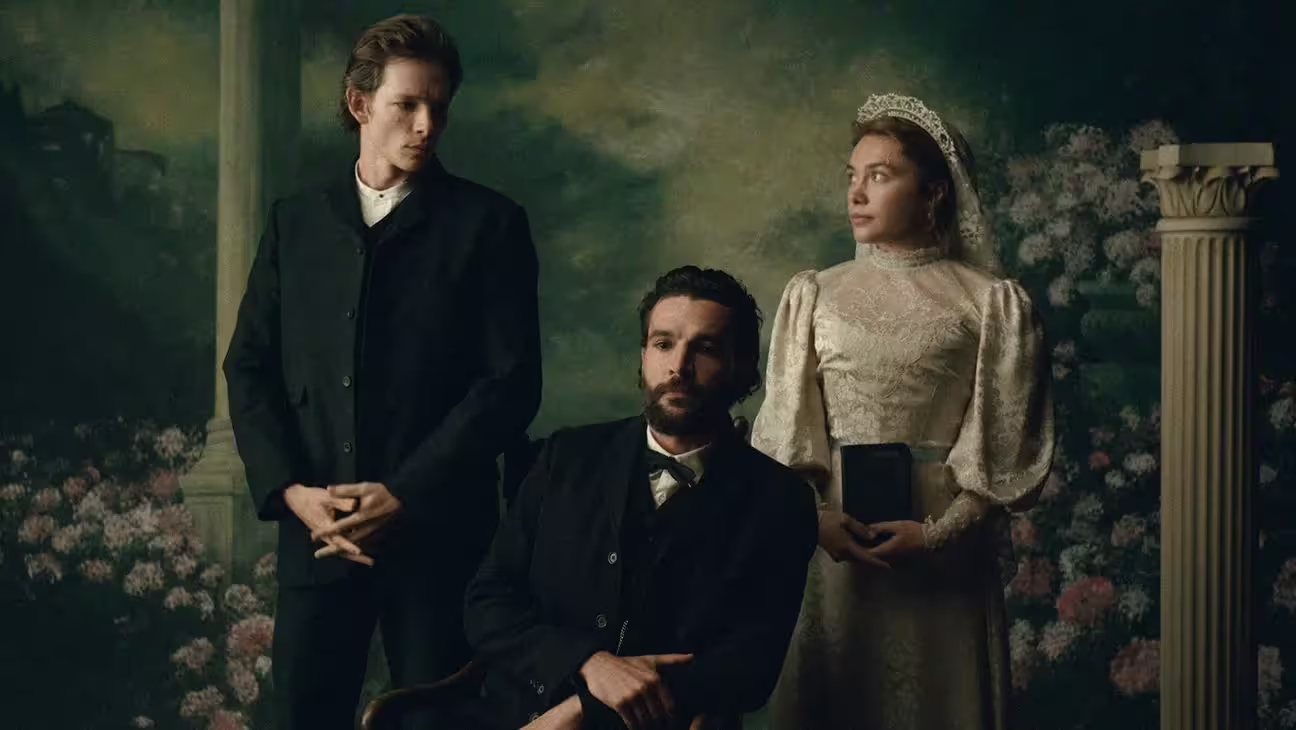
Many point to Pugh as the engine. Her Katie is magnetic and sometimes merciless, a figure who absorbs sympathy and scorn in equal measure. Opposite her, Christopher Abbott gives Adam a taut, weathered center; together they turn a family tale into something felt in the bones. The cinematography—wide, sun-bleached, intimate—gets frequent praise for turning landscape into mood.
Voices from the press have been emphatic. The A.V. Club awarded a perfect score, arguing that Kazan has set a new bar for how literary adaptations can live on television. The Playlist, also at the top of the scale, sees the series as a study in trauma and redemption, calling it a contender for best show of the year. Collider admires the shift from allegory to intimate tragedy, describing a family caught in a poisonous cycle that longs for release.
Other outlets echo similar beats but with caveats. IGN praises the show's sumptuous visuals and bingeability, while The Telegraph applauds Pugh's charismatic presence — even noting moments where the character's styling recalls modern pop icons without undermining the era. The Guardian calls it a brilliantly engrossing family epic, though it questions whether the series fully sustains the philosophical depth Steinbeck's critique demands.
Variety flags the practical difficulties of translating a narrative so tied to time, noting how aging makeup and performance choices sometimes jar, but concludes that the acting — particularly Pugh's and Abbott's — redeems those risks. RogerEbert.com admits the adaptation isn't flawless yet finds the combination of Pugh's work and the show's insistence that Katie's story matters on its own terms deeply satisfying.
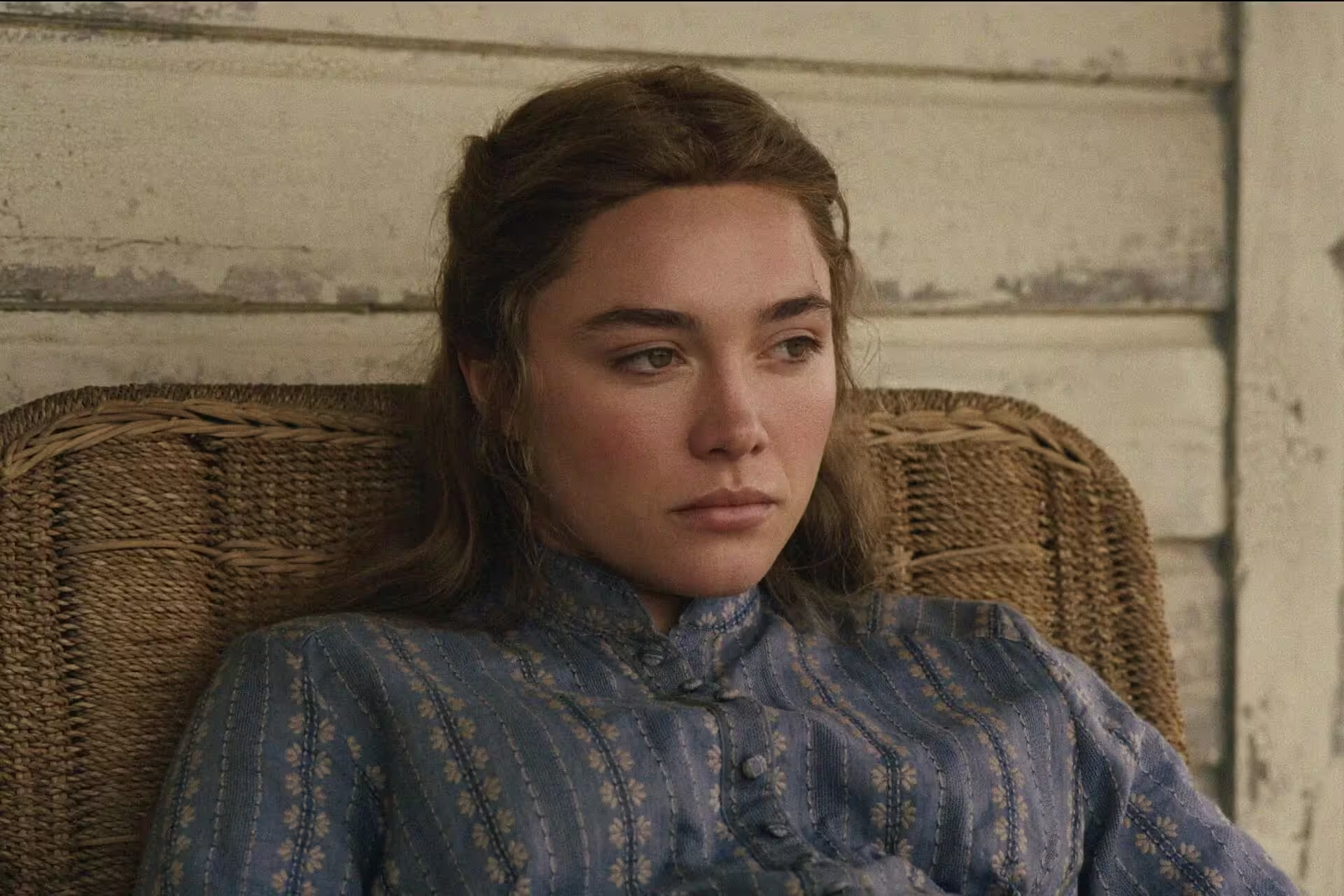
Not all reviews are celebratory. Screen Rant argues that in reshaping the source material the series occasionally loses thematic weight and drifts toward predictability. The New Yorker, similarly skeptical, highlights Katie's electrifying pull as both the show's greatest asset and the source of its uneven pacing: when the series steps away from her, momentum slips.
So where does that leave viewers? With a period drama that feels modern in temperament and cinematic in scale; with a lead performance that refuses to be polite; and with an adaptation that will please many Steinbeck loyalists while testing others. Watch for the scenes that sing aloud—Pugh does most of the heavy lifting—and decide whether this East of Eden finds the balance between fidelity and reinvention for you.

Leave a Comment
Comments
No comments yet. Be the first.