
Hollywood is about to be reshuffled. Big time. After months of courtroom drama, regulatory scrutiny and last-minute negotiations, the merger between Paramount and Warner is set to cross the finish line next week.
The $111 billion deal is expected to close on Tuesday, October 6, 2026. That single sentence changes the map of studios, networks and streaming services worldwide: two of the industry’s largest catalogs, talent pipelines and franchise factories will live under one corporate roof.
What cleared the final hurdle was a settlement with a coalition of 12 state attorneys general and a federal judge who approved the arrangement. The U.S. Department of Justice, which completed its own review earlier, concluded the transaction was unlikely to harm competition or consumers. With that green light, the path to closing narrowed to scheduling and integration mechanics.
The combined company will control Paramount and Warner studios, Paramount Plus and HBO Max, plus an enormous roster of cable and broadcast networks including CBS, CNN, MTV, TBS, Comedy Central and Food Network. It will also bring together marquee franchises that define modern pop culture: Harry Potter, Game of Thrones, the DC universe, Yellowstone, Mission: Impossible, Top Gun and a vast Nickelodeon catalog.
Still, regulators didn’t sign off without conditions. As part of the settlement the new company agreed not to sell the Paramount or Warner studios in California for at least five years, and to ramp up U.S. film production by a minimum of $300 million per year. That adds up to at least $1.5 billion in additional American production spending over five years. Another notable commitment: the merged studio must release at least 30 theatrical films each year in the first two years, and at least 32 per year in years three through five, with wide-release films required to remain in cinemas for a minimum of 45 days.
Concerns around newsroom independence were addressed too. A new oversight mechanism will be established to safeguard editorial independence for CNN and CBS News, with a board tasked to draw up standards and guardrails for newsroom decision-making.
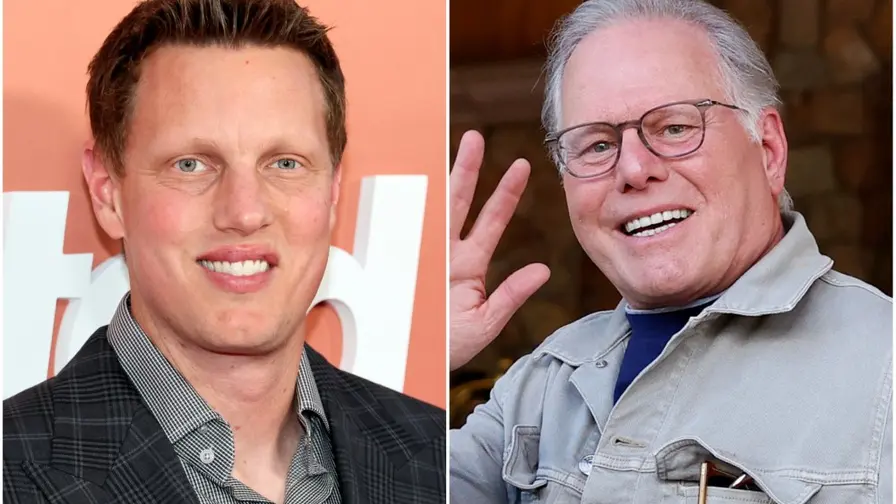
Leadership at the new company is being stitched together even as the paperwork is finalized. David Ellison, the current CEO of Paramount, will oversee strategy, creative operations and technology. Joining him as co-CEO is Ynon Kreiz, who will step away from his role at Mattel to run the day-to-day and manage the integration. The streaming business will be led by Casey Bloys, who moves up from HBO. Several senior executives from Warner are expected to depart after closing; reports indicate David Zaslav will leave with a payout exceeding $550 million in stock and cash.
Money of a scale rarely seen in entertainment is behind the deal. Larry Ellison, founder of Oracle and father of David Ellison, has personally guaranteed roughly $46.7 billion of financing. In addition, sovereign wealth funds from Saudi Arabia, Qatar and the United Arab Emirates have committed about $24 billion. Combined, those three funds are slated to own roughly 38.5 percent of the merged company.
Names still matter in branding and in boardrooms, and the official corporate name for the new entity has not yet been revealed. Industry chatter has floated shorthand tags like Paramount-Warner or Paramount-WBD, but with closing imminent the company is expected to unveil its brand identity in the coming days.
Even after signatures are exchanged, the real work begins. Integrating two studios, multiple streaming platforms, dozens of networks and hundreds of franchises is a logistical puzzle that will stretch across months, if not years. Rights stacks, distribution windows, creative teams and international licensing deals will all need reconciling. For talent and creators, the merger presents both opportunity and uncertainty: bigger scale and deeper pockets, but also new competition for greenlights and promotional attention.
For viewers, the immediate change may be subtle. Your favorite shows and films will likely remain available, but how they are marketed, where they stream and when they arrive in theaters could shift. For the industry at large, this consolidation marks one more step toward a smaller number of mega-platforms shaping how stories are financed and distributed.
Expect announcements on the company name, executive roster, and integration roadmap to come fast once the deal is official. And then watch closely. When two of Hollywood’s most powerful engines merge, the ripple effects are never small.


Leave a Comment
Comments
No comments yet. Be the first.