
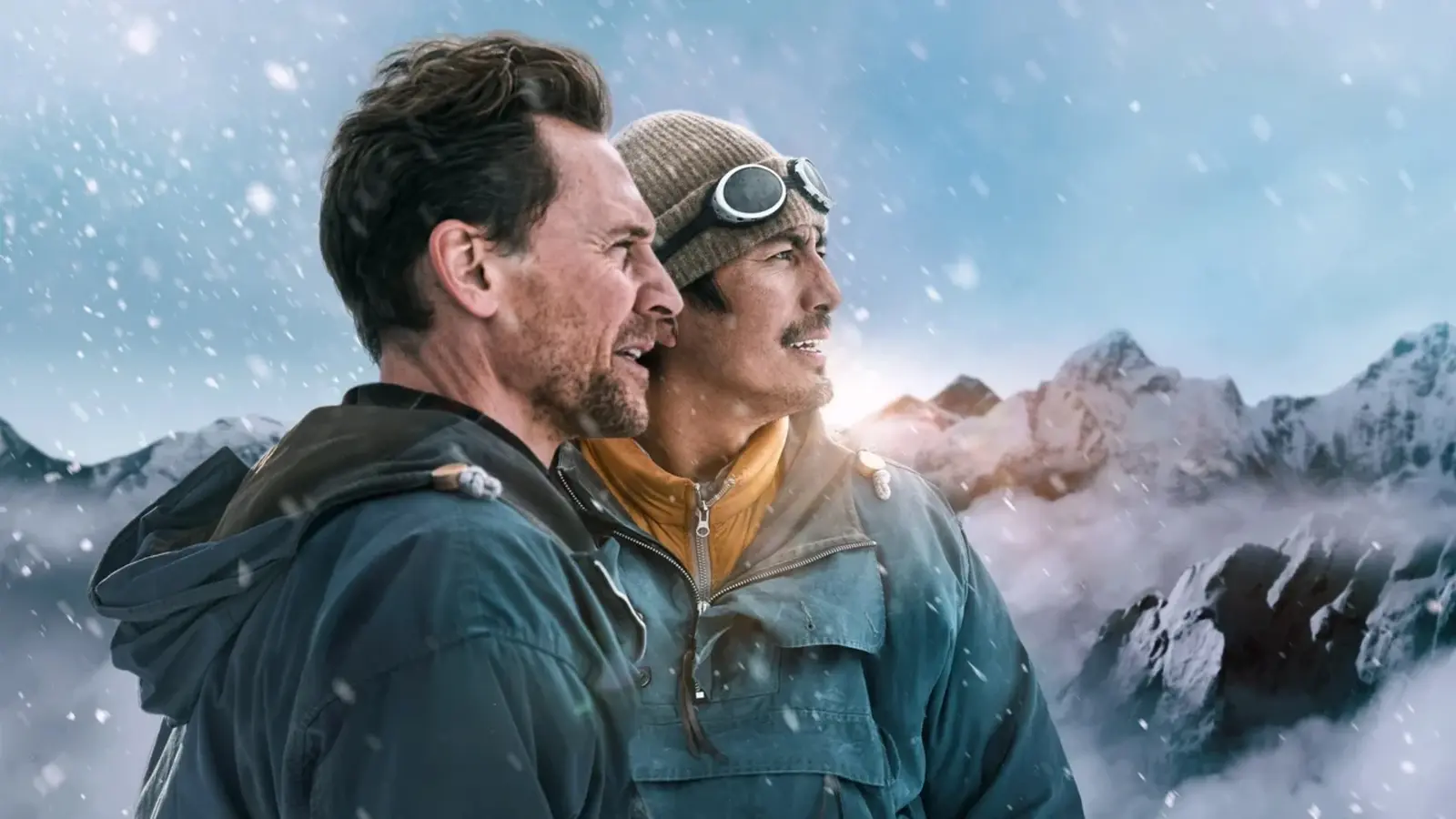
They stand where oxygen thins and myths thicken: Tenzing Norgay and Edmund Hillary, remade for the screen in a film that insists you feel altitude as much as you see it. Tenzing, directed by Jennifer Peedom and written by Luke Davies, brings a human pulse to one of mountaineering’s most famous triumphs.
Ganden Phuntsok plays Tenzing Norgay with a warmth and urgency that anchors the movie; Tom Hiddleston counters with a quieter, steady Edmund Hillary. Willem Dafoe turns up as John Hunt, the pragmatic leader of the British expedition. This international co-production aims not only to recreate the brutal logistics of climbing Everest in 1953 but to reframe the story so the Sherpa at the heart of the ascent gets his due.
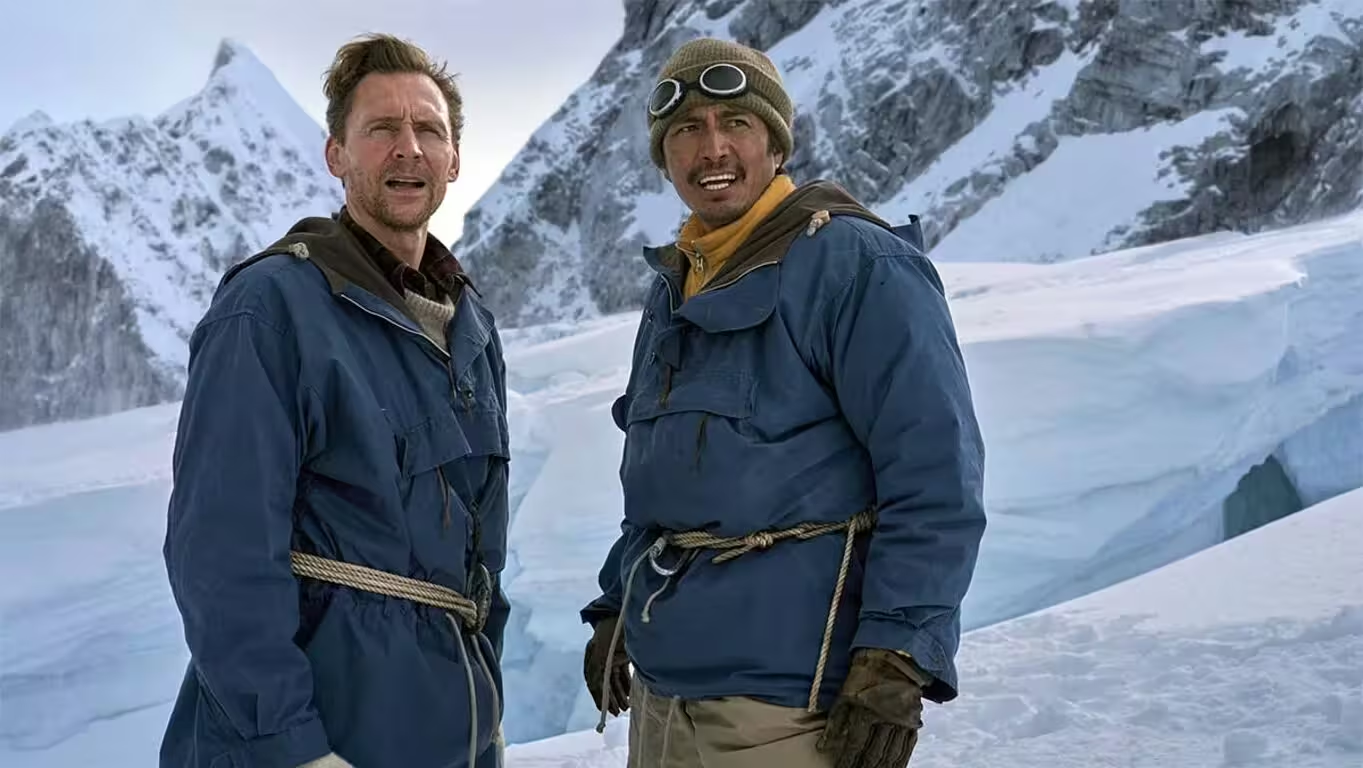
The film’s visual language is its first argument for immersion. Drone work and wide alpine compositions render the mountain with a crystalline clarity — some reviewers liken the imagery to 8K resolution — and the sound design is patient, microscopic: the rasp of breath, the subtle groan of crampons, the vast silence between campfires. Short sentences. Long shots. The contrast keeps you on edge.
But Tenzing isn’t only spectacle. It’s a portrait of partnership under pressure. The screenplay threads backstory into the climb, revealing the wounds and quiet convictions that drive Tenzing forward. It asks: what does it mean to share glory when histories and power imbalances tilt the narrative? That question gives the film its moral beat. Performances feed it. Phuntsok’s Tenzing is more than a flag-planting archetype; he’s a man shaped by loss, ritual, and stubborn hope. Hiddleston’s Hillary is resolute, sometimes distant, a foil whose friendship grows in crevices as narrow as the ridgelines they traverse.
Critics have largely embraced the film’s craft. On Rotten Tomatoes, Tenzing holds a 98% critics’ rating from 50 reviews, a reflection of widespread admiration for its technical achievement and respectful retelling. Metacritic’s more tempered aggregate — 67 from 18 reviews — captures a split: many celebrate the movie’s visual and emotional textures, while some fault its narrative caution and pacing choices.
Major outlets offer varied takes. RogerEbert.com praised the film’s aerial perspective and immersive sound, saying each snowy frame feels tactile, each breath dangerously tangible, a feeling that turns cinema into a small, cold room you can almost step into. Collider called it a film about faith and collective endeavor, noting that the emotional payoff when Tenzing reaches the summit feels earned. IGN highlighted the way the script compensates for the known outcome by exposing Tenzing’s interior life — the private setbacks he overcame before the climb.
Other critics found value in the movie’s restraint. TheWrap admired Peedom’s eye for composition and described the film as a visually arresting travelogue. The New York Times observed the work’s classical honesty: unshowy, sincere, occasionally moving. Some outlets were less convinced that restraint always serves drama. Screen Rant and Screen Daily suggested the film, while technically assured and beautifully acted, sometimes keeps the audience at arm’s length just when a bolder emotional thrust would have paid off.
Is the movie flawless? No. A few reviewers pointed to underwritten supporting characters and a conservative approach to spectacle that favors documentary-like fidelity over operatic drama. Even so, many concede those choices are also the film’s strength: an insistence on respect, on returning voice and visibility to a figure too often footnoted in history.
At its best, Tenzing fuses intimacy and scale. It reminds you that mountains are not just backdrops for heroism; they are social landscapes, threaded with class, empire, and the labor of local communities. The film re-centers a Sherpa’s perspective without flattening the complexity of a historic partnership. It asks the audience to look again — and to listen.

Expect a movie that privileges feeling over showmanship, one that lingers on small gestures as much as on sweeping panoramas. Go for the performances, stay for the sound and the vistas, and leave with a fresher sense of why some stories need to be retold from a different angle.

Leave a Comment
Comments
No comments yet. Be the first.