

Jason Momoa has always gravitated toward characters that surprise you — warriors, outlaws, larger-than-life figures. But this time he says something else: the part he plays in Dune: Part Three was the oddest turn of his career.
He told The New York Times that the challenge wasn't brawn or bravado. It was subtlety. Momoa plays Hayt, a being reconstructed from the genetic material of Duncan Idaho — the loyal swordsman he portrayed in the first Dune film — yet Hayt arrives without the full archive of Duncan's memories. How do you act like someone who is and isn't the person you once were? How do you show echoes without repeating the original? Those questions, he admits, made the role disorienting in the best possible way.
There’s another layer to the oddness: Momoa didn’t rejoin director Denis Villeneuve on-set from the start. The production was already underway when he turned up. He didn’t want to pepper the crew with questions or disrupt the rhythm they’d built. The result, he says, forced him into a quieter place as an actor — more restrained than audiences are used to seeing from him.
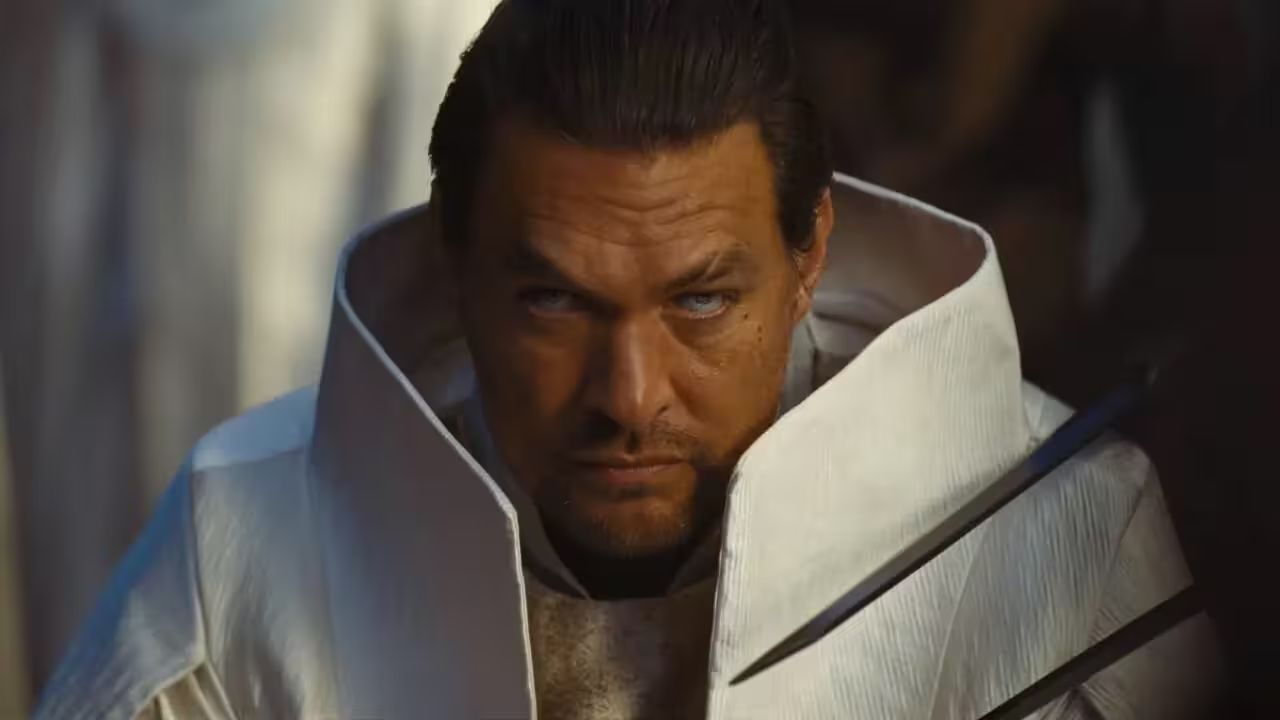
This may well be Momoa’s most understated and quietly intense performance to date.
For fans who followed the first film, the backstory is familiar. Duncan Idaho (Momoa) sacrificed himself in a heroic act. His recovered corpse was later reworked by the Bene Tleilax into a ghola — a recreated human engineered from original cells. Hayt bears genetic markers of Duncan but lacks the continuity of his memories. In the story, this ghola is presented to Paul Atreides (Timothée Chalamet) as a gift with ugly intentions: something meant to unmoor Paul rather than comfort him.
Playing someone who feels like a present and a problem at the same time demands nuance. Momoa describes feeling uncertain, in a good way. He had to strip back his instinct to dominate a scene and instead live in the small, telling moments — a glance, a pause, a barely-there shift in posture. The performance becomes a study in halves: half-man, half-reconstruction; half-truth, half-gap.
For viewers, the payoff will be the tension between familiarity and alienation. Will Hayt echo the mentor and friend who trained Paul? Or will he be a mirror that shows Paul what he fears most? The film teases both possibilities.
Dune: Part Three is scheduled to arrive in theaters on December 18, 2026. Expect a return to the desert—but expect it to feel, in places, uncomfortably new.

Leave a Comment
Comments
No comments yet. Be the first.