
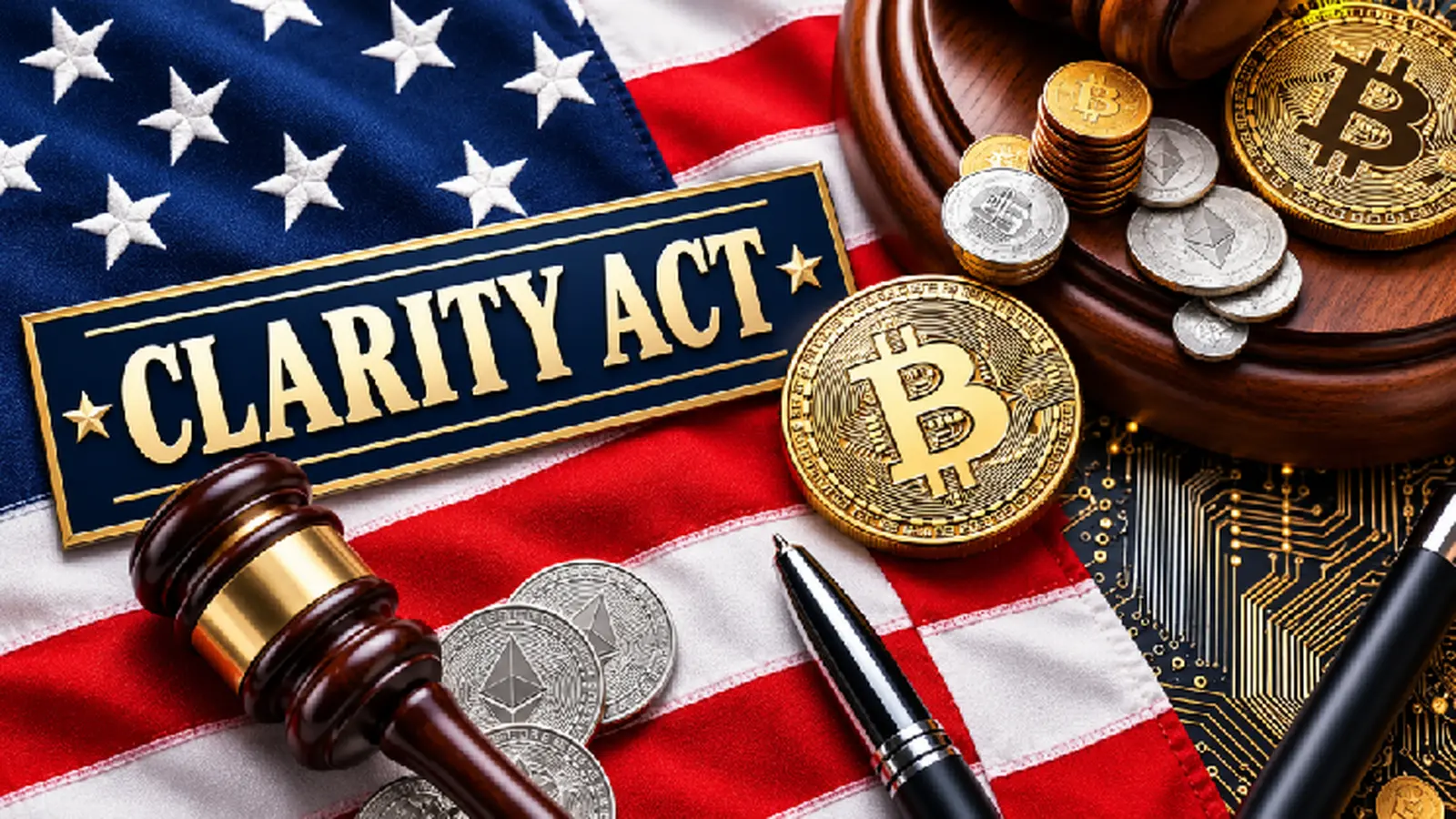
Giancarlo Says Democrats Could Recast CLARITY Act to Pressure White House
Former Commodity Futures Trading Commission (CFTC) Chairman Chris Giancarlo told Bitcoin Magazine in a November 11 interview that House Democrats may draft their own version of the CLARITY Act after taking control of Congress in January. According to Giancarlo, lawmakers could largely preserve the existing market-structure framework while altering key sections to reflect Democratic policy priorities — then put the bill to the White House in a calculated bid to force a presidential veto.
Politics Meets Crypto Regulation: A Strategic Rewrite
Giancarlo outlined how Democrats might keep roughly 80% of the current CLARITY Act language intact and rework the remaining 20% to incorporate their own agenda. By presenting a revised bill that retains most of the market-structure and definitional elements, Democrats could frame themselves as pro-regulation and responsible stewards of digital asset markets while shifting contentious provisions to align with their legislative goals.
The former regulator described the tactic bluntly: the Democratic leadership could pass a bill and effectively challenge President Donald Trump to reject it, saying, in Giancarlo’s words, "We dare you to veto it." That political maneuver would put pressure on the administration to either accept bipartisan crypto legislation or risk taking a high-profile stand against a measure that appears to support consumer protections and clearer rules for digital assets.
What Would Change: SEC, CFTC Roles and Consumer Protections
Internal discussions among House Democrats reportedly contemplate giving the Securities and Exchange Commission (SEC) broader authority over certain cryptocurrencies while narrowing the Commodity Futures Trading Commission’s responsibilities. Some of these ideas draw on Representative Maxine Waters’ earlier Crypto Investor and Consumer Bill of Rights amendment, which emphasized custody protections, withdrawal safeguards, and reserve reporting requirements.

Giancarlo said he’s heard Waters intends to preserve the majority of the CLARITY Act’s structure but add provisions related to investor safeguards and transparency. That approach would shift the public debate from a generalized industry critique to a sharper focus on conflict-of-interest concerns among elected officials — including scrutiny of the president’s and his family’s cryptocurrency holdings.
Targeted Criticism Rather than an Industry Backlash
Rather than attempting another sweeping assault on the crypto industry, Giancarlo expects Democrats to concentrate political energy on administration figures with crypto ties. He argued this narrower strategy is more politically viable than broad-based efforts to stifle sector growth — particularly because many crypto firms continued to operate throughout earlier regulatory conflicts under the Biden administration.
Legislative Headwinds: The CLARITY Act’s Halt and Potential New Battles
The original CLARITY Act stalled in September when the Senate failed a procedural vote, 49-50, short of the 60 votes needed to proceed. Despite that setback, seven Senate Democrats signaled interest in ongoing negotiations, leaving unresolved disputes over ethics, consumer protections, and jurisdictional lines between agencies.
Giancarlo warned that as lawmakers rework the bill, unrelated policy riders could proliferate. He compared the potential legislative churn to the sprawling negotiations that shaped the Dodd-Frank reforms — where provisions ranging from financial stability measures to fee rules became entangled. In that scenario, he said, President Trump could argue that a heavily amended bill no longer focuses primarily on cryptocurrency markets and opt to reject it.
Possible Attachments and Political Tradeoffs
Observers have speculated that Democrats might attach provisions on restrictions, prohibitions, or even credit card fee reforms to a revised CLARITY Act. Those add-ons could expand the bill beyond pure market-structure issues and raise fresh objections from conservatives or industry stakeholders concerned about overreach.
SEC vs. CFTC: Turf, Expertise and Cooperative Oversight
A central dispute in any rewrite will be how to distribute supervisory responsibility between the SEC and CFTC. Giancarlo emphasized that both agencies have already been working together on digital asset oversight, developing a cooperative approach without waiting for Congress to settle every jurisdictional question.
He framed the debate as partly a matter of political influence and committee interests, noting that jurisdictional fights often reflect which industries fall under a committee’s oversight. From a functional standpoint, he argued the SEC is best suited to handle disclosure regimes meant to reduce information asymmetries between issuers and investors, while the CFTC specializes in maintaining market integrity, price discovery, and anti-manipulation efforts.
Policy Guidance: Avoid Overlap and Match Expertise
Giancarlo recommended that lawmakers pay attention to those distinctions when drafting legislation: ensure minimal overlap between regulators and assign responsibilities based on agency expertise. That, he said, will better protect market participants and reduce regulatory confusion for exchanges, custodians, and DeFi platforms navigating competing rules.
He also praised the collaboration between SEC Chairman Paul Atkins and CFTC Chairman Michael Selig, calling their coordination a noteworthy accomplishment. At the same time, Giancarlo warned Congress has the prerogative to reconsider agency roles if legislators believe a statutory clarification is warranted.
Commission Vacancies and the Case for Bipartisan Commissions
Beyond statutory design, Giancarlo criticized persistent vacancies in the commissioner ranks at both agencies. He argued that full, bipartisan commissions produce stronger rulemaking because commissioners must hash out disagreements, leading to more durable and considered regulation.
"I’m a big believer in a full commission structure," he said, noting that rules developed during his tenure benefited from cross-party debate. He assigned responsibility for the gaps to both the White House and Senate leadership, while underscoring that agencies must continue essential rulemaking even when operating with fewer commissioners.
Looking Ahead: A New Congress, New Stakes for Crypto Policy
With Democrats set to control both chambers of Congress starting January 3 and leadership changes likely — Maxine Waters expected to lead the House Financial Services Committee and Elizabeth Warren positioned to influence Senate banking policy — the CLARITY Act could return in a changed form. Whether it becomes a platform for bipartisan market-structure reform or a politically charged vehicle for specific Democratic priorities will shape the next phase of U.S. crypto regulation.
Giancarlo’s view suggests lawmakers are weighing a pragmatic path: hold onto constructive technical language while adding targeted consumer and ethics provisions, then force the political hand of the White House. The strategy, if adopted, would put cryptocurrency regulation at the center of a high-stakes legislative and political contest in 2025.


Leave a Comment
Comments (1)
If Dems keep 80% and tack on ethics bits, is this just theatre to force a veto? Feels like political chess, not real clarity. who actually benefits...?