
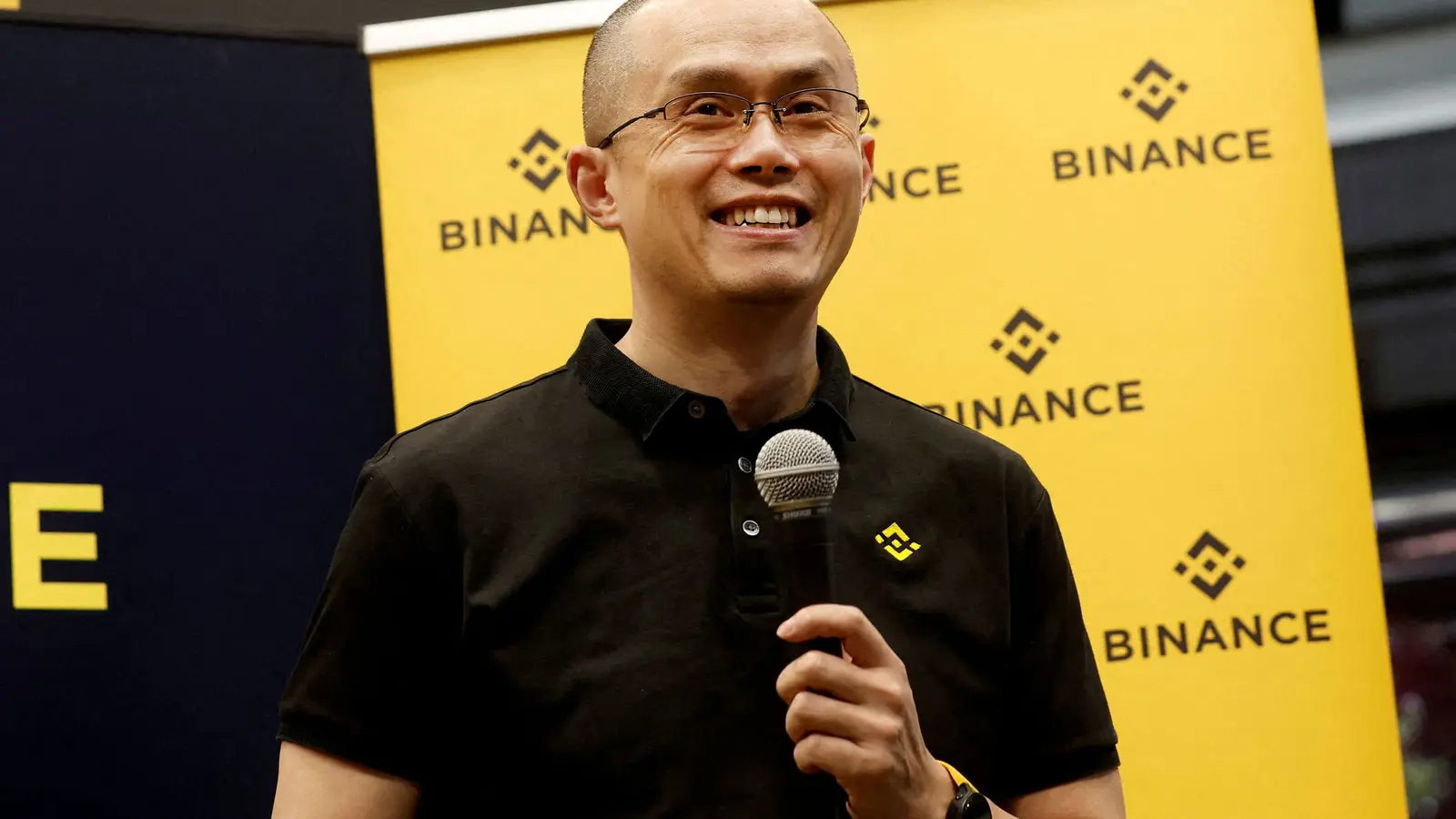
CZ frames blockchain’s next growth phase around real-world use
Changpeng Zhao (CZ), co-founder of Binance, told an audience in Bangkok that the blockchain industry is entering a more substantive stage where practical applications will drive growth rather than pure speculation. Speaking at the CZ in Thailand: Digital Assets in SEA event organized by Binance TH on November 27, Zhao emphasized the need to shift focus from trading momentum to tangible, regulated on-chain products that can attract mainstream capital.
From hype to utility: why adoption matters
Zhao argued that the recent cooling of speculative fervor could be a positive turning point for the sector. Instead of viewing lower retail trading volumes as a setback, he described it as an opportunity to build infrastructure and real-world use cases—tokenized securities, stablecoins tied to national currencies, and blockchain-based government debt among them. He underlined that while artificial intelligence is drawing investor attention, digital money and tokenization remain fundamental to the digital economy; in his words, AI may be flashy, but it cannot replace money.
Tokenized stocks and bonds: access to global capital
One of the central themes of Zhao’s remarks was tokenization of traditional financial instruments. He pointed to tokenized stocks and government bonds as realistic channels for bringing foreign investment into local markets. Because bonds and publicly traded shares already have established prices and liquidity benchmarks, they are logical first candidates for blockchain-based distribution.
Tokenized government debt could allow sovereign issuers to reach investors outside conventional syndication and distribution networks. Zhao cited Binance’s global reach—serving roughly 330 million users—as an illustration of how tokenized products can tap a much larger pool of potential buyers. Similarly, tokenized equity could enable cross-border investors to access Thai companies beyond regular stock exchange hours, potentially expanding fundraising windows for domestic businesses.
Thailand’s pilot: G-Tokens and public debt on-chain

Thailand has already taken concrete steps to integrate blockchain into public finance. In May 2025 the Thai Cabinet approved a plan for the Ministry of Finance to issue government investment tokens, or G-Tokens, with an initial planned issuance of 5 billion baht. The scheme is designed to widen access to public debt instruments, enabling smaller investors to participate in government financing while introducing a new borrowing channel for the state.
Unlike general-purpose cryptocurrencies or payment stablecoins, the G-Tokens are intended as investment instruments and are not meant to circulate as cash substitutes. To support the public distribution of these tokens, the Ministry of Finance selected Token X—a subsidiary of SCBX’s fintech group—as one of the platforms responsible for selling the offering in August 2025.
Practical limitations and asset considerations
While Zhao was bullish on tokenizing bonds and shares, he pointed out that not all assets are equally suited for tokenization. Real estate, for example, typically changes hands less frequently and can be difficult to value continuously, which complicates the creation of liquid token markets. By contrast, government bonds and listed equities have transparent price discovery and liquidity profiles that make them more compatible with on-chain models.
Baht-backed stablecoins: use cases and safeguards
Another recommendation from CZ was for Thailand to support a domestic, baht-backed stablecoin ecosystem. He argued that national-currency stablecoins could facilitate international payments, speedy remittances, and on-chain transactions tied to tokenized domestic securities—helping the baht retain relevance as commerce and finance migrate to blockchain rails.
To protect consumers and preserve financial stability, Zhao advocated strict reserve requirements: issuers should maintain full one-to-one backing of reserves, with regulated banks potentially acting as custodians and verifiers of those reserves. This approach mirrors the Bank of Thailand’s public consultation, which ran from October 19 to November 17 and proposed licensing arrangements for stablecoin issuers and wallet providers under the Payment Systems Act, along with standards for reserve management, redemption, cybersecurity, and anti-financial crime controls.
Thailand’s Securities and Exchange Commission has also suggested daily transfer caps—proposing a 5 million baht limit per customer at each regulated digital asset operator, with exemptions for certain institutional flows—reflecting a cautious, measured regulatory stance toward stablecoins.

Security, AI and the future of autonomous payments
CZ acknowledged that cybersecurity remains a key impediment to broader blockchain adoption. As artificial intelligence tools make it easier to discover software vulnerabilities, the industry must raise its security standards to reduce exploit risk. He predicted that, as firms invest in better defenses and operational practices, security incidents could decline over the following six to 12 months.
Looking further ahead, Zhao envisaged blockchain networks facilitating payments between autonomous AI agents. That vision will require significant improvements to transaction throughput and latency, but he sees interoperable ledgers as a useful backbone for machine-to-machine value transfer once performance and cost hurdles are addressed.
Data centers, tokenized infrastructure and local partnerships
Zhao also highlighted Thailand’s growing data center sector as another candidate for tokenization. Digital tokens representing computing resources could provide alternative financing for infrastructure operators and introduce a new class of on-chain assets tied to real-world computing capacity.
During the event, he praised Binance’s local collaboration with the Gulf Group, led by Sarath Ratanavadi, as one of the exchange’s most productive partnerships. Zhao credited the alliance with helping Binance navigate Thailand’s regulatory landscape and expand its local market presence from an initial market share of less than 2%.
Binance’s tokenization push and market signals
Binance has moved beyond advocacy and into product deployment. The exchange continued to expand its tokenization business in late 2025, adding several tokenized securities for spot and margin markets—products linked to mainstream investment vehicles such as BlackRock’s iShares Bitcoin Trust and sector-focused ETFs, unveiled on November 25.
Zhao’s remarks in Thailand reflect a broader industry trend: a recalibration from speculative trading to building credible, regulated on-chain financial services. For regulators, incumbent financial institutions, and crypto firms alike, the imperative now is to create clear rules, robust custody and reserve frameworks, and higher security standards that can support mainstream adoption of tokenized securities, stablecoins, and other blockchain-enabled financial products.
As countries experiment with tokenized debt, national-currency stablecoins and infrastructure tokenization, the coming phase of blockchain development will likely be defined less by hype and more by practical utility—bridging digital-asset innovation with traditional finance to unlock new channels for capital, payments, and economic participation.

Leave a Comment
Comments (2)
Makes sense tbh. Real utility > hype, but Thai regs must move fast, or it stalls
Tokenizing govt debt sounds neat but is this really lowering systemic risk? Kinda skeptical, custody/legal mess, cross-border issues...