
2 Minutes
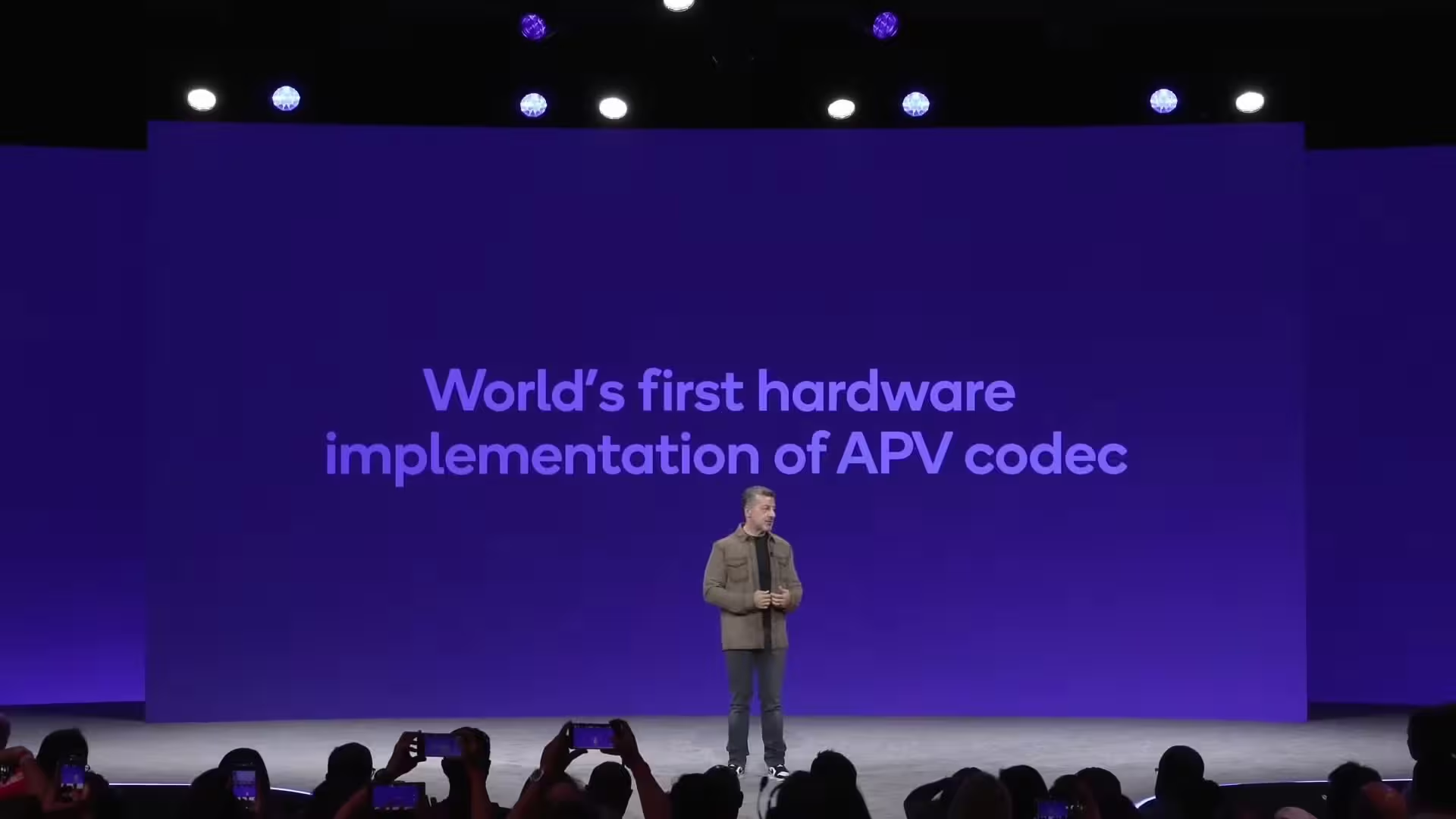
The Snapdragon 8 Elite Gen 5 becomes the first mobile chipset to include Samsung's APV video codec in hardware, promising cinematic-quality footage, pro-grade editing and smaller file sizes for smartphone creators.
What hardware APV support delivers
Qualcomm's latest flagship integrates dedicated encoding and decoding for Samsung's Advanced Professional Video (APV) codec, a format introduced in 2023. Because the codec runs on dedicated silicon inside the Snapdragon 8 Elite Gen 5, phones can capture and process high-quality video faster and with lower power consumption than software-only solutions.
APV aims for near-lossless results while cutting storage needs: roughly 10% more efficient than Apple’s ProRes and about 20% more efficient than HEVC. It supports intra-frame-only coding for precise frame-by-frame editing, multi-view video, HDR10+, and resolutions up to 8K. Color fidelity is robust too, with chroma subsampling options from 4:0:0 through 4:4:4:4 and bit depths ranging from 10-bit to 16-bit for richer color grading and dynamic range.
Adoption, ecosystem and where you'll see it first
The timing is favorable for APV. Android 16 already includes support for the codec, and Samsung is expected to deploy APV-capable cameras on the Galaxy S26 series early next year. APV has been standardized through the IETF and counts heavyweights like Adobe, Blackmagic Design (DaVinci Resolve), Dolby, YouTube, ArcSoft and Company 3 among its supporters. That ecosystem backing should make it easier for creators to shoot, edit and distribute APV footage across devices and apps.
Conclusion
By adding hardware-level APV support to the Snapdragon 8 Elite Gen 5, Qualcomm and Samsung are pushing smartphone video closer to professional workflows: higher fidelity, smaller files and faster editing. As more tools and devices accept APV, it could become a mainstream choice for mobile filmmakers and content creators looking for ProRes-level quality without the same storage overhead.



.webp "Redmi 17C 5G: 6.9-inch Screen and 6,000mAh Power Lands")

Leave a Comment
Comments
No comments yet. Be the first.