
Meta is reportedly preparing to slash funding for its metaverse division by as much as 30%, a move Bloomberg says could include headcount reductions. The potential rollback reflects shifting priorities after years of heavy investment in virtual reality projects that failed to find broad consumer appeal.
What’s driving the budget trim?
Investors and industry observers have been skeptical of Meta’s large-scale bet on the metaverse since the company rebranded in 2021. Bloomberg’s report points to underwhelming user engagement with Horizon Worlds and slower-than-expected adoption of Meta’s VR headsets as key reasons for the rethink. Put simply: the market hasn’t rewarded the scale of spending.
- Low consumer uptake of VR experiences and headsets
- High ongoing development and hardware costs
- Investor pressure to reduce funding for loss-making projects
Investors see a silver lining
Rather than panic, the market reacted positively to the news: Meta shares rose after the report surfaced. That spike suggests investors interpret a budget pullback as a sign Meta may refocus capital on higher-return areas — such as artificial intelligence and next-generation smart glasses — instead of continuing to bankroll risky, loss-making metaverse experiments.
What this means for Meta’s products and teams
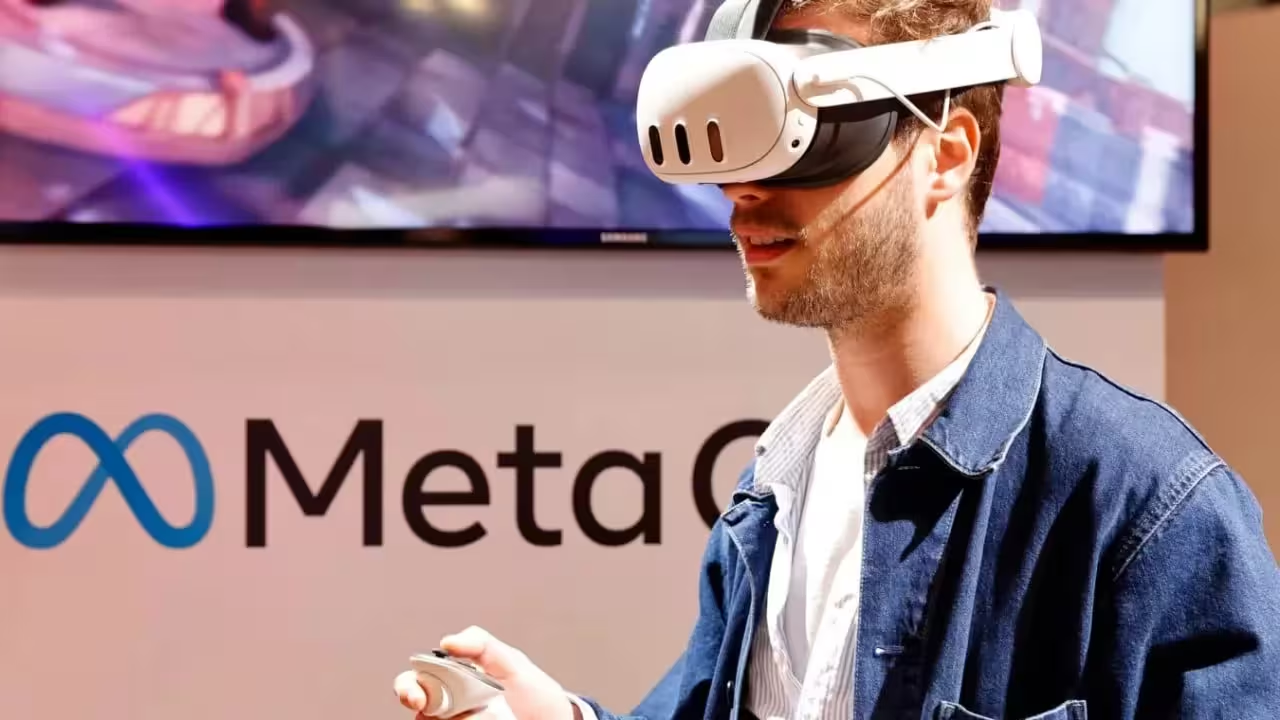
The reduction could affect teams working on Horizon Worlds, VR hardware and related metaverse initiatives. Bloomberg’s coverage explicitly mentions the possibility of layoffs. At the same time, Meta’s AI efforts and wearable device development have drawn steadier praise and better results, which may benefit from reallocated funding.
Practical impacts to watch
- Slower rollout or scaling back of some VR features and virtual worlds
- Potential consolidation of engineering teams and product roadmaps
- Increased investment in AI, smart glasses, and more commercially viable projects
The metaverse concept — still a long-term gamble
At its core, the metaverse describes an immersive 3D digital universe where users interact via avatars to socialize, shop, work and create. It aims to combine VR, augmented reality, AI and, in some visions, blockchain. Despite intense corporate investment, realizing that vision has been slowed by technical limits, steep costs and limited mainstream demand.
Meta’s potential pullback doesn’t kill the idea of the metaverse, but it does underline the gap between promise and present reality. Companies building toward that future will likely need to demonstrate clearer, nearer-term commercial value before pouring in more capital at scale.
.avif "Xbox Executive Under Fire for Suggesting Laid Off Employees Seek Emotional Support from Copilot AI")

Leave a Comment
Comments
No comments yet. Be the first.