

3 Minutes
Trump vows 1,600 new plants to ease AI-driven power pressure
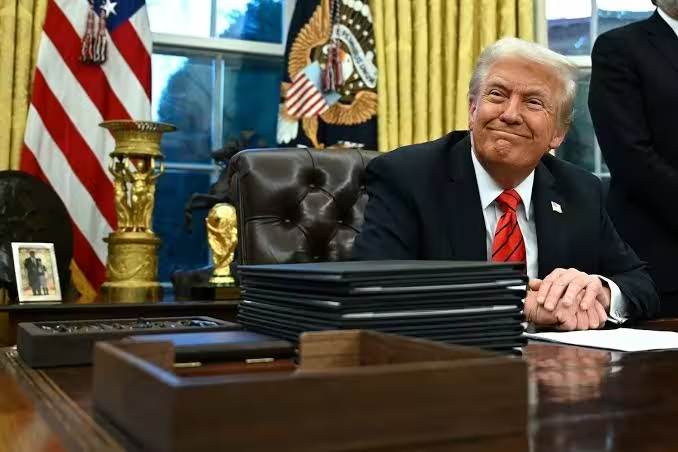
President Donald Trump announced a plan to bring 1,600 new electrical generating plants online within the next 12 months, arguing the expansion will reduce electricity and consumer costs while strengthening U.S. competitiveness in emerging technologies. The declaration came during a year-end address that also highlighted sharply rising demand for electricity from AI-scale data centers — a trend with implications for the broader energy landscape, including blockchain infrastructure and crypto mining operations.
Surge in AI data center demand strains ERCOT interconnection queue
The Electric Reliability Council of Texas (ERCOT) has reported a dramatic jump in large-load interconnection requests, swelling from roughly 63 GW at the end of last year to about 226 GW today. ERCOT said data center projects now make up approximately 73% of these requests — many of them designed for AI-scale compute. This load surge creates intense competition for grid capacity, affecting industrial users, cryptocurrency mining farms, and hyperscale cloud providers alike.
Why crypto miners and blockchain projects are watching closely
Energy-hungry applications such as Bitcoin mining and some proof-of-work blockchain operations compete directly with AI data centers for affordable, reliable power. Rising demand can push up wholesale prices and capacity constraints, increasing operational costs for crypto mining rigs and GPU farms. Conversely, faster approvals and a meaningful increase in generation capacity could lower energy costs and reduce volatility for both AI infrastructure and blockchain nodes.
Policy, economics and energy markets
In his speech, Trump linked the new generation push to broader economic goals: lower consumer prices, higher real wages, and sustained U.S. competitiveness. He argued that streamlined approvals and accelerated construction are essential to secure long-term affordability. The president also referenced recent political battles — including a brief government shutdown related to healthcare subsidy policy — as headwinds that his administration is working to overcome.
Grid reliability, renewables and emissions concerns
Energy experts point out that adding generation capacity does not automatically solve questions about reliability, transmission bottlenecks, or emissions. Many crypto and blockchain stakeholders favor a clearer policy framework that balances new generation with transmission upgrades and incentives for cleaner sources. For miners and blockchain developers, the ideal outcome is reliable baseload power paired with competitive pricing and predictable regulatory treatment.
Market impact and next steps
If implemented, a rapid buildout of 1,600 plants would reshape regional markets and could relieve near-term price pressure caused by AI-scale demand. That said, the timeline and project mix (natural gas, renewables, storage, etc.) will determine real impacts on electricity prices and on industries such as crypto mining, Ethereum staking validators, and blockchain data centers. Market participants should monitor ERCOT interconnection updates, federal approvals, and state-level permitting processes.
For crypto investors and infrastructure operators, the key takeaway is that energy policy and grid investments are now central to the economics of both AI compute and blockchain operations. Increased generation and faster approvals could make the U.S. a more attractive location for both data centers and crypto mining farms — but successful outcomes will require coordinated investment in generation, transmission, and clean-energy integration.












Leave a Comment
Comments
No comments yet. Be the first.