
2 Minutes
Ads are rolling into ChatGPT, but most people won't notice them — at least not yet. OpenAI has quietly launched a limited experiment that places clearly labeled sponsored content inside conversations for a slice of its user base, and the results of this test will determine how broadly the company moves forward.
The trial targets logged-in adult users in the United States who use the Free tier or the Go subscription. If you pay for higher-tier access—Plus, Pro, Business, Enterprise or Education—you won’t see those placements. Advertisements are designed to stand apart from the assistant's replies, visually separated and tagged as sponsored so users don’t mistake them for the AI’s responses.
How are the ads chosen? By relevance. The system matches promotions to conversation topics, earlier chats, and prior ad interactions so what appears feels connected to the exchange. Talk about dinner ideas and you may spot grocery or food-service offers. Crucially, OpenAI says advertisers do not get access to individual conversations or personal data; only aggregated metrics such as views and clicks are shared with partners.
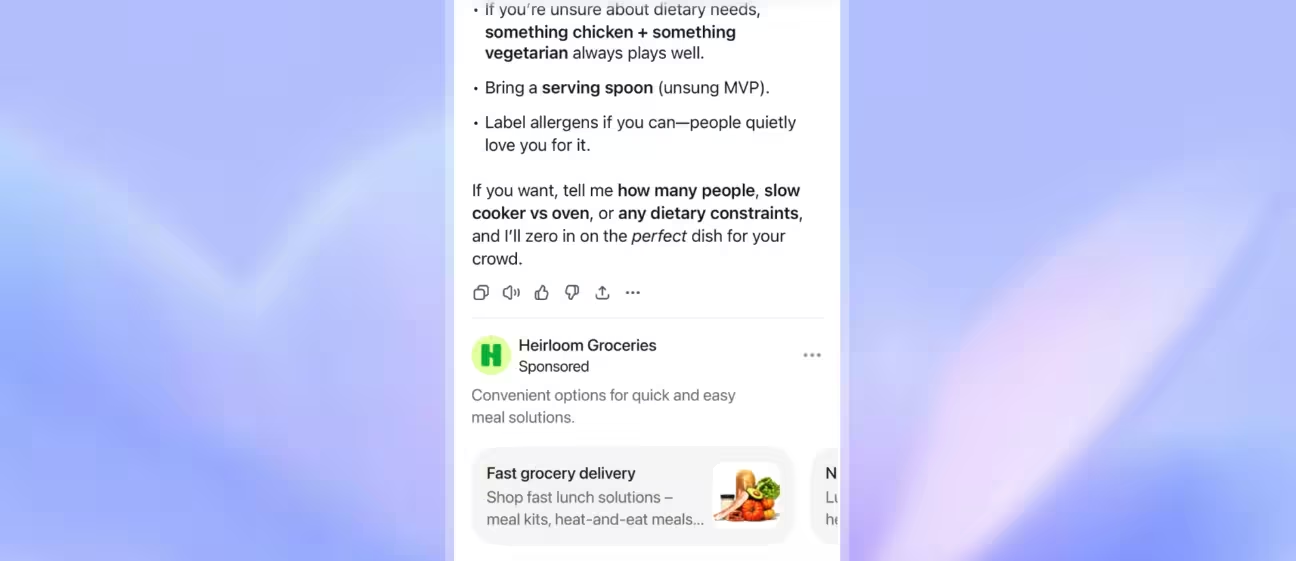
Paid plans such as Plus, Pro, Business, Enterprise and Education will remain ad-free. That protection gives power back to anyone willing to upgrade. For budget-conscious people, the Go plan sits at the cheaper end — around $8 per month in the U.S. — while the completely free tier will carry ads as part of this experiment. Users who want no ads can either move up to a higher-paid tier or choose limited opt-out options, depending on how OpenAI configures the settings.
OpenAI frames the move as practical: ads help offset infrastructure costs and make advanced features more accessible to nonpaying or low-cost accounts. Opponents, though, worry about erosion of trust. If commercial messages appear inside a tool that people use for research, learning and decision-making, skepticism is natural. The company insists that ad placements will be kept away from sensitive subjects like health, politics and mental well-being, and that users will have tools to dismiss ads, provide feedback and adjust personalization settings.
The rollout remains deliberately narrow. Early feedback will shape placement rules, privacy guardrails and the list of topics that are off-limits. Expect tweaks. Expect debate. If you encounter these ads, test the controls and tell OpenAI whether the experience feels helpful or intrusive — your response may steer the next phase.










Leave a Comment
Comments
No comments yet. Be the first.