
Picture a console that feels like a living room PC: you press a button, a familiar TV-friendly interface appears, and with another click you find yourself on a full Windows 11 desktop. Strange? Comfortable? Both.
That’s the clearest sketch we have so far of Microsoft’s next Xbox, according to remarks from AMD’s CEO and reporting by Windows Central. Lisa Su told investors that AMD is supplying a semi‑custom chip for the project, codenamed Magnus inside AMD, and the hardware is slated to arrive in 2027. The chip is being positioned to bridge console simplicity and PC versatility.
From what insiders describe, the Xbox of the future won’t look—or act—like a traditional console. It will boot by default into a streamlined, television‑oriented shell that mimics today’s console experience. But you won’t be stuck there. Users will be able to exit that shell and run the full Windows 11 environment, install alternative storefronts like Steam or the Epic Games Store, and even run developer tools when needed. In short: it behaves like a dedicated console until you decide you want a desktop.
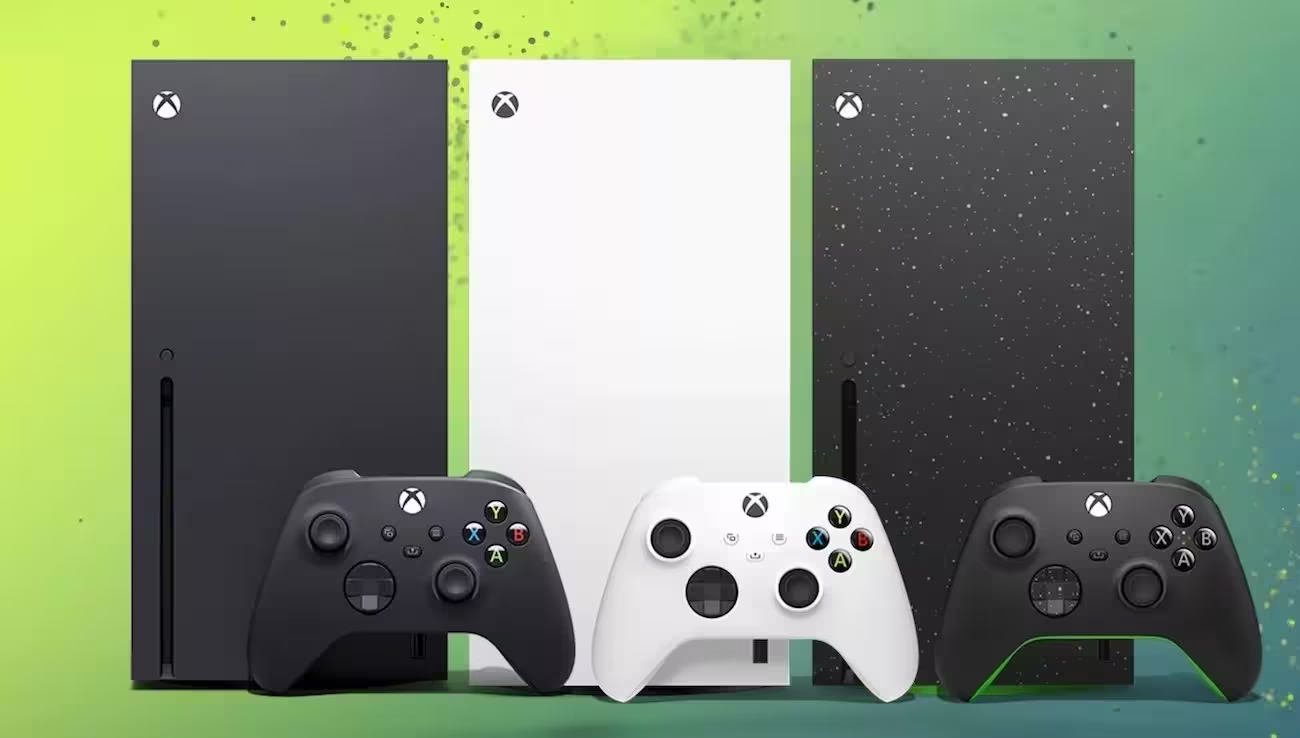
Price is the trickiest piece of this puzzle. Exact figures haven’t leaked, but those tracking the industry expect a premium tag. Rising costs for AI components, cutting‑edge silicon and global tariffs all press upward on retail pricing. Microsoft’s answer is strategic rather than purely financial: it plans to open the Xbox hardware ecosystem to OEM partners so companies such as Asus can build their own Xbox devices.
That move flips the model—Xbox becomes a software platform first, while hardware turns into a range of choices from multiple manufacturers. The implication is obvious: Microsoft could ship a flagship, high‑end console while partners supply more affordable or specialized form factors, including handhelds and slimmer units, giving gamers options even if the Microsoft‑branded unit lands near the $1,000 mark.
This project is unusually ambitious for Microsoft on the hardware front. Engineers from the Windows and Xbox teams are working closer than ever to smooth the transition between console and full operating system. One experimental feature already in testing on the Xbox Ally X is a neural processing unit that can auto‑generate gameplay highlight videos; if it proves reliable, expect that capability to be baked into the next console line.
The roadmap is clear: blend PC power with console convenience, widen the hardware ecosystem, and lean on AI features to offer new experiences. Whether that will redraw the line between consoles and PCs is the question everyone now wants an answer to.

Leave a Comment
Comments
No comments yet. Be the first.