
3 Minutes
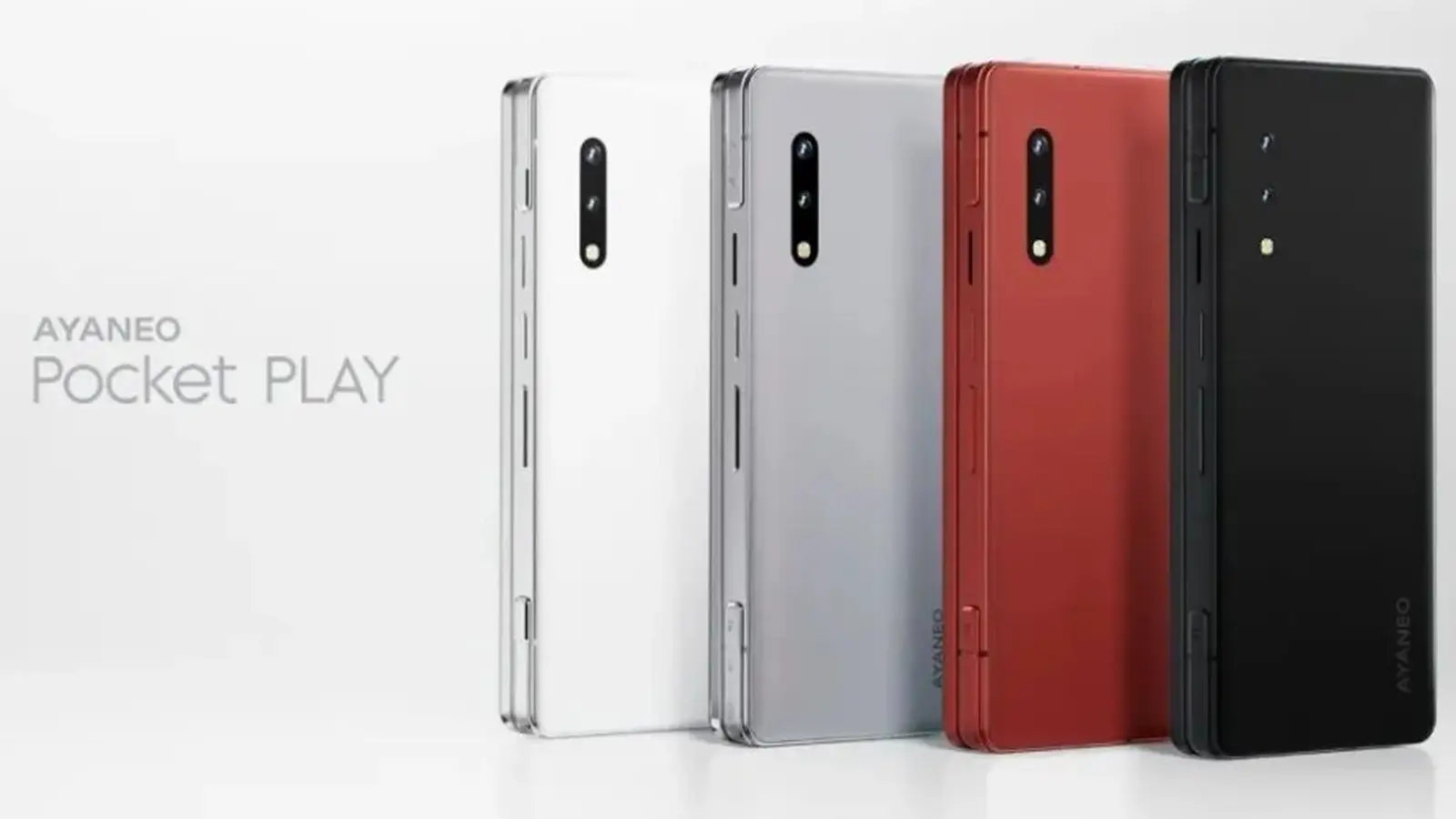
It feels like someone took a handheld console and tucked a smartphone inside it. Slide the chassis open and a controller emerges, built into the body—no add-ons, no awkward adapters. Ayaneo calls the result the Pocket Play, and the company has finally peeled back the curtain on key hardware choices that show it wants to be taken seriously as a portable gaming machine.
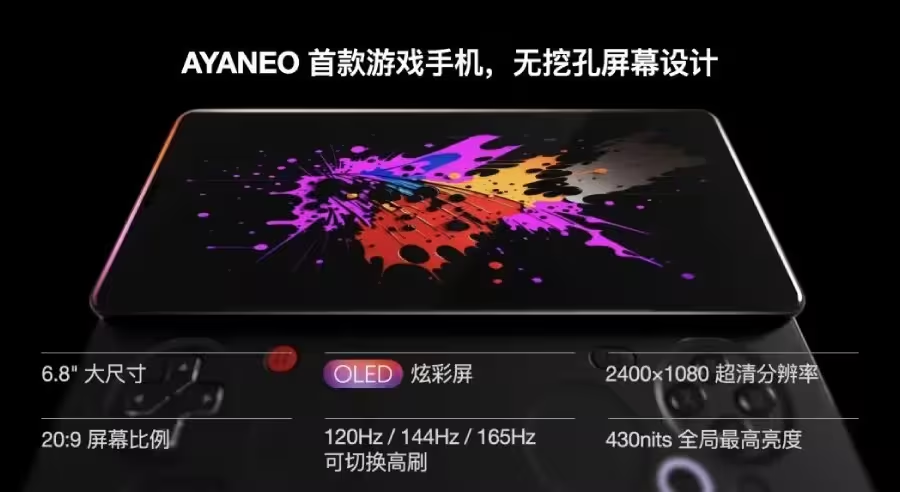
The first impression is visual and tactile. A 6.8-inch OLED dominates the front, unbroken by notches or punch-holes, stretched to a 20:9 aspect and a 2400 × 1080 resolution that keeps pixels tight without overpowering battery life. What will catch gamers’ eyes is the display’s flexible frame-rate: 120Hz, 144Hz, and a peak 165Hz option for ultra-smooth motion when the game and GPU can keep up.
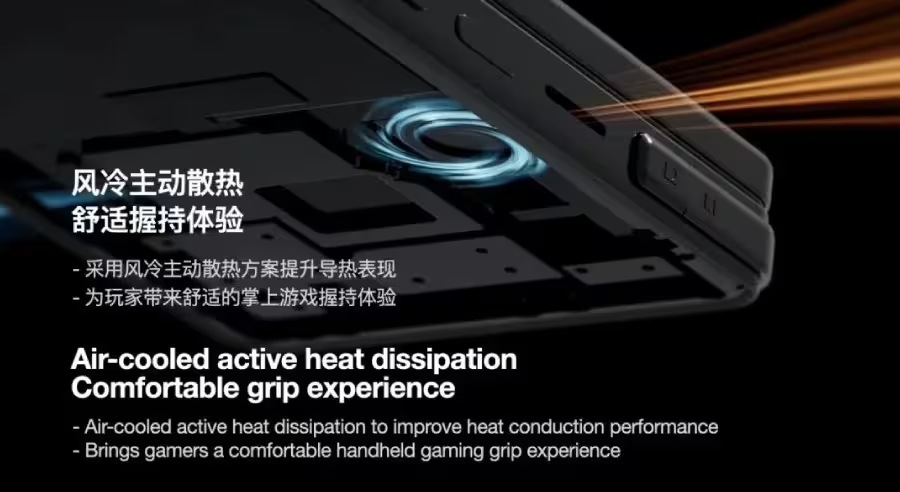
Under the hood sits MediaTek’s Dimensity 9300, a chip built on TSMC’s third-generation 4nm node. It pairs an octa-core CPU design with Arm’s Immortalis-G720 GPU—hardware that signals Ayaneo isn’t flirting with low-power gimmicks. There’s also an active air-cooling system baked into the chassis. Translation: this is meant for extended play sessions, not a five-minute demo at a trade show.
Haptics get attention too. The Pocket Play uses an X-axis linear motor with four distinct vibration modes, designed to add nuance to explosions, recoil, and menu clicks. Audio is stereo. In short: Ayaneo built feedback layers so games feel tactile and present, not just visually sharp.
For anyone worried it’s a one-trick device, Ayaneo kept everyday phone functionality intact. You get full telephony and data capability, a USB-C 3.2 Gen 2 port that supports DisplayPort 1.4 video output, a fingerprint reader integrated into the power button, and a hybrid SIM/microSD tray—so storage can grow if you collect large game libraries.
- Display: 6.8-inch OLED, 2400 × 1080, 20:9, up to 165Hz
- SoC: MediaTek Dimensity 9300; Immortalis-G720 GPU
- Cooling: Active air-cooling system
- Haptics & audio: X-axis linear motor (4 modes), stereo speakers
- Ports & extras: USB-C 3.2 Gen 2 with DisplayPort 1.4, fingerprint power button, SIM/microSD slot
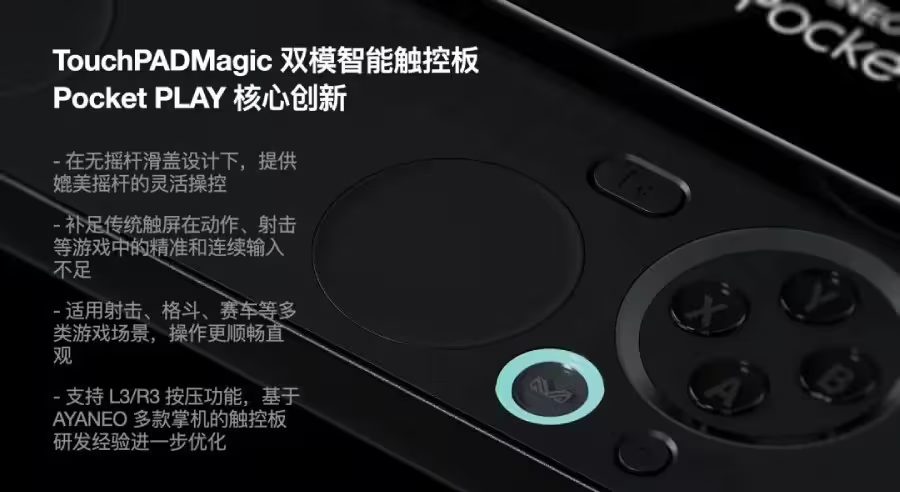
Ayaneo’s sliding mechanism is as much about ergonomics as it is about novelty. Slide it open and physical shoulder buttons, thumbsticks, and triggers become available—something developers and players have missed since the heyday of dedicated handhelds. This isn’t an accessory you clip on. It’s integrated, and that changes how you hold the device, how long you play, and how you think about mobile gaming.
On paper, the Pocket Play is a clear bet on mobility-first gaming.
Details that matter remain unknown: Ayaneo hasn’t announced pricing or exact availability. But the pieces we do have point toward a deliberate product strategy—one that places performance, control fidelity, and a premium screen experience front and center. For anyone who wants a handheld that behaves like a console and lives in a pocket, the Pocket Play looks like one of the most interesting entries this year.
Will it be the device to bridge the gap between phone convenience and console-level play? We’ll see, but the hardware choices suggest Ayaneo is at least trying to close it.







Leave a Comment
Comments
No comments yet. Be the first.